A backed-up floor drain in a restaurant kitchen or a slow restroom sink in an office building does not stay a small problem for long. A commercial drain cleaning service helps business owners, property managers, and landlords deal with drainage issues before they turn into downtime, bad smells, health concerns, or expensive damage.
For commercial properties, drain trouble usually shows up at the worst time – during business hours, before an inspection, or right when tenants start calling. The real issue is not just the clog you can see. It is whether the line has grease buildup, sludge, debris, roots, scale, or a deeper sewer problem that keeps coming back. That is why commercial drain work needs more than a quick fix.
What makes commercial drain problems different
Commercial drain systems take more abuse than most residential lines. Restaurants send grease, soap, food particles, and wash water through the system every day. Apartment buildings deal with constant use from multiple units. Retail spaces, offices, schools, and industrial buildings often have a mix of sinks, toilets, floor drains, and main lines that all connect into a larger drainage network.
That means a clog in a commercial setting can spread farther and affect more people, faster. One blocked line can shut down a restroom, slow down kitchen operations, create standing water in a work area, or cause sewer odors that customers notice right away. In some properties, a problem in one section may point to a larger blockage in the main line.
It also means the cheapest short-term option is not always the most affordable choice. A cable machine may break through part of a blockage and get water moving again, but if grease or heavy buildup is still coating the pipe walls, the problem can return soon. In a busy commercial building, that kind of repeat issue costs time, money, and patience.
Signs you need a commercial drain cleaning service
Some drain issues are obvious. Others build slowly until they start affecting daily operations. If you manage a commercial property, it helps to pay attention to patterns instead of waiting for a full backup.
Slow drains across more than one fixture often point to more than a single local clog. If one restroom sink drains slowly, that may be isolated. If multiple sinks, toilets, or floor drains are acting up at the same time, the problem may be farther down the line.
Recurring clogs are another red flag. When the same drain needs repeated attention, the blockage is often not fully removed. Grease, sludge, paper buildup, and debris can keep narrowing the pipe even after temporary clearing.
Bad odors matter too. Sewer smells near drains, in utility rooms, or around restrooms can signal trapped waste, poor flow, or a developing sewer line issue. For businesses that rely on walk-in traffic, odor problems are more than an inconvenience. They affect customer experience right away.
Gurgling sounds, bubbling toilets, and water backing up in floor drains are signs you should not ignore. Those symptoms often mean air is being displaced by a blockage or that wastewater is struggling to move through the system. If water appears where it should not, the line needs attention before it becomes a bigger mess.
How a professional commercial drain cleaning service solves the problem
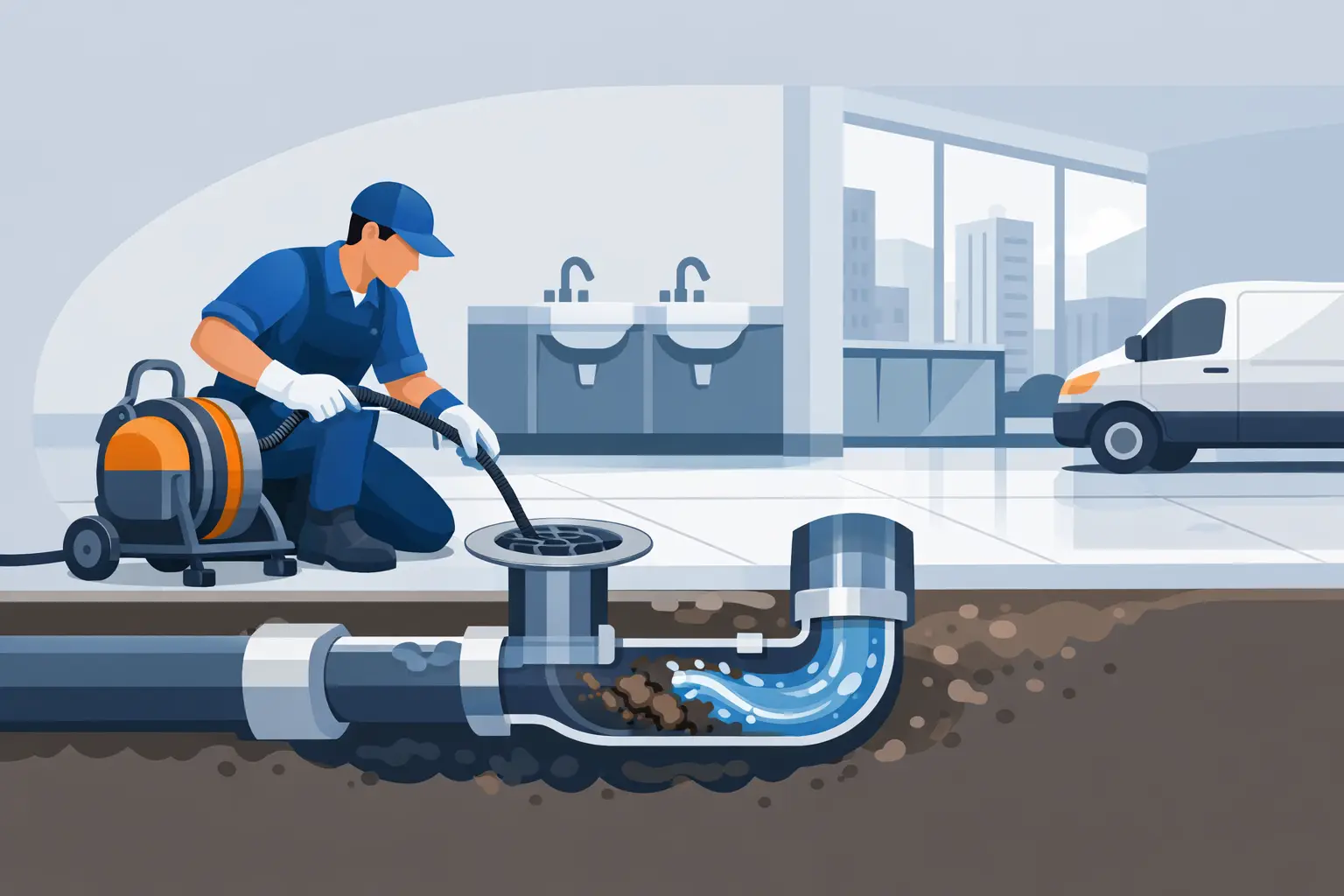
A proper commercial drain call starts with finding the real cause, not just punching a hole through the clog and leaving. In some cases, a drain can be cleared with snaking or mechanical equipment. In others, hydro-jetting is the better option because it removes heavy buildup from the pipe walls instead of just opening a narrow path.
That difference matters. Hydro-jetting uses high-pressure water to cut through grease, sludge, soap residue, and other debris. For restaurants, multi-unit properties, and buildings with recurring issues, it is often one of the most effective ways to restore full flow. It is also a smart option for customers who want an approach that avoids harsh chemical drain cleaners.
There are trade-offs, though. Not every line should be jetted without checking its condition first. Older pipes, damaged lines, or systems with weak spots may need a camera inspection before high-pressure cleaning begins. That is why experienced drain specialists match the method to the pipe, the blockage, and the building use.
Video inspection can also take the guesswork out of repeat problems. If a line keeps clogging, the issue might not be grease or paper at all. It could be root intrusion, a broken section, offset joints, or a sag in the sewer line. Cleaning helps when buildup is the problem. Structural damage needs a different solution.
Why preventive service matters for commercial properties
Emergency calls are part of property management, but commercial drain maintenance can reduce how often those calls happen. For businesses with heavy drain use, preventive cleaning is usually cheaper than waiting for a shutdown.
Think about a restaurant with grease-heavy kitchen lines or an apartment property with frequent mainline backups. If the drains are cleaned on a regular schedule, buildup can be removed before it creates a full blockage. That helps avoid service interruptions, water damage, tenant complaints, and after-hours panic.
Preventive service also helps with planning. It is easier to schedule drain cleaning around business hours or tenant needs than to deal with an unexpected backup during the busiest part of the week. For property owners trying to control maintenance costs, predictable service often beats repeated emergency visits.
The right schedule depends on the building. A small office may only need occasional service based on usage and warning signs. A restaurant, grocery store, multi-unit housing property, or older commercial building may need more frequent cleaning and inspection. It depends on what goes down the drains, how often the system is used, and whether there is a history of recurring trouble.
Choosing the right commercial drain cleaning service
Commercial work moves differently than a simple household sink clog. You need a company that understands urgency, knows how to work around occupied properties, and has the equipment to handle more than surface-level stoppages.
Fast response matters, but so does honesty. A good drain specialist should explain what they are seeing, what method they recommend, and whether the issue looks like buildup, a blockage, or a sewer line problem. Clear communication saves time and helps owners make informed decisions instead of guessing.
It also helps to work with a drain-focused company rather than a general service provider that treats drain issues as a side job. Commercial systems can be messy and unpredictable. Specialized tools like hydro-jetting and sewer camera inspection make a real difference when the goal is not just to get through the day, but to solve the problem properly.
For local businesses and property owners in Southeast Iowa and nearby communities, that local knowledge matters too. A company familiar with the area understands the mix of older lines, commercial properties, and urgent service calls that come with managing buildings here. That is part of why businesses call Drain Pros LLC when drains start slowing down, backing up, or causing repeat headaches.
Commercial drain cleaning service is not just for emergencies
A lot of people wait until wastewater is on the floor before they make the call. Sometimes that is unavoidable. But a commercial drain cleaning service is just as valuable when the goal is prevention, not crisis response.
If your building has recurring slow drains, foul odors, frequent tenant complaints, or a history of sewer issues, those are reasons to act early. The sooner the line is cleaned and inspected, the better your chances of avoiding a shutdown, a cleanup bill, or a bigger repair.
Commercial properties run better when the basics work the way they should. Drains are easy to ignore until they are not. Taking them seriously before they fail is one of the simplest ways to protect your building, your tenants, your staff, and your customers.
If something seems off, trust that instinct. A drain problem rarely fixes itself, and catching it early is usually the less expensive move.