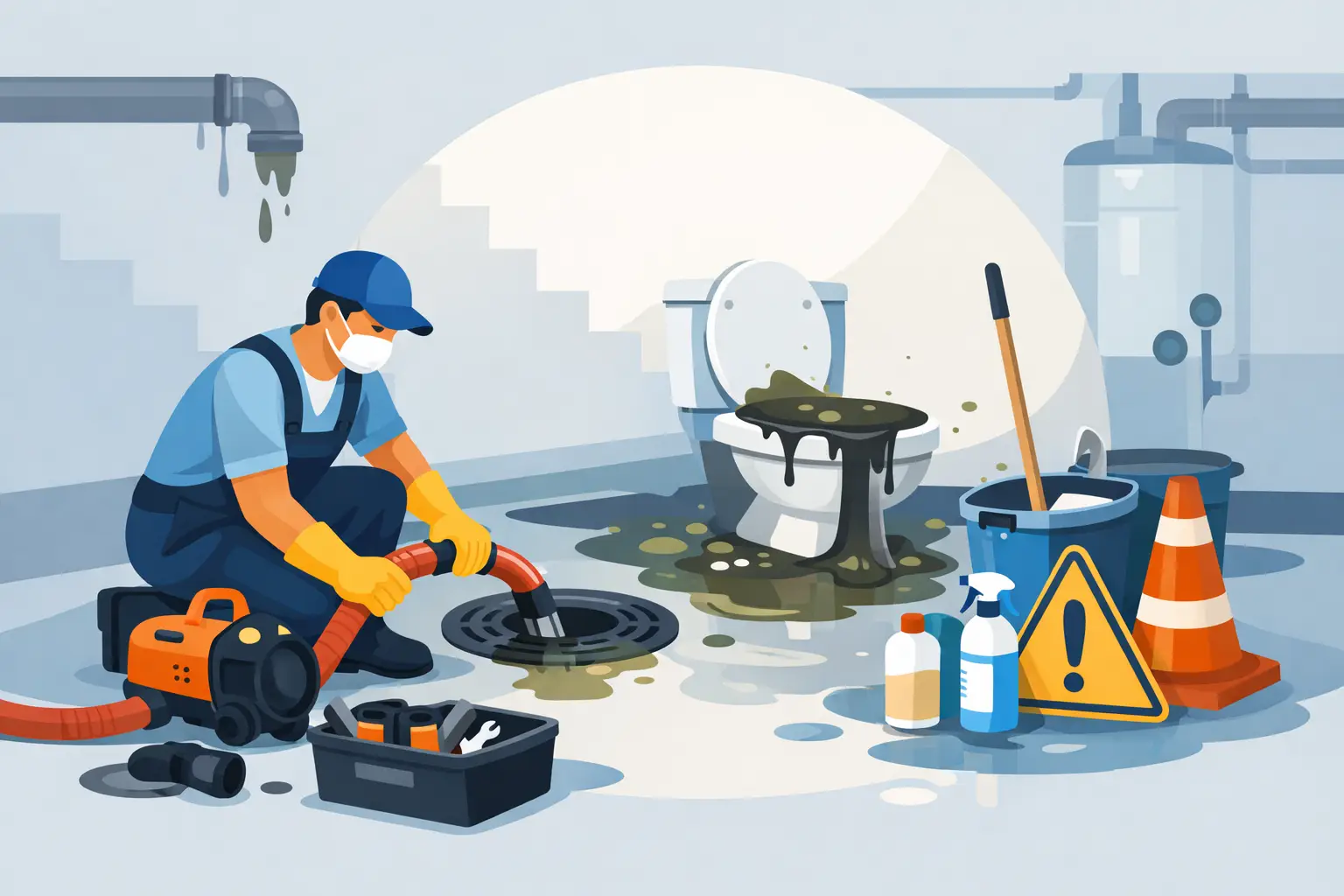
That smell usually hits first – strong, sour, and impossible to ignore. Then you see dark water around a floor drain, toilet base, or basement cleanout, and the question becomes urgent: how to handle sewage backup without making the mess, damage, or health risk worse.
A sewage backup is not a normal clog. It can carry bacteria, viruses, and contaminated waste into your home or business. It can also keep rising if wastewater from sinks, toilets, showers, or laundry keeps feeding the line. The right first steps matter, and so does knowing when the problem has gone beyond a plunger or drain cleaner.
How to handle sewage backup in the first few minutes
Start by stopping water use right away. Do not flush toilets, run sinks, start the dishwasher, or wash clothes. If the sewer line is blocked, every bit of water you send into the system can come back up at the lowest drain.
If it is safe to do so, keep people and pets out of the affected area. Sewage-contaminated water should be treated like a health hazard, not just a cleanup job. If the backup is in a basement, laundry room, bathroom, or utility area, close the door or block it off.
Next, turn off electricity to the area if water is near outlets, extension cords, appliances, or your furnace. Do not step into standing water to do this. If you cannot safely access the breaker, leave it alone and call for help.
Then take a quick look at where the backup is showing up. If sewage is coming out of multiple drains, or backing up when another fixture is used, that usually points to a main sewer line problem. If the issue is isolated to one toilet or one sink, it may be a local clog. That difference matters because a mainline blockage needs a different level of response.
What not to do during a sewage backup
A lot of damage happens because people try to force a quick fix. Do not use chemical drain cleaners. They rarely solve a sewer backup, and they can make the water more hazardous for anyone who has to work on the line later.
Do not keep plunging random fixtures if sewage is surfacing in the basement or lower drains. You may just push water to another weak point in the system. And do not assume the water will go down and stay down. Sometimes a partial blockage lets the level drop for a bit, then the next shower or flush sends it right back.
It is also smart not to move contaminated items through the house unless you have to. Dragging rugs, towels, or boxes across clean floors can spread bacteria further than the actual backup did.
Why sewage backups happen
If you are wondering how to handle sewage backup long term, it helps to know what caused it. In this part of Iowa and nearby Illinois communities, the most common reasons are heavy buildup in the line, main sewer clogs, tree root intrusion, and damaged or aging sewer pipes.
Grease, wipes, paper products, and debris can narrow the line over time until wastewater has nowhere to go. Roots can work their way into tiny pipe openings and keep growing until they trap solids and create a full blockage. In some properties, especially older homes or commercial buildings, the pipe may have shifted, cracked, or collapsed.
Weather can also play a role. After heavy rain, overburdened systems can expose weak spots in a private sewer line. But even then, the answer is not guesswork. The cause needs to be identified before anyone can say whether you need cleaning, hydro-jetting, or a camera inspection.
When you can clean it yourself and when you should not
There is a difference between minor contaminated splashing around a toilet and an actual sewage backup across the floor. If the affected area is very small, the source is clearly contained, and you have protective gear, you may be able to handle limited cleanup after the clog is professionally cleared.
But if sewage has covered flooring, soaked drywall, reached stored items, or backed up more than once, this is not a basic cleanup situation. Porous materials can hold contamination even after they look dry. Carpet padding, cardboard, insulation, and some types of wood trim often need to be removed.
The line itself also has to be addressed first. Cleaning the floor without clearing the blockage is like mopping under a leaking roof. Until the sewer flow is restored, the backup can happen again at any moment.
When to call a drain and sewer specialist
Call right away if sewage is coming from a floor drain, basement drain, shower, or multiple fixtures. The same goes for backups that return after plunging, slow drains throughout the property, gurgling toilets, or foul sewer odor with no obvious source.
This is where specialized equipment matters. A professional can determine whether the blockage is from grease, roots, sludge, scale, or pipe damage. Depending on what is found, the right fix may be cabling, mainline clearing, hydro-jetting, or a sewer camera inspection.
Hydro-jetting can be especially useful when buildup is heavy and recurring. Instead of just poking a hole through the clog, it cleans the inside of the pipe with high-pressure water. That is often a better fit for lines with grease, sludge, or years of debris, though it depends on the pipe condition. If the sewer line is badly damaged, inspection comes first so the pipe is not stressed unnecessarily.
For homeowners and business owners in Southeast Iowa who need fast, focused sewer help, a local specialist like Drain Pros LLC is built for exactly this kind of problem.
How to protect yourself during cleanup
If you are dealing with any contaminated area before help arrives, wear gloves, rubber boots, eye protection, and a mask if splashing is possible. Wash hands thoroughly after any contact, even if you wore gloves.
Open windows if you can do so safely. Good airflow helps with odor and drying, but it does not replace proper sanitation. Use disposable towels or rags for small containment only, and bag them immediately. Keep children, pets, and anyone with health concerns away from the area.
Hard, non-porous surfaces can usually be cleaned and disinfected after the source is corrected. Soft materials are a different story. If sewage soaked into carpet, upholstered furniture, drywall, or stored belongings, some items may not be worth saving. It depends on how much contamination there was, how long it sat, and what the material is made of.
Preventing the next backup
Once the emergency is over, prevention becomes the next smart step. A lot of sewer problems give warning signs before they turn into a backup. Slow drains in more than one area, bubbling toilets, water around a basement floor drain, and recurring clogs are all worth attention.
Routine sewer and drain cleaning can remove buildup before it becomes a blockage. If roots have been an issue before, periodic inspection can catch regrowth early. And if your property has an older sewer line, a camera inspection gives you a clearer picture of its condition instead of relying on guesses.
Daily habits matter too. Keep grease out of kitchen drains, skip flushable wipes even if the label says otherwise, and avoid sending paper towels, hygiene products, or food scraps into the system. Those small choices prevent a lot of expensive calls.
The bottom line on how to handle sewage backup
The safest answer to how to handle sewage backup is simple: stop using water, keep clear of the contaminated area, and get the sewer line checked as fast as possible. Some messes look manageable at first and turn out to be a mainline issue underneath. Acting quickly can limit damage, protect your health, and help keep a bad day from becoming a major repair.
If you ever smell sewer gas, see wastewater backing up, or notice multiple drains acting up at once, trust what your property is telling you. Sewage problems do not usually fix themselves, but fast action gives you the best shot at a cleaner, cheaper solution.