A drain that backs up once may be a simple clog. A drain that backs up every few weeks or months is telling you the real blockage was never fully removed – or there is a bigger problem farther down the line. The top causes of recurring backups usually involve buildup, damaged pipes, or a main sewer issue that a plunger and store-bought cleaner cannot solve.
For homeowners, landlords, and business owners, repeat backups are more than a nuisance. They can shut down a kitchen, make a restroom unusable, damage floors, create odors, and lead to costly cleanup. Finding the cause early is the best way to stop the cycle.
Top Causes of Recurring Backups
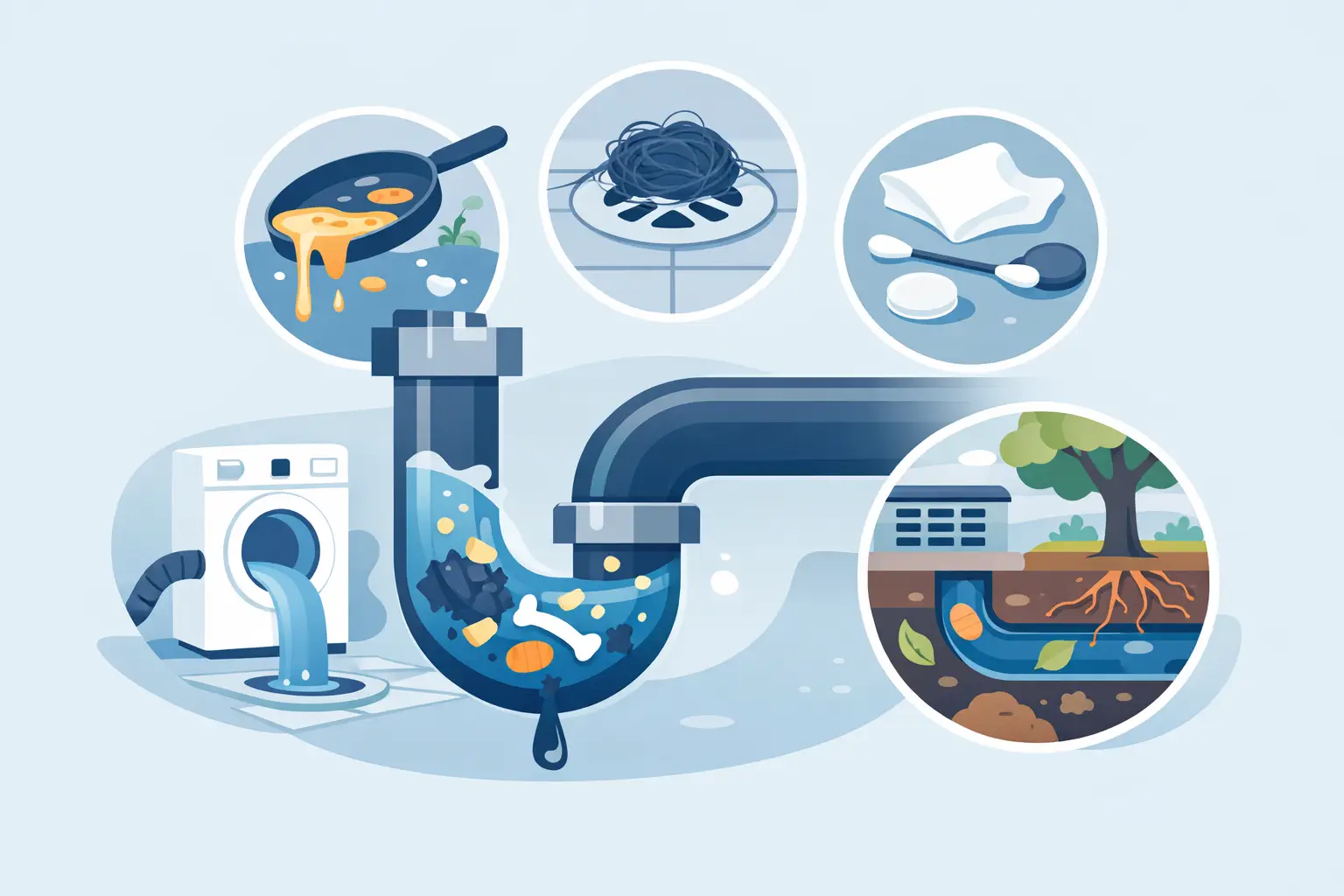
Grease and food buildup in kitchen lines
Grease is one of the most common reasons a kitchen sink keeps backing up. Cooking oil, bacon grease, butter, sauces, and fat may go down the drain as liquids, but they cool and harden inside the pipe. Over time, that sticky layer catches food particles, soap residue, and other debris until water has very little room to pass.
Garbage disposals can add to the issue. They are useful for small scraps, but they are not meant for coffee grounds, eggshells, fibrous vegetables, rice, pasta, or large amounts of food. Those materials can settle in bends and joints, especially in older drain lines.
A quick chemical treatment may poke a small opening through the buildup, but it rarely cleans the pipe wall. That is why the sink may drain better for a short time, then slow down again. Professional drain cleaning or hydro-jetting can remove the grease coating instead of just creating a narrow path through it.
Soap scum, hair, and products in bathroom drains
Bathroom sink, tub, and shower backups often start with hair. Hair wraps around the drain stopper or catches inside the pipe, where it combines with soap scum, toothpaste, shaving products, and skin oils. The clog grows gradually, so many people do not notice it until water is pooling around their feet or the sink takes several minutes to drain.
Hard water can make this worse. Mineral deposits leave a rough surface inside the pipe, giving soap and hair more places to hang up. A basic drain snake can remove some hair near the opening, but it may not clear the full length of the buildup.
If multiple bathroom fixtures are slow at the same time, the problem may not be limited to one sink or shower. It could be farther down the branch line or in the main sewer line.
Flushing items that do not break down
Toilets are designed for human waste and toilet paper. Wipes labeled “flushable,” paper towels, feminine hygiene products, cotton swabs, dental floss, and similar items do not break down the same way toilet paper does. They can snag inside the line, catch other waste, and form a blockage that keeps coming back.
A toilet that overflows once after a child uses too much paper can be a one-time problem. But repeated toilet backups, gurgling in nearby drains, or water rising in a tub when the toilet flushes can point to a deeper restriction. In that situation, repeatedly plunging the toilet may not reach the actual blockage.
Tree roots entering the sewer line
Tree roots naturally seek moisture, and even a small crack or loose joint in a sewer line can attract them. Once roots enter, they spread and create a net that catches toilet paper, grease, and waste. The line may still drain between backups, which can make the issue easy to ignore at first.
Root problems are common in properties with mature trees and older sewer lines. They can also affect commercial properties where landscaping sits close to the building sewer. Cutting roots out can restore flow, but roots may return if the damaged pipe section is not addressed. The right long-term option depends on the condition of the line, how often the roots return, and whether a repair is needed.
Cracked, offset, or sagging sewer pipes
Not every recurring backup is caused by something put down the drain. Sewer pipes can crack with age, shift at their joints, collapse, or develop a low area called a belly. In a sagging section, waste and water collect instead of moving downhill as they should. The material may eventually pass, but solids are likely to settle again and create another backup.
Older clay, cast-iron, and Orangeburg-style sewer lines can be more vulnerable to deterioration. Soil movement, heavy traffic above the line, and freezing conditions can also contribute to pipe damage. Cleaning may improve the immediate problem, but a damaged line needs an accurate diagnosis before anyone can recommend a lasting repair.
A sewer camera inspection is especially useful here. It shows what is inside the pipe and where the issue is located, helping avoid guesswork and unnecessary work.
Main sewer line blockages
When one fixture clogs, the issue is often in that fixture’s drain line. When several fixtures back up, especially the lowest drains in the building, the main sewer line is a likely suspect. For example, flushing a toilet may cause water to rise in a basement floor drain, shower, or tub. Running the washing machine may also trigger a backup because it sends a large volume of water into the system quickly.
Mainline blockages can be caused by roots, grease, wipes, pipe damage, or heavy buildup over time. This is not a problem to put off. Continued use of water can force sewage back into the home or business.
Improper drain slope or poor past repairs
Drain pipes need the right slope to carry water and waste away. If a line is too flat, solids can settle. If it is too steep, water may run ahead while solids are left behind. Poorly fitted connections, undersized piping, or an old repair that has shifted can create repeat trouble in the same area.
This cause is less obvious because the pipe may look fine from above. A camera inspection and professional evaluation can reveal whether the system is draining as designed or whether a correction is needed.
Why Quick Fixes Often Do Not Last
A plunger is a good first step for a minor toilet or sink clog. A hand snake may also help with hair near a shower drain. But repeated use of harsh chemical drain cleaners can damage certain pipes, create fumes, and leave the main buildup behind. They can also make the work more hazardous if a technician later needs to open or service the line.
The best cleaning method depends on what is blocking the pipe. Snaking can break through a compact clog or remove roots. Hydro-jetting uses high-pressure water to clean heavy grease, sludge, and buildup from pipe walls without relying on harsh chemicals. However, hydro-jetting is not automatically right for every line. Older or damaged pipes should be inspected first so the cleaning approach matches the pipe condition.
Signs It Is Time for a Professional Inspection
Do not wait for a full sewage backup if the same drain keeps slowing down. Repeated gurgling, foul odors, water backing up into another fixture, frequent plunging, and multiple slow drains all deserve attention. These signs usually mean the blockage is beyond the drain opening.
For property managers and business owners, fast action matters even more. A recurring restroom or kitchen backup can disrupt tenants, customers, employees, and daily operations. Clearing the line thoroughly and identifying the cause can prevent repeat calls and unexpected downtime.
Drain Pros LLC helps Burlington-area homes and businesses get to the source of stubborn drain and sewer issues with professional cleaning, hydro-jetting, and sewer camera inspections. A clear diagnosis helps you pay for the fix that makes sense, not another temporary workaround.
If a drain keeps backing up, treat it as a warning instead of a routine inconvenience. Stop sending more water down the line, avoid chemical cleaners, and have the system checked before a slow drain turns into a messy emergency.