Need a main sewer line cleared in Oquawka? Call Drain Pros LLC at 319-380-4712 for drain clearing, hydro-jetting, root removal, and sewer camera inspection.
A slow toilet is frustrating. A toilet that bubbles when the washing machine drains, water rising in a basement floor drain, or sewage backing up into a tub is a different kind of problem. Those signs often point to the main sewer line, and they call for professional main sewer line cleaning in Oquawka, IL before a small blockage turns into a messy cleanup.
Your main line carries wastewater from every drain in the building to the sewer system or septic tank. When that line is restricted, the problem rarely stays in one room. Getting it cleared quickly protects your home, business, tenants, and peace of mind.
Signs Your Main Sewer Line Needs Attention
A clog in one sink is usually a local drain issue. A main line blockage affects several fixtures, especially fixtures on the lowest level of the property. The water may seem to drain eventually, but that does not mean the line is clear. It can mean wastewater is pushing past a partial blockage that is getting worse.
Watch for repeated slow drains throughout the building, gurgling from toilets or drains, unpleasant sewer odors, and water coming up in a shower, tub, or floor drain. You may also notice that flushing a toilet causes water to move in a nearby sink or tub. These are common clues that the blockage is farther down the system.
For Oquawka homeowners, older sewer pipes can be part of the picture. Tree roots look for moisture and can work their way into small cracks or loose pipe joints. Over time, roots catch paper and debris until flow is restricted. Grease, wipes, hygiene products, and heavy buildup can create similar problems in both older and newer lines.
Businesses have their own risks. A restaurant, bar, office, rental property, or small shop may have frequent use from customers and staff. Grease, paper products, and high traffic put more demand on the drain system. Waiting until sewage backs up can mean interrupted operations and an unpleasant experience for everyone on site.
Why Main Sewer Line Cleaning Is Different
The main sewer line is not a job for a bottle of chemical cleaner from the store. Harsh chemicals can damage certain pipes, create safety issues, and do little for a blockage located deep in the line. They are especially unreliable against tree roots, packed debris, or thick grease buildup.
A professional drain specialist starts by identifying what the system is doing and where the restriction is likely located. Depending on the situation, the right solution may be cable cleaning, hydro-jetting, or a sewer camera inspection. The best method depends on the pipe material, the age and condition of the line, the type of blockage, and whether the issue is recurring.
Cable cleaning uses a specialized machine and cutting head to break through many common blockages. It is often effective when paper, roots, or compacted debris is stopping flow. The goal is to restore drainage without guessing or taking apart more of the system than necessary.
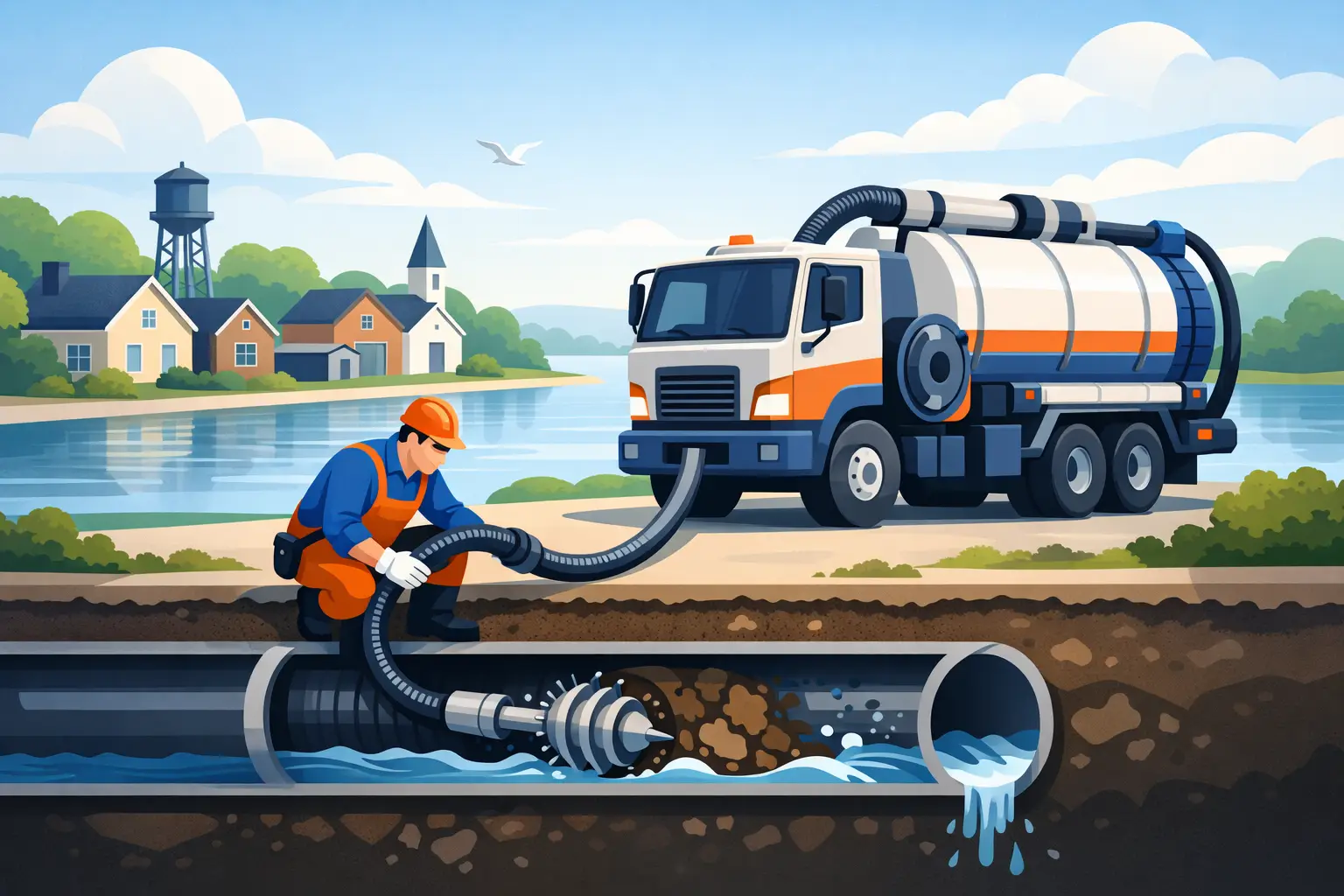
Hydro-jetting uses controlled, high-pressure water to scour buildup from the inside of the pipe. It can be an excellent option for grease, sludge, scale, and recurring buildup because it cleans more of the pipe wall than simply opening a small path through the clog. Hydro-jetting also avoids harsh chemical cleaners. However, a severely damaged, collapsed, or fragile pipe may need a camera inspection first to make sure high-pressure cleaning is appropriate.
When a Sewer Camera Inspection Makes Sense
If the same main line clog keeps returning, clearing it alone may not answer the real question: why does it keep coming back? A sewer camera inspection allows a technician to see inside the line and locate root intrusion, broken pipe sections, separated joints, heavy buildup, or a sagging section of pipe where waste collects.
A camera inspection is particularly useful before purchasing a property, after repeated backups, or when a line was cleared but drainage still seems unreliable. It gives you a clearer basis for deciding whether cleaning is enough or whether a repair should be considered.
Not every backup means the pipe needs replacement. That is worth saying plainly. A lot of main line problems are caused by cleanable buildup or roots and can be resolved without excavation. On the other hand, if the camera shows a collapsed section or major structural damage, repeatedly cleaning the line may only buy time. A straightforward explanation of the findings helps you make the right call for your property and budget.
What to Do When You Suspect a Main Line Clog
If sewage or dirty water is backing up, stop using water throughout the building as much as possible. Do not keep flushing toilets, run the dishwasher, start laundry, or take a shower to see whether the line will clear itself. Every gallon sent down the drain can add to the backup.
Keep children and pets away from the affected area. Wastewater can carry bacteria, and standing water can damage flooring, walls, and belongings quickly. If the backup is near electrical outlets or equipment, avoid the area until it can be assessed safely.
Then call a drain and sewer specialist. Give a clear description of what happened, which fixtures are affected, and whether the problem has happened before. That information helps the technician arrive prepared and helps narrow down whether the issue is likely a main line blockage, a local drain clog, or something outside the building.
Drain Pros LLC focuses on the work that matters when drains stop moving: professional drain cleaning, sewer clearing, hydro-jetting, and sewer line inspections. Local customers need an honest answer and a dependable fix, not a confusing sales pitch. Fast response, clear communication, and no weekend up-charge help take some of the stress out of an already unpleasant problem.
Preventing the Next Sewer Line Backup
Some sewer line issues cannot be prevented completely, especially when aging pipe or tree roots are involved. Still, a few habits can reduce avoidable blockages. Keep wipes out of toilets, even products labeled flushable. Put cooking grease in a container for disposal instead of pouring it down the sink. Use drain strainers where food scraps, hair, or debris are common.
For homes with a history of roots or recurring backups, preventive cleaning can be a smart investment. The right schedule varies. A property with mature trees near the sewer route may benefit from more regular service, while a newer home with no prior problems may only need attention when warning signs appear. A camera inspection can help determine whether preventive maintenance makes sense.
Landlords and business owners should pay attention to patterns, too. Multiple tenant complaints about slow drains, recurring toilet issues, or odors can be early warnings. Addressing them before a full backup protects the property and avoids disruption for residents, employees, or customers.
A main sewer line rarely fails at a convenient time. If you are seeing multiple slow drains, gurgling fixtures, or water backing up at the lowest drain, treat it as a warning worth acting on. Getting the line inspected and professionally cleaned now can keep a hard day from becoming a much bigger mess.