A plunger can handle a simple toilet clog. A small drain snake can sometimes pull out hair near a bathroom sink. But when several fixtures drain slowly, wastewater backs up, or the same clog keeps returning, the problem may be farther down the line. This hydro jetting homeowner guide explains what professional hydro jetting does, when it makes sense, and when a camera inspection should come first.
Hydro jetting is not a stronger version of a store-bought drain cleaner. It is a professional drain and sewer cleaning method that uses controlled, high-pressure water to cut through buildup and flush it out of the pipe. Done correctly, it can restore flow without relying on harsh chemical products.
What Hydro Jetting Actually Cleans
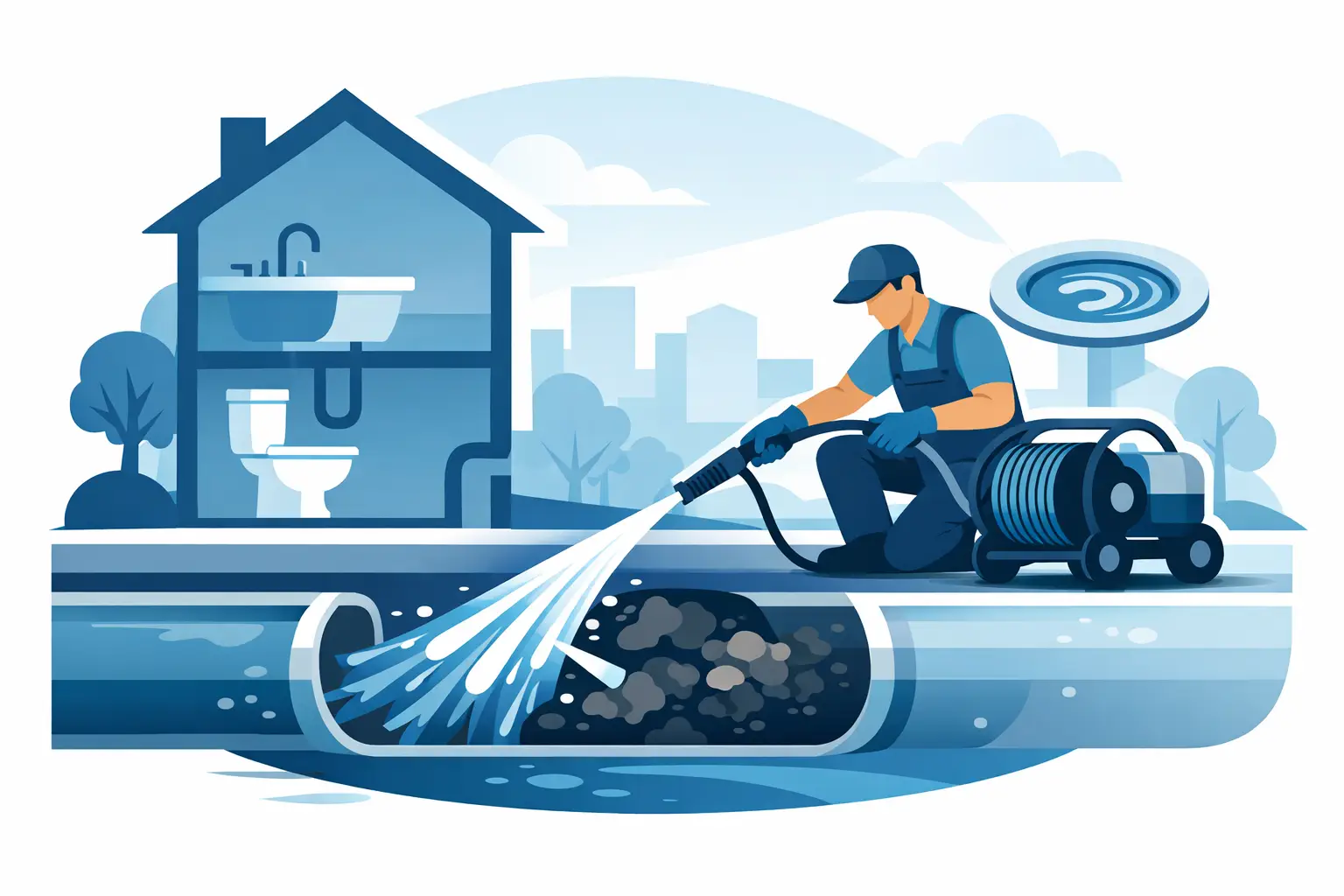
A hydro jetting machine sends a specialized hose into the drain or sewer line through a cleanout or access point. The hose has a nozzle that sprays water forward and backward. Forward jets help break through the blockage, while rear-facing jets pull the hose through the pipe and wash debris back toward the access point.
The goal is more than punching a small hole through a clog. Hydro jetting can clean grease, soap scum, sludge, scale, food waste, roots, and other material that sticks to pipe walls. That fuller cleaning is why it is often a good option for recurring sewer and drain problems.
A cable machine, often called a drain snake, still has its place. It can be the right first tool for a simple obstruction, especially when the issue is a localized clog. Hydro jetting is usually the better fit when buildup has coated the line or when a main sewer line needs a more complete cleaning.
Signs Your Home May Need Hydro Jetting
One slow sink does not automatically mean you need hydro jetting. The location and pattern of the problem matter. A clog limited to one bathroom sink may be hair and soap near that fixture. Problems affecting several drains are more likely to point to a larger blockage in a branch line or main sewer line.
Watch for warning signs such as repeated backups after prior drain cleaning, toilets that bubble when another fixture drains, water coming up in a tub or shower, kitchen drains that clog often, or sewage backing up near a basement floor drain. Bad odors around drains can also signal buildup sitting in the pipe.
For homeowners in Burlington and surrounding Southeast Iowa communities, tree roots are another common concern. Roots naturally seek moisture and can enter sewer lines through small openings, loose joints, or damaged sections. Hydro jetting can remove roots that have entered the line, but it cannot repair a cracked, collapsed, or separated pipe. If roots keep returning, an inspection helps determine whether the line needs repair rather than repeated cleaning alone.
When an Inspection Should Come First
High-pressure water is effective, but it is not a one-size-fits-all answer. Before jetting an older line or a line with a serious history of backups, a sewer camera inspection may be the smart first step.
A camera lets a drain specialist see what is inside the pipe and locate the issue. The blockage could be grease, roots, a foreign object, settled debris, a broken pipe, or a low spot where waste and water collect. Those problems do not all call for the same solution.
Inspection is especially valuable when a home has clay tile, Orangeburg, cast iron, or older sewer piping. Some older lines are still in usable condition and can benefit from careful cleaning. Others may be too deteriorated for aggressive cleaning. A professional should evaluate pipe condition, choose the correct water pressure and nozzle, and tell you plainly if hydro jetting is the right move.
That is also why homeowners should not rent a hydro jetter and try it themselves. These machines use serious pressure. Improper use can damage pipes, flood a property, force debris into the wrong area, or create an unsafe situation. Professional equipment matters, but trained operation and an accurate diagnosis matter just as much.
What to Expect During Professional Hydro Jetting
The process starts with questions about what you are seeing: which fixtures are affected, how long the issue has been happening, whether sewage has backed up, and whether the line has been cleaned before. A technician may test fixtures and identify the best access point before beginning work.
If inspection is needed, the camera is run through the line to check the blockage and pipe condition. Once hydro jetting is approved, the technician feeds the hose into the line and uses the appropriate nozzle and pressure for the material being removed. The water breaks up buildup and carries it through the pipe.
The exact time depends on the line length, access, the type of blockage, and the condition of the pipe. A straightforward cleaning may move quickly. A heavily blocked main line, root intrusion, or a system with limited access may take more time. The right company should explain what they found, what they cleaned, and whether they saw signs of a larger repair issue.
Hydro jetting uses water rather than corrosive chemical drain openers. That makes it a practical option for clearing many common types of buildup. Still, it is not magic. If a pipe has collapsed, shifted apart, or has major structural damage, water cleaning will not make that pipe reliable again.
How to Prevent Another Drain or Sewer Backup
After a thorough cleaning, a few everyday habits can help protect your lines. In the kitchen, keep grease, oils, coffee grounds, and food scraps out of the drain. Grease may go down warm as a liquid, but it cools and sticks to the pipe, collecting more debris over time.
In bathrooms, use drain screens where hair is a recurring problem and avoid flushing wipes, paper towels, hygiene products, or anything labeled “flushable.” Toilet paper and human waste are what the line is built to handle. Most other materials increase the chance of a clog.
If your property has mature trees near the sewer route, periodic inspection and cleaning can be less disruptive than waiting for a full backup. Landlords and property managers may also benefit from preventive service between tenant turnovers, particularly in buildings with older plumbing or a history of drain calls.
There is no fixed schedule that fits every property. A newer home with careful use may not need routine jetting for years. A restaurant, rental property, older home, or house with root-prone sewer lines may need more frequent maintenance. The best schedule is based on what the camera and service history show, not on a blanket recommendation.
Choosing the Right Help for a Tough Clog
When a drain problem is urgent, it is tempting to choose the fastest possible fix. Fast response matters, but so does getting a clear answer about the cause. Ask whether the technician recommends inspection, whether hydro jetting is appropriate for your pipe type, and what the service is expected to accomplish.
You should also know what pricing includes before work begins. A trustworthy drain specialist explains the issue in plain language and does not pressure you into work that your line does not need. For homeowners and businesses dealing with tough clogs across Burlington, West Burlington, Fort Madison, Mount Pleasant, Keokuk, and nearby communities, Drain Pros LLC focuses on practical drain and sewer solutions with clear communication and reliable results.
If water is backing up now, stop running faucets, showers, dishwashers, and washing machines until the line is checked. The sooner the real cause is identified, the better chance you have to clear the line before a manageable clog turns into a messy backup.