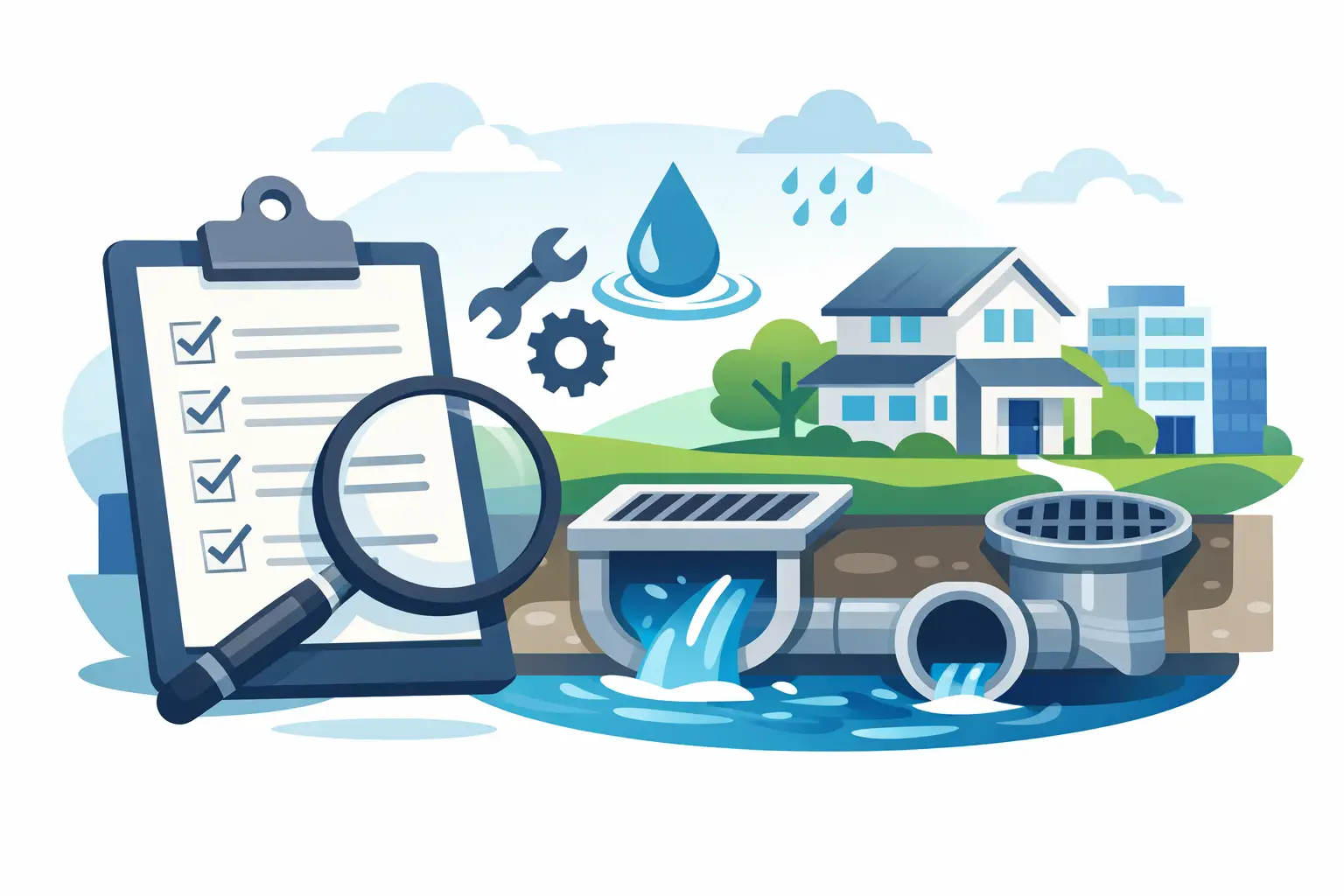
A slow kitchen sink is easy to ignore until it turns into a backup during dinner. A floor drain that gurgles may seem minor until heavy rain or a busy workday sends dirty water where it does not belong. This drainage maintenance checklist helps homeowners, landlords, and business owners catch common trouble early, protect their sewer lines, and know when a clog needs professional attention.
The goal is not to take apart pipes or pour harsh chemicals down every drain. Good maintenance is mostly about noticing changes, keeping the wrong materials out of the system, and scheduling service before a small restriction becomes a costly mess.
Drainage Maintenance Checklist: Monthly Tasks
Walk through the property once a month and test every drain that gets regular use. Turn on the water at sinks, tubs, showers, utility basins, and commercial hand sinks. Water should drain freely without pooling, bubbling, or sewer-like odors.
Pay attention to the sounds as much as the speed. Gurgling can mean air is being forced around a developing blockage. If more than one fixture drains slowly, the issue may be farther down the line than a single sink trap.
Use this monthly check to stay ahead of buildup:
- Remove hair from shower, tub, and bathroom sink stoppers.
- Empty and rinse drain strainers in kitchen and utility sinks.
- Run water in little-used sinks, floor drains, and basement fixtures to refill their traps and reduce sewer odors.
- Check under sinks and around toilets for moisture, staining, or a musty smell.
- Look at outdoor drain covers and remove leaves, grass clippings, mulch, and trash.
- Watch for water collecting near cleanouts, foundation walls, parking areas, or walkways.
For properties with a garbage disposal, run cold water before, during, and after use. The disposal is not a place for grease, coffee grounds, eggshells, fibrous vegetables, or large amounts of food waste. Those materials can stick in the drain line and create a stubborn clog farther down.
What Should Never Go Down a Drain
Most preventable drain calls start with items that should have gone in the trash. Toilets are designed for human waste and toilet paper only. Even products labeled flushable can catch on rough pipe surfaces, roots, or existing buildup.
Keep wipes, paper towels, feminine hygiene products, dental floss, cotton swabs, diapers, and cleaning rags out of toilets. In kitchens, let cooking grease cool in a container and throw it away rather than rinsing it down with hot water. Hot water may move grease temporarily, but it cools as it travels and can coat the pipe like wax.
For small businesses, make sure employees know the rules. A break-room sink, restaurant prep sink, salon basin, or shop floor drain can be affected by daily habits. The right routine depends on the business. Food service locations often need grease management and more frequent cleaning, while rental properties benefit from clear tenant reminders about wipes and grease.
Seasonal Checks That Protect Your Sewer Line
Southeast Iowa weather gives drainage systems a workout. Spring rain, falling leaves, freezing temperatures, and tree growth all create different problems. A quick seasonal inspection helps prevent surprises.
Spring and early summer
After snowmelt and heavy rain, check low areas of the yard, exterior drains, and basement floor drains. Standing water near the foundation may point to a grading or surface drainage issue, while water coming up through a floor drain can indicate a sewer restriction. Those are not the same problem, and treating one like the other wastes time.
Spring is also a smart time to consider a sewer camera inspection if the property has mature trees, an older sewer line, or a history of backups. Tree roots naturally seek water. Tiny openings in a sewer pipe can give roots a path inside, where they trap paper and debris until the line stops flowing.
Fall
Clear leaves from gutters, downspout exits, storm drains, and yard drains before they pack down. If your downspouts connect to underground piping, watch for overflowing water during rain. That can signal a blocked extension or drainage pipe.
For buildings with floor drains or outdoor drain inlets, clear visible debris before winter. Frozen leaves and sediment are much harder to remove after temperatures drop.
Winter
Protect exposed pipes from freezing, especially in garages, crawl spaces, vacant units, and unheated utility rooms. If a drain has been slow for weeks, do not wait for a holiday gathering or a freezing weekend to deal with it. A restricted line is more likely to become a full blockage when the system is under heavy use.
Warning Signs That Belong on Your Checklist
A single slow bathroom sink may be a local hair clog. Several fixtures acting up at once is a different situation. The following signs deserve a prompt call to a drain and sewer specialist:
- Water backs up in a tub or shower when a toilet is flushed.
- Toilets bubble, gurgle, or need repeated plunging.
- Wastewater comes up through a basement floor drain.
- A cleanout is leaking or overflowing outside.
- Drains improve briefly, then slow down again within days or weeks.
- You smell sewage indoors, near the basement, or around the yard.
- There is a wet, unusually green, or sunken spot over the sewer line.
Do not keep adding chemical drain cleaners when these signs appear. Strong chemicals may not reach the real blockage, can be hard on certain pipes, and create a safety issue for anyone who later works on the line. A plunger can help with a simple fixture clog, but repeated plunging without results is a sign to stop and get the line diagnosed.
When Professional Cleaning Makes Sense
Professional drain cleaning is not only for emergencies. Preventive service makes sense when a drain has a known pattern of slowing down, a building has high daily use, or a sewer line has recurring roots or buildup.
A sewer camera inspection shows what is actually inside the pipe. It can help separate grease buildup from roots, a broken pipe, a sagging line, or an object caught in the system. That matters because the right fix depends on the cause. Snaking may open a path through a basic clog, while hydro-jetting can thoroughly clean grease, scale, sludge, and roots from suitable lines using high-pressure water.
Hydro-jetting is especially useful for commercial kitchens, rental properties with recurring backups, and older lines that collect buildup. It is not automatically the best choice for every pipe. A professional should assess the line first, particularly if it is damaged, very old, or made from materials that need careful handling.
At Drain Pros LLC, the focus is straightforward: identify the blockage, clear the line with the right equipment, and explain what was found in plain language. A clear answer is better than guessing at a problem hidden underground.
Keep a Simple Drain Service Record
For a home, a note on your phone can be enough. For rentals and businesses, keep a simple record of slow drains, backups, repairs, camera findings, and cleaning dates. Include which fixture had the problem and what was happening at the time.
This record helps spot patterns. If the same restroom backs up every few months, if the kitchen line slows after busy weekends, or if roots return in the same season, that history helps a technician recommend a practical maintenance schedule. It also helps property managers communicate clearly with tenants and owners.
A drain system usually gives warning before it fails completely. Treat the first gurgle, slow drain, or bad odor as useful information. A quick check today can keep a routine day from ending with water on the floor tomorrow.