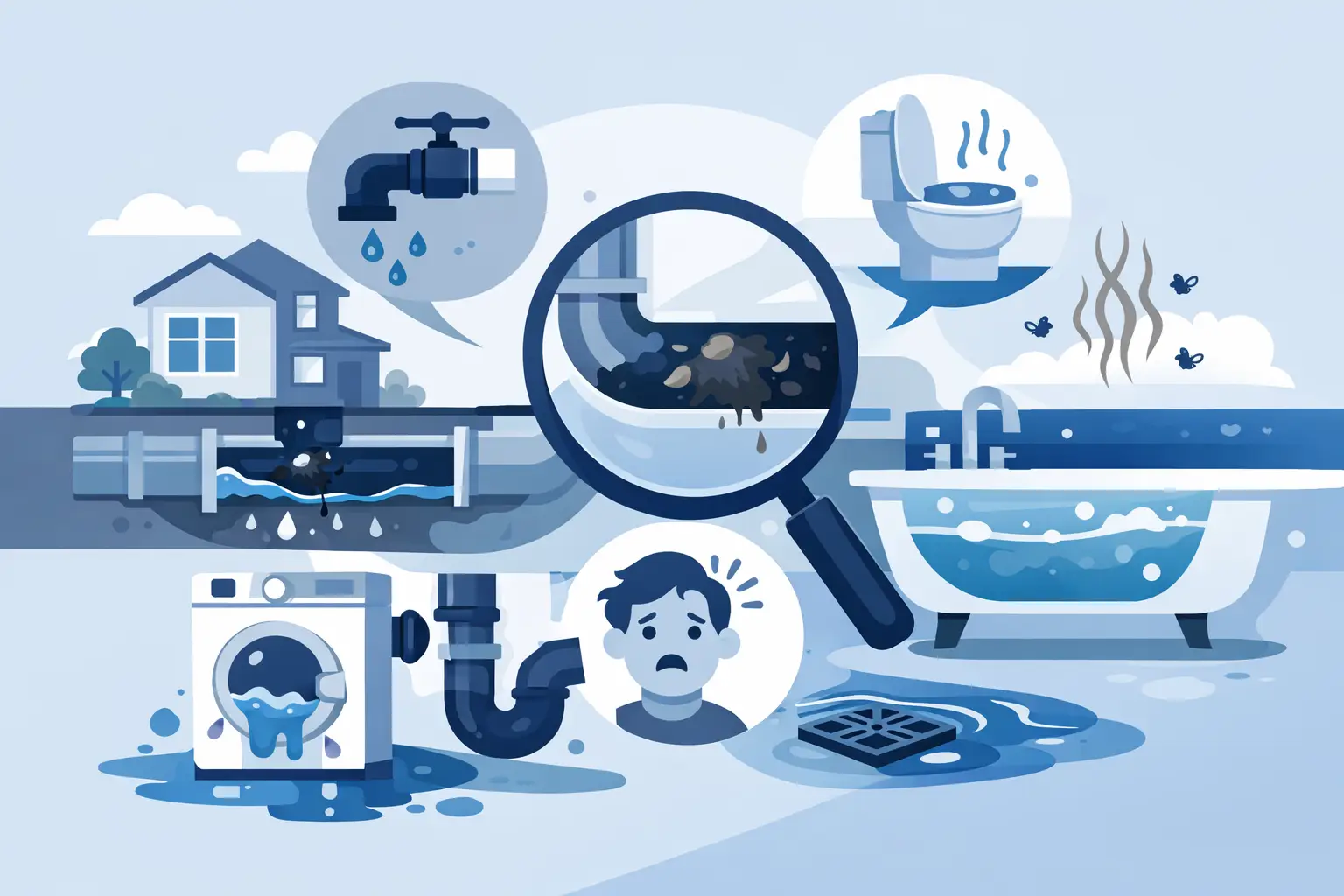
If your toilet bubbles when the shower runs, or the basement drain starts holding water for no clear reason, those are not random plumbing quirks. They are often main line drain clog symptoms, and they usually mean the problem is bigger than a single sink or toilet. When the main sewer line starts to clog, every drain in the building can be affected.
That is why this issue gets expensive fast. A slow kitchen drain is annoying. A blocked main line can send wastewater back into tubs, floor drains, and lower-level fixtures. For homeowners, landlords, and business owners in Southeast Iowa, catching the warning signs early can mean the difference between a straightforward cleaning and a messy cleanup.
What a main line clog actually means
Your main sewer line is the pipe that carries wastewater from the whole property out to the municipal sewer or septic connection. Every sink, toilet, shower, floor drain, and washing machine eventually feeds into that line. When a clog forms there, the entire system loses its ability to move water out the way it should.
Some clogs build slowly from grease, wipes, sludge, or scale inside the pipe. Others come from tree roots, a sag in the line, or broken pipe sections that catch debris over time. The cause matters because a quick snaking may help in one case, while another calls for a camera inspection and hydro-jetting.
9 main line drain clog symptoms to watch
1. More than one drain is backing up
This is one of the clearest warning signs. If the kitchen sink is slow, that may be a local clog. If the kitchen sink, bathtub, and toilet are all acting up around the same time, the problem is likely farther down the system.
The key is pattern. Main line issues usually show up across multiple fixtures, especially on the lowest level of the property.
2. Toilets gurgle or bubble when water drains elsewhere
If you flush a toilet and hear odd gurgling, or if the toilet water moves when someone uses a sink or shower, pressure is building in the line. Air has to go somewhere when wastewater cannot move freely, and you may hear it or see it in the bowl.
This symptom is easy to ignore at first because the toilet may still flush. But bubbling toilets often show up before a full backup.
3. Water backs up in the tub or shower when the toilet flushes
This is a classic main line clue. The tub or shower drain is lower than many other fixtures, so when wastewater hits a blockage, it can come up there first.
If flushing a toilet causes water to rise in a shower drain, do not keep testing it. Continued use can turn a warning sign into a full sewage backup.
4. Floor drains start holding water
Basement floor drains are often the first place a main sewer problem becomes visible. If water collects around a floor drain, drains slowly, or comes up after running laundry or using other fixtures, that points to trouble in the main line.
For commercial spaces, this can be especially disruptive because floor drains are often tied to high-use areas. Even a small amount of backup can create a cleanup issue and a health concern.
5. Slow drains all over the property
One slow sink does not automatically mean a main line clog. But if everything seems a little off at once, that is different. You may notice the bathroom sink draining slower, the toilet flushing weaker, and the shower taking longer to clear.
This is how many main line problems start. The line is not fully blocked yet, but it is restricted enough to affect flow throughout the system.
6. Sewage smells indoors or near the cleanout
Bad drain odor from one sink can come from a dry trap or local buildup. A sewage smell affecting multiple rooms, the basement, or the yard near the sewer cleanout can suggest wastewater is not moving properly through the main line.
Odor alone does not confirm the cause. Still, when sewer smell shows up along with slow drains or bubbling toilets, it should move up your priority list.
7. The lowest fixtures have the worst problems
Main line clogs usually hit the lowest openings first because that is where backed-up wastewater has the easiest path to escape. That means basement showers, floor drains, lower-level toilets, or first-floor tubs may show symptoms before upstairs fixtures do.
If the upstairs bathroom seems mostly fine but the basement bathroom is backing up, do not assume the issue is limited to that room. It may be the early stage of a larger blockage.
8. Problems get worse after running a lot of water
A partially blocked main line may handle small amounts of water, then struggle when you run a washing machine, take a long shower, or drain a full sink. If symptoms show up during heavy water use, that is a strong sign the line has limited capacity.
This is one reason some people miss the issue at first. The drains seem okay until the system is put under normal daily demand.
9. The issue keeps coming back
Recurring drain trouble is a red flag. If you plunge a toilet, use a store-bought drain cleaner, or clear one fixture, but the same symptoms keep returning, there may be a deeper blockage in the main line.
Temporary improvement does not mean the problem is solved. In many cases, debris was loosened but not fully removed, or the real cause was never addressed.
Main line drain clog symptoms versus a local drain clog
This is where many property owners lose time. A local clog usually affects one fixture or one small section of the system. A main line clog affects multiple drains, often with strange interactions between them.
For example, a sink that drains slowly by itself may just need that branch line cleaned. But if flushing a toilet affects the shower, or laundry water shows up in a floor drain, that points to the main sewer line. The difference matters because the fix, tools, and urgency level are not the same.
What causes these symptoms
Grease buildup is common in homes and food-service spaces. Flushable wipes are another major issue because they do not break down the way people expect. Tree roots are a frequent cause in older sewer lines, especially in established neighborhoods where roots naturally seek moisture.
Then there is pipe condition. Older clay, cast iron, or damaged sewer lines can catch debris more easily. In those cases, cleaning helps, but a camera inspection often tells the real story. You want to know whether the problem is simple buildup or a structural issue that will keep causing backups.
What not to do when you notice the signs
Do not keep flushing toilets or running water to test whether it clears. That can push more wastewater back into the house. Do not rely on chemical drain cleaners for a suspected main line issue either. They usually do little for a sewer blockage and can create extra problems for pipes and cleanup.
If you can, stop using water in the building until the line is checked. That includes laundry, dishwashing, and long showers. The less water entering the system, the lower the chance of a bigger backup.
When it is time to call a drain specialist
If you are seeing more than one of these main line drain clog symptoms, it is time to get the line professionally inspected and cleaned. Fast action matters most when you have sewage smell, water coming up in low drains, or repeated backups.
A professional can clear the blockage with the right equipment, then determine whether the line needs follow-up work. In some cases, a cable machine is enough. In others, hydro-jetting is the better option because it clears heavy buildup off the pipe walls instead of just punching a hole through the clog. If roots or pipe damage are involved, a sewer camera inspection helps confirm exactly what is happening underground.
For property owners in Burlington, West Burlington, Fort Madison, Mount Pleasant, Keokuk, and nearby communities, working with a local drain specialist usually means faster diagnosis and less guesswork. Drain Pros LLC focuses on drain and sewer problems every day, which matters when the issue is urgent and you want a straight answer.
A smart move before a backup happens
The best time to deal with a main line problem is before wastewater ends up on the floor. If your drains have been acting strange, trust the pattern. Multiple slow drains, bubbling toilets, and water showing up where it should not are your system asking for help. Catch it early, and you usually have more options, less damage, and a much easier day ahead.