
A slow floor drain usually starts as a small annoyance – a little standing water near the water heater, a musty smell in the basement, or mop water that takes too long to disappear. Then one day it stops draining altogether. If you’re wondering how to clear a floor drain without making the mess worse, the good news is that many clogs near the surface can be handled with a few basic tools and a careful approach.
Floor drains are common in basements, laundry rooms, garages, utility rooms, and some commercial spaces. They are built to carry away water before it becomes a bigger problem, so when they clog, the risk is more than inconvenience. Backups can lead to odors, slippery floors, water damage, and in some cases a sign of a larger sewer issue.
How to clear a floor drain step by step
Start by looking at what kind of blockage you may be dealing with. Floor drains often collect dirt, lint, pet hair, soap residue, grease, and small debris that wash down over time. In basements and utility rooms, mud and sediment are also common. If the drain has been slow for a while, the clog may be close to the top. If it backed up suddenly, the problem could be deeper in the line.
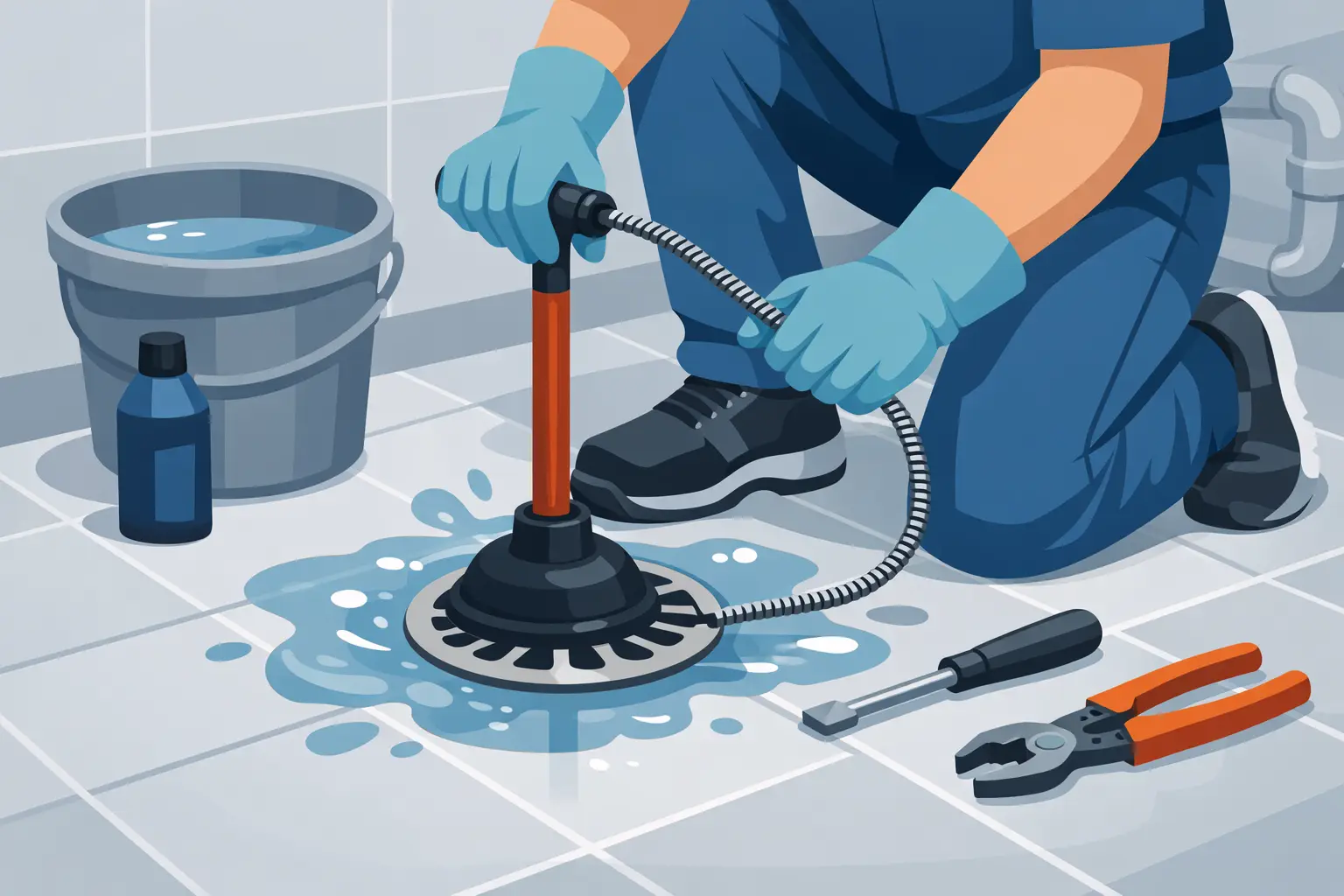
Before you begin, put on rubber gloves and clear the area around the drain. If there is standing water, remove as much as you can with a cup, small bucket, or wet vacuum. That gives you a clearer look inside and makes the cleanup easier.
Next, remove the drain cover. Some covers lift straight off, while others are secured with screws. Once it’s open, use a flashlight to inspect the drain. Many floor drains have visible debris packed just below the grate. Pull out whatever you can by hand or with needle-nose pliers. It is not glamorous work, but removing that first layer often makes a bigger difference than people expect.
After that, clean the drain opening with hot water and dish soap. Not boiling water if you are unsure about the pipe condition, but hot water from the tap can help loosen grime. If the clog is minor, this may be enough to get things moving again.
Use a drain snake before you reach for chemicals
If the water still drains slowly, a small hand auger or drain snake is usually the next best move. Feed the cable into the floor drain slowly and turn the handle as you go. When you hit resistance, keep steady pressure and work through the clog instead of forcing it. Pull the cable back out, clean off the debris, and repeat if needed.
This method works well for hair, lint, sludge, and compacted buildup a few feet down the line. It is also safer than pouring harsh drain cleaner into a floor drain. Chemical cleaners can damage older pipes, create fumes in enclosed spaces, and still fail if the clog is dense or caused by roots, scale, or heavy buildup farther down.
If you do use any product, read the label carefully and never mix cleaners. But in most cases, mechanical clearing is the better first step.
When a plunger can help
A plunger is not just for toilets. If there is enough water to cover the drain opening, a standard cup plunger can sometimes loosen a floor drain clog. Seal the plunger over the drain and use short, firm strokes. This works best on soft blockages near the top of the pipe.
It will not do much for heavy sediment, deep obstructions, or a line that is backing up because of a sewer issue. Still, if the clog is light, it is worth trying before moving to stronger tools.
Don’t forget the floor drain trap
Many people clean the grate and stop there, but the trap below the floor drain can hold a lot of sludge. In some floor drains, you can remove a cleanout plug or access the trap area directly under the cover. If you can safely reach it, clear out any buildup and flush with hot water.
That trap is there for a reason. It holds water to block sewer gases from coming back into the building. If a floor drain is rarely used, the trap can dry out and allow odors even when there is no clog. In that case, pouring in a bucket of water may solve the smell. If the odor keeps coming back, the issue may be deeper in the line or tied to a venting problem.
Signs the clog is bigger than the floor drain
Sometimes learning how to clear a floor drain also means knowing when not to keep fighting it on your own. A floor drain can be the lowest opening in the system, which means it may be where a bigger blockage shows up first.
If you notice water backing up into the floor drain when you run a sink, flush a toilet, or do laundry, the problem may be in the main drain line. The same goes for multiple slow drains, gurgling sounds, sewage odors, or repeated backups after you clear the top of the drain. Those are signs of a system issue, not just a local clog.
Tree roots, grease buildup, collapsed piping, and heavy scale inside older sewer lines can all cause floor drain backups. In those cases, a basic snake may not reach the real blockage or may only poke a small hole through it. That can bring short-term relief, but the problem usually comes back.
When hydro-jetting makes sense
For stubborn buildup, hydro-jetting is often the right solution. It uses high-pressure water to scour the inside of the pipe and remove grease, sludge, soap residue, and other debris. It is especially useful when a line has recurring clogs and needs a more complete cleaning than a cable can provide.
It depends on the pipe condition, though. If a sewer line is damaged or badly deteriorated, the line should be inspected before high-pressure cleaning is used. That is why a camera inspection is often the smart next step when a floor drain keeps backing up.
Common mistakes to avoid
The biggest mistake is forcing tools into the line and damaging the pipe or pushing the clog farther down. Another common one is treating every floor drain clog like a simple hair blockage. Basement and utility room drains often collect heavier debris and may tie into a larger drain system issue.
It is also easy to ignore the early warning signs. A drain that is slow today can become a flooded floor tomorrow, especially during heavy water use. Waiting too long usually means more cleanup and a tougher job.
And while homemade mixtures get a lot of attention, they are not a fix for every clog. Baking soda and vinegar may freshen a mildly dirty drain, but they will not clear a packed line, roots, or a sewer blockage.
How to keep a floor drain from clogging again
A little routine maintenance goes a long way. Sweep up dirt and debris before washing down a floor. Keep lint, mop strings, grease, and construction debris out of the drain. In garages and work areas, be careful about sand, mud, and absorbent materials that settle and harden in the pipe.
Flushing the drain with water once in a while helps, especially in spaces where the drain is not used often. If your floor drain has had repeat problems, periodic professional cleaning may save you from a much bigger backup later.
For landlords, property managers, and small business owners, this matters even more. One clogged floor drain in a basement, restroom, utility room, or service area can affect tenants, customers, and daily operations fast.
When to call a drain specialist
If you have cleared visible debris, tried snaking the line, and the drain still backs up, it is time for professional help. The same is true if the clog returns quickly or if other drains in the building are acting up at the same time.
A drain specialist can determine whether the issue is isolated to the floor drain or tied to the main line. With the right equipment, they can inspect the pipe, break through heavy blockages, and clean the line more thoroughly than most DIY tools can manage. If you are in Burlington or nearby communities, Drain Pros LLC handles this kind of work every day with fast, straightforward service.
A floor drain is easy to ignore until it stops doing its job. Clear it early, be careful with what you put down it, and if the signs point to a bigger blockage, get it handled before a slow drain turns into a messy one.