A drain can seem fine one day and back up across the floor the next. That is why the choice between snaking vs hydro jetting matters. Both are professional drain-cleaning methods, but they solve different problems. A cable machine is often the right answer for a single clog. Hydro jetting is built for tougher buildup, recurring blockages, and sewer lines that need a more complete cleaning.
For homeowners, landlords, and business owners in Southeast Iowa and West-Central Illinois, the goal is not to choose the biggest machine. It is to clear the line safely, fix the cause when possible, and avoid another messy backup a few weeks later.
What a Drain Snake Does Best
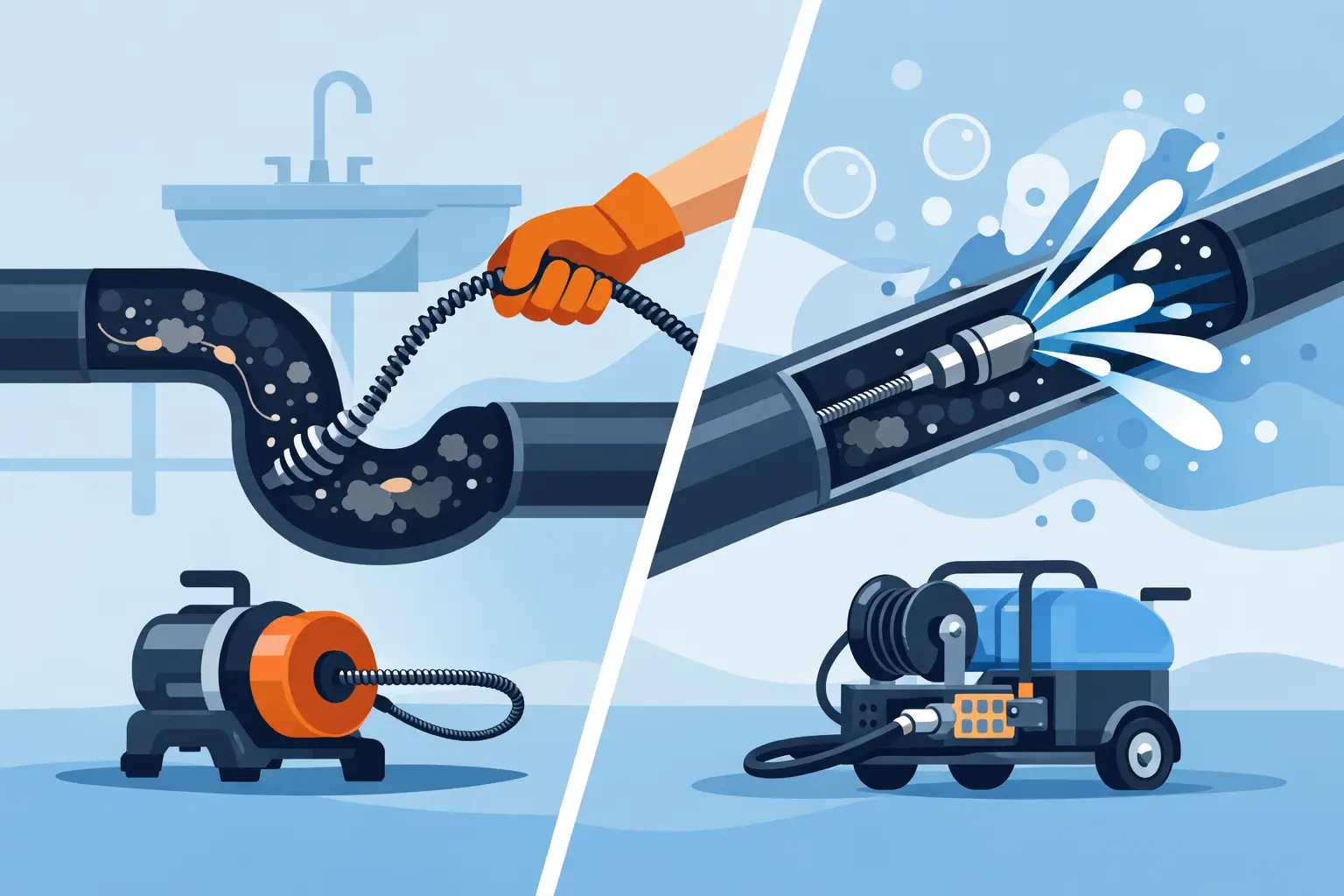
A drain snake, also called a cable machine or drain auger, uses a flexible rotating cable with a cutting or retrieving head. The technician feeds it into the drain line until it reaches the blockage. As the cable turns, it can break through, cut apart, or pull back the material stopping the flow.
Snaking is a practical first choice for many everyday clogs. It works well when the problem is localized, such as hair packed into a bathroom drain, a small object lodged in a trap, paper buildup in a toilet line, or a soft blockage in a branch drain. It can restore flow quickly without filling the pipe with harsh chemical cleaners.
The key limitation is that a snake opens a path through the clog. It does not always scrub the full inside wall of the pipe. Grease, soap residue, sludge, and scale can stay behind, creating a narrow opening that clogs again as more waste moves through the line.
That does not make snaking a temporary fix by default. For the right blockage, it is efficient and effective. It simply is not designed to clean every inch of a grease-coated or heavily scaled sewer line.
How Hydro Jetting Cleans a Sewer Line
Hydro jetting uses a specialized hose and nozzle to send highly pressurized water through the pipe. The nozzle directs water forward to break through the blockage and backward to wash debris toward the cleanout. Instead of only punching a hole through the clog, hydro jetting cleans much more of the pipe wall.
This method is especially useful for kitchen and restaurant grease, soap scum, roots, mineral deposits, sludge, and repeated main sewer backups. It is also a strong preventive maintenance option for properties with a history of buildup.
Hydro jetting uses water, not caustic drain chemicals. That makes it a cleaner approach for clearing buildup, but it is still powerful equipment that needs a trained operator. Pressure must be matched to the line, the condition of the pipe, and the blockage being addressed.
Before jetting an older or questionable sewer line, a camera inspection may be the smart move. If the pipe is collapsed, badly cracked, separated, or weakened by age, the real issue is the damaged line – not the material inside it. Cleaning cannot repair a structural failure.
Snaking vs Hydro Jetting: The Real Difference
The simplest way to compare snaking vs hydro jetting is this: snaking targets the obstruction, while hydro jetting targets the obstruction and the buildup around it.
A cable machine is usually faster and more cost-effective for a straightforward clog in a sink, toilet, tub, or short drain run. If water begins flowing normally and there is no history of backups, snaking may be all the line needs.
Hydro jetting makes more sense when the same drain or sewer line keeps acting up. A line that drains slowly for months, backs up during heavy use, or clogs again after it was recently snaked often has residue still attached to the pipe. Jetting can remove that residue more thoroughly and help restore the pipe’s carrying capacity.
Neither method should be selected by guesswork alone. The location of the clog, the type of property, the age of the line, and what is causing the blockage all matter. A professional diagnosis helps prevent paying for a service that is either too light for the problem or unnecessary for a simple clog.
When Snaking Is Usually the Better Choice
Snaking is often the right call when the clog is new, isolated, and clearly tied to one fixture. A bathroom sink full of hair, a toilet that will not clear, or a laundry drain slowed by lint may not need a full hydro-jetting service.
It can also be the better option when access is limited or when a technician needs to locate and break through a blockage before deciding whether additional cleaning is needed. In some cases, snaking is the first step that gets the line moving again so the condition of the system can be evaluated.
For rental properties and small businesses, this matters. Not every slow drain signals a major sewer problem. A focused repair can keep costs reasonable while getting the fixture back in service quickly.
When Hydro Jetting Is Worth It
Hydro jetting earns its place when the problem is bigger than one clump of debris. It is often recommended for lines with recurring clogs, heavy grease, root intrusion, or widespread buildup. Commercial kitchens, older homes, multi-unit buildings, and properties with long sewer runs can all benefit from a more thorough cleaning.
Watch for signs that a basic snake may not be enough:
- Multiple fixtures drain slowly or back up at the same time.
- The main sewer line has clogged more than once in the past year.
- Drains improve after cleaning but quickly become slow again.
- A kitchen line has years of grease and food residue inside it.
- A sewer camera shows roots, sludge, or buildup along the pipe walls.
A single symptom does not automatically mean hydro jetting is required. For example, a toilet backup can come from a blockage in the toilet itself, while a floor drain backing up when the washing machine empties can point to a larger branch-line issue. The value comes from matching the equipment to the evidence.
Older Pipes Need an Honest Assessment
Many Burlington-area homes and commercial buildings have older drain and sewer systems. Some may have cast iron, clay, or aging connections that deserve extra caution. Hydro jetting is safe and effective for many existing lines when handled correctly, but no responsible drain specialist should promise that every old pipe is a good candidate without evaluating it.
A sewer camera inspection can show whether the pipe is intact enough for cleaning and whether roots are entering through a joint or crack. If roots return because they have a path into the pipe, cleaning will restore flow, but the opening may eventually need repair. If a line has bellies, offsets, or collapse damage, jetting may clear debris while the underlying condition still needs attention.
That kind of straightforward answer is more useful than repeatedly treating the symptom. The best service is the one that explains what was found, what was cleared, and what should be watched going forward.
Avoid Chemical Drain Cleaners Before Calling
When a drain is slow, store-bought chemical cleaner can feel like the fastest option. Often, it is not. Those products may fail to reach a mainline blockage, do little against heavy grease or roots, and leave corrosive chemicals sitting in the pipe. They can also create a safety concern for anyone who later opens the line or works on the drain.
Skip the chemical mix-and-match approach. If a plunger will not solve the problem, stop using the fixture when possible and call for professional drain cleaning. For a sewer backup, avoid running water, flushing toilets, using the dishwasher, or starting laundry until the line has been checked.
Choose the Fix That Keeps Water Moving
A clear drain should stay clear. If you have one stubborn fixture, snaking may be the fast, affordable answer. If you are dealing with recurring backups, grease-heavy lines, or a main sewer that never seems fully clean, hydro jetting may save you from repeat service calls and repeat damage.
Drain Pros LLC can inspect the line, explain the options in plain language, and recommend the cleaning method that fits the problem. One call now can be a lot easier than cleaning up a backup later.