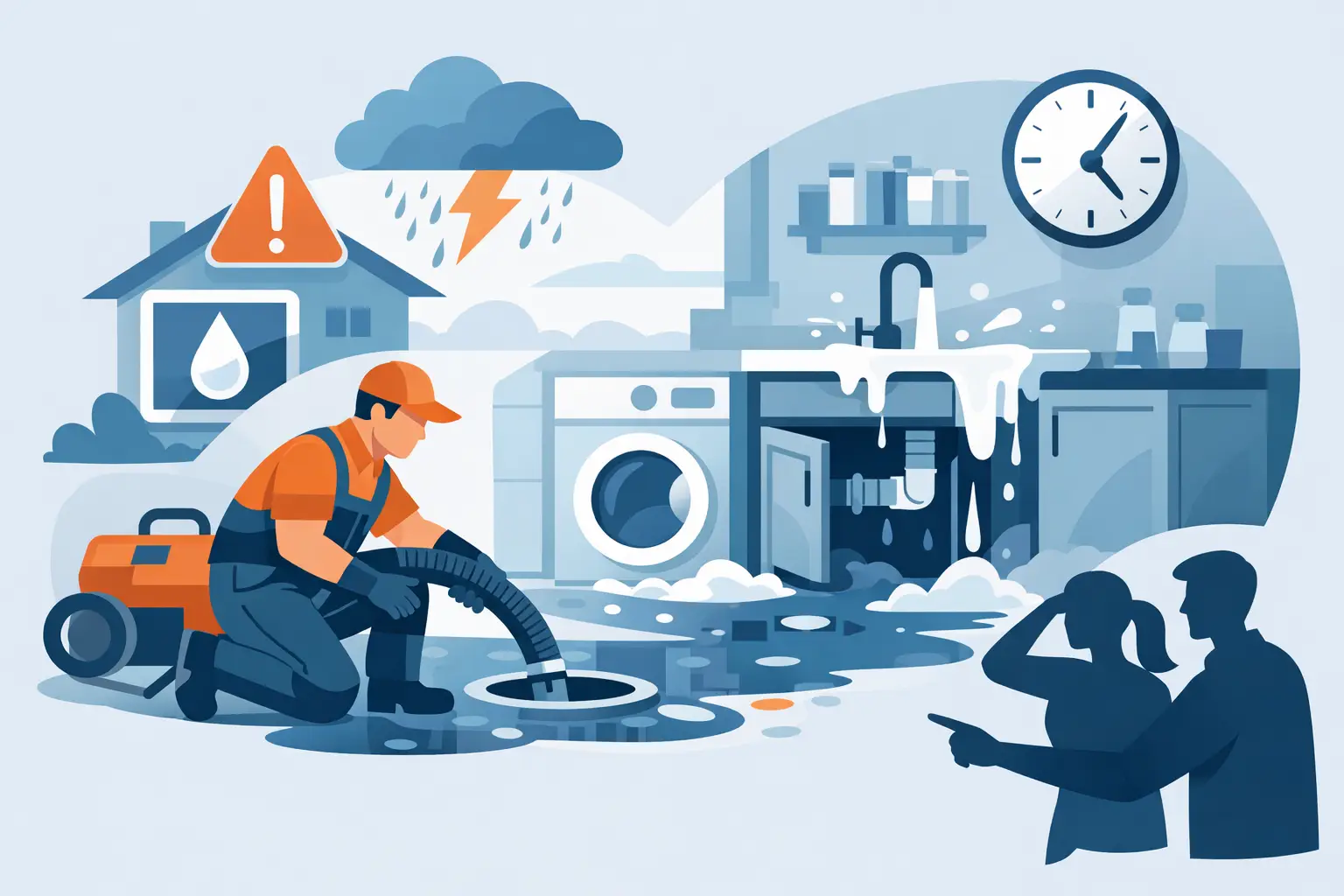
A sewer backup usually does not start with drama. It starts with a toilet that will not flush right, a floor drain that gurgles, or dirty water showing up where it should never be. When that happens, sewer backup service is not about convenience – it is about stopping damage, protecting your property, and getting the line cleared before the mess spreads.
If wastewater is coming up in a basement drain, shower, or lowest toilet in the building, time matters. The longer it sits, the more cleanup, odor, and contamination you are dealing with. For homeowners, landlords, and small business owners around Burlington and nearby communities, the first goal is simple: stop using water and get a drain and sewer specialist involved fast.
When you need sewer backup service
Not every slow drain is a sewer emergency. A single sink clog can often stay contained to that fixture. A sewer backup is different because it affects the main line that carries wastewater out of the property. When that line is blocked, water from toilets, tubs, sinks, floor drains, and appliances can start backing up through the lowest opening.
A few warning signs usually show up before the worst of it hits. You may hear bubbling in the toilet when a sink drains. You may notice more than one drain slowing down at the same time. Basement floor drains may smell stronger than usual or start holding water. In commercial spaces, restrooms may stop draining properly all at once. Those are strong signs the problem is in the main sewer line, not just one branch drain.
If sewage is actively coming back into the building, that is the point where waiting rarely helps. It usually gets worse with every flush, shower, dishwasher cycle, or load of laundry.
What to do first during a backup
The first step is to stop running water anywhere in the property. Do not flush toilets to test them. Do not run the washing machine. Do not try one more shower to see if it clears. Every bit of water has to go somewhere, and if the line is blocked, it can end up back inside.
Next, keep people and pets away from the affected area. Sewer water is not just unpleasant. It can carry bacteria and contaminants that make cleanup more serious than a typical water spill. If the backup is in a basement, utility room, or commercial restroom, limit access until the issue is diagnosed.
Then call for professional help. In a real backup, this is not the time for guesswork or repeated chemical treatments. An experienced drain and sewer specialist can identify whether the line is blocked by grease, wipes, roots, sludge, or a heavier obstruction farther down the system.
Why sewer backups happen
The most common cause is a blockage in the main sewer line. In residential properties, that may be a buildup of grease, paper products, wipes, or years of debris catching inside the pipe. In older lines, tree roots are a major problem. Roots find small openings, grow into the line, and start trapping waste until flow slows down or stops completely.
Commercial properties often deal with a different version of the same problem. Restrooms get heavy use, and kitchens or utility drains can send more solids and grease into the system than the line can handle over time. One busy day can push a partially blocked sewer over the edge.
There are also cases where the issue is not just a clog. A damaged, shifted, or collapsed sewer line can create repeat backups that keep coming back after temporary clearing. That is why the best sewer backup service does not stop at punching a hole through the blockage and leaving. It should include figuring out why the backup happened in the first place.
What a drain specialist will typically do
The right response depends on the severity and cause of the backup. In some cases, a mainline sewer machine can break through the obstruction and restore immediate flow. That is often the fastest first move when wastewater is already inside the property and the line needs to open now.
But clearing a path is not always the whole job. If the line is packed with grease, sludge, or root intrusion, hydro-jetting may be the better fix. High-pressure water cleaning removes buildup from the pipe walls instead of just creating a small opening through the middle. That can make a big difference in how long the line stays clear.
A sewer camera inspection is also valuable, especially if the property has had repeat issues. It shows what is really happening inside the line. If roots are heavy, if the pipe is offset, or if there is a damaged section, a camera helps confirm the problem instead of leaving you to hope it was solved.
For many property owners, that is the difference between a quick emergency response and a lasting repair plan. You need the line flowing again fast, but you also need to know whether you are dealing with a one-time blockage or an ongoing sewer issue.
Emergency sewer backup service for homes and businesses
Homeowners usually feel the stress of a backup right away because the house can become hard to use fast. One blocked main line can affect every bathroom, the laundry, and lower-level drains. If the backup is in a finished basement, the urgency goes up even more because flooring, drywall, stored items, and furniture can all be affected.
For landlords and property managers, the pressure is different but just as real. You are balancing tenant safety, property damage, and the need to restore service quickly. Delays can turn one drain problem into complaints, cleanup costs, and damage claims.
Small businesses have even less room for downtime. A sewer backup in a restroom or utility area can interrupt operations, create health concerns, and push customers away. Fast service matters, but so does choosing someone equipped to handle commercial drain loads and mainline issues without wasting time.
That is where a focused drain and sewer company usually makes more sense than a general approach. A specialist comes in looking directly at the line, the blockage, and the fastest way to restore flow.
Why DIY usually makes a bad situation worse
When wastewater is backing up, many people try plungers, store-bought drain cleaners, or repeated flushing before making the call. That can work on a simple sink clog, but a main sewer backup is a different situation. If the blockage is deep in the line, chemical products are unlikely to solve it. In some cases, they can sit in the pipe and create a more hazardous situation for whoever has to service it afterward.
There is also the risk of misreading the warning signs. If one toilet is slow, it may seem minor. But when multiple fixtures are involved, or the basement drain is active, the problem is bigger than a fixture clog. Waiting too long can mean more contaminated water indoors and more expensive cleanup.
The trade-off is simple. Calling early may feel like acting fast, but calling late often costs more. Sewer issues rarely reward delay.
How to reduce the chance of another backup
Some backups are hard to predict, especially in aging sewer systems, but a few habits go a long way. Do not flush wipes, paper towels, hygiene products, or anything labeled flushable if you can help it. Keep grease and food waste out of kitchen drains. If the property has had root problems before, schedule periodic sewer inspection or cleaning before the line closes off again.
For businesses, preventive service is often cheaper than emergency downtime. A line that handles heavy restroom use or grease should not be left alone until it fails. Regular cleaning can catch buildup before it becomes a backup.
This is also where honest local service matters. You want someone who will tell you whether the line needs jetting, inspection, routine maintenance, or a more serious repair path. Not every backup means full replacement. Not every line can be fixed with a quick cable either. It depends on the pipe condition, what caused the blockage, and how often the issue has happened.
Choosing the right sewer backup service
Speed matters, but so does capability. The right company should be able to respond quickly, clear mainline sewer blockages, and explain what they found in plain language. Fair pricing matters too, especially in an emergency. People dealing with a sewer backup do not need confusion, hidden add-ons, or a weekend surprise on the bill.
That practical, straight-answer approach is why many local property owners turn to specialists like Drain Pros LLC when sewer and drain problems cannot wait. They want someone who understands the area, shows up ready to work, and treats the situation like the urgent mess it is.
If a drain is gurgling, toilets are backing up, or wastewater is showing up in the basement, do not wait for a clearer sign. Sewer problems have a way of making the decision for you. The better move is to act while the problem is still smaller than it wants to become.