A sewer backup rarely starts with a dramatic warning. More often, it begins with a toilet that bubbles when the washer drains, a shower that empties slowly, or a faint sewage smell near a floor drain. Knowing how to maintain sewer lines helps homeowners and business owners catch those early signs before wastewater ends up where it does not belong.
Sewer line maintenance is not about pouring a bottle of chemicals down every drain. It is about keeping the wrong materials out of the system, paying attention to changes in drainage, and calling a drain and sewer specialist when the line needs professional cleaning or inspection. A little prevention can save you from a messy cleanup, damaged flooring, downtime at your business, and a much larger repair bill.
What Your Sewer Line Has to Handle
Your main sewer line carries wastewater from toilets, sinks, tubs, floor drains, dishwashers, and washing machines out to the municipal sewer connection or a septic system. Every drain in the building relies on it. When that line begins to clog, the lowest drains are usually the first to show it – often a basement floor drain, shower, or first-floor toilet.
Some clogs build up slowly from grease, soap residue, paper products, and debris. Others happen when tree roots enter an older pipe through small joints or cracks. In Southeast Iowa, changing weather, mature trees, and aging sewer infrastructure can all add to the problem. A newer line may need simple good habits, while an older property may benefit from scheduled cleaning and camera inspections.
How to Maintain Sewer Lines at Home or Work
The best maintenance plan is practical and consistent. You do not need to treat every drain like a science project, but what goes down the drain matters every day.
Keep grease and food waste out of kitchen drains
Cooking grease may look harmless when it is warm, but it cools and sticks to pipe walls. Over time, it catches food particles and turns into a stubborn blockage. Let grease cool in a container, then throw it away instead of rinsing it down the sink.
Use a sink strainer to catch food scraps, coffee grounds, eggshells, and fibrous vegetable peels. Garbage disposals can handle small amounts of appropriate food waste, but they are not a fix for a full plate of leftovers. Restaurants, break rooms, and other commercial kitchens should be especially careful, since grease buildup can restrict a sewer line quickly.
Flush only toilet paper and human waste
“Flushable” wipes are one of the most common causes of preventable sewer clogs. They do not break apart like toilet paper, and they can snag on roots, rough pipe surfaces, or existing buildup. The same goes for paper towels, tissues, feminine hygiene products, cotton swabs, dental floss, diapers, and cleaning rags.
Keep a covered trash can in every bathroom. It is a simple step that protects the main line and keeps a small bathroom mistake from becoming a property-wide backup.
Use drain screens where hair and debris collect
Hair is a frequent cause of slow shower, tub, and bathroom sink drains. A low-cost screen catches it before it travels farther into the plumbing. Empty the screen regularly instead of pushing the collected hair down the drain.
For utility sinks and floor drains, keep dirt, mop strings, pet hair, and construction debris out of the system. Property managers and business owners should also make sure tenants or staff know not to wash paint, plaster, grout, oil, or other job-site materials into drains.
Be careful with chemical drain cleaners
Store-bought chemical cleaners can sometimes open a minor sink clog, but they are not a maintenance plan for a sewer line. Harsh chemicals can damage certain pipes, create dangerous fumes, and sit in the line without clearing a deep blockage. They can also make the job more hazardous for the technician who later has to service the drain.
If one fixture is slow, try removing visible debris from the stopper or trap if you can do so safely. If multiple fixtures are slow or backing up, skip the chemical products. That is usually a mainline issue that needs the right equipment.
Watch for Early Warning Signs
Sewer line problems often give you time to act if you recognize the signals. A single slow sink may be a local drain clog. Several slow drains at once point to a larger restriction farther down the line.
Call for professional help if you notice recurring toilet clogs, gurgling from drains, water rising in a shower or tub when another fixture runs, sewage odors, or water near a basement floor drain. These symptoms do not always mean the pipe has failed, but they should not be ignored. Continued use can force wastewater back through the lowest opening in the building.
For commercial properties, pay attention to restrooms that drain slowly during busy hours, repeated calls for the same clog, or drains that struggle after dishwashing or laundry use. Closing a restroom or kitchen because of a backup affects customers and employees, so proactive service is often the more affordable choice.
Schedule Cleaning Based on Your Property
There is no one schedule that fits every sewer line. A newer home with no tree roots and careful drain habits may go years without needing mainline cleaning. An older house with large trees near the sewer route, frequent guests, or a history of backups may need service every year or two.
Businesses with high drain use may need more frequent maintenance. Restaurants, rental properties, salons, laundries, and facilities with public restrooms place more demand on their lines than a typical household. If you have had the same issue more than once, do not settle for repeated quick fixes. Ask for a recommendation based on the condition of your line and what is actually causing the blockage.
When hydro-jetting makes sense
Hydro-jetting uses high-pressure water to scour buildup from the inside of a sewer line. It is especially useful for grease, sludge, scale, roots, and recurring blockages that a basic cable may only punch through temporarily. Because it uses water rather than harsh chemical cleaners, it is a cleaner approach for many properties.
Still, hydro-jetting is not automatically right for every pipe. A damaged, collapsed, or severely deteriorated line needs to be evaluated first. A professional inspection helps determine whether the pipe can be safely cleaned or whether a repair is the smarter next step.
Use a camera inspection when problems repeat
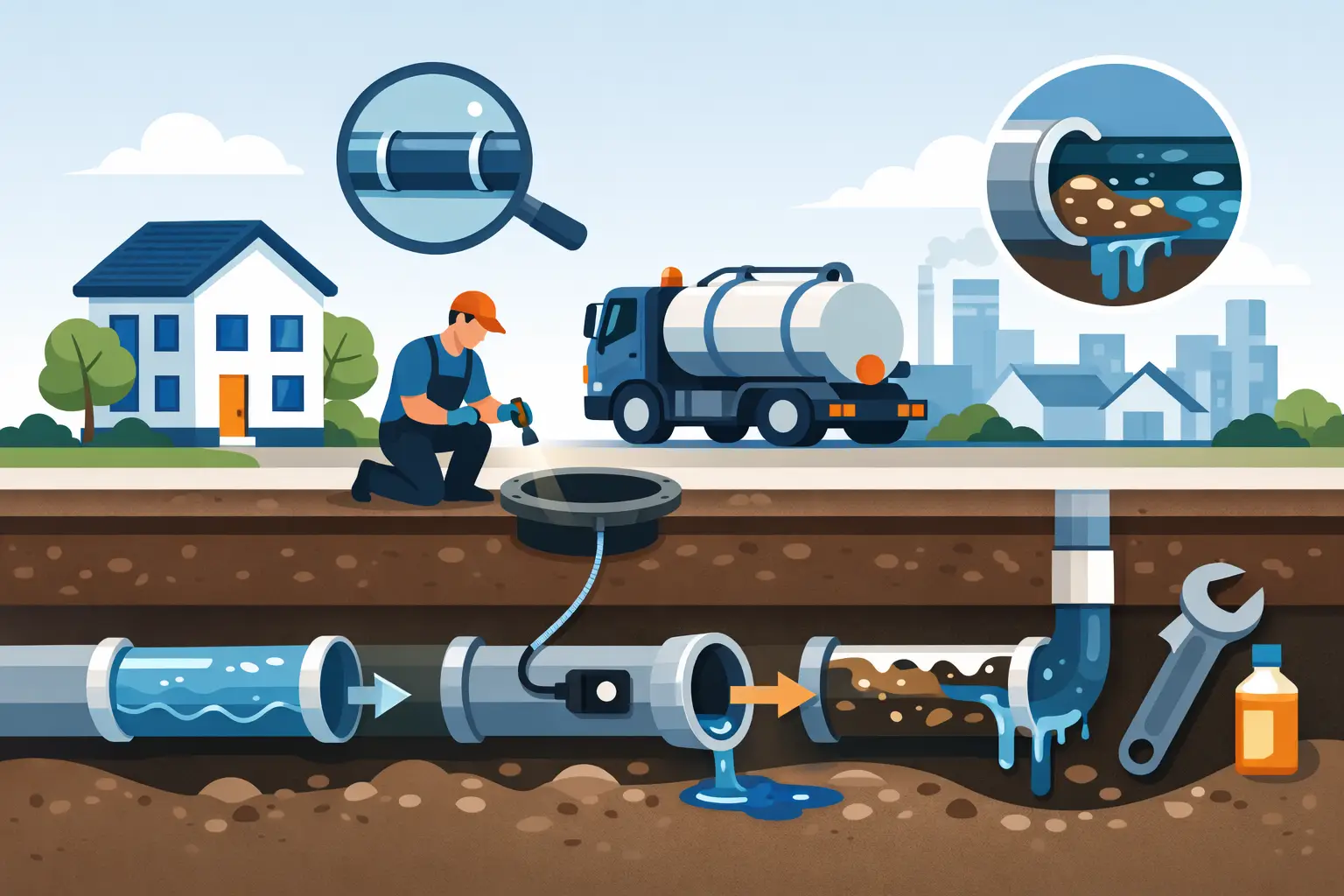
A sewer camera inspection takes the guesswork out of recurring clogs. It can show whether the line has roots, a cracked section, a belly that holds water, a foreign object, heavy buildup, or a connection problem. This matters because the right solution depends on the cause.
For example, cleaning may solve grease buildup, while roots may require regular maintenance or further repair planning. If the pipe has shifted or collapsed, repeated cleaning will not correct the underlying issue. A clear look inside the line helps you spend money on the right service rather than trying one temporary solution after another.
Protect Outdoor Sewer Connections
Know where your mainline cleanout is located and keep it accessible. It may be in a basement, crawlspace, garage, or outside near the foundation. Do not cover it with permanent landscaping, storage, or concrete. A technician can work faster when the cleanout is easy to reach.
Be thoughtful before planting trees near the route of an older sewer line. Roots naturally seek moisture and can work their way into pipe joints. If you already have mature trees, that does not mean they need to come down. It means regular inspection and cleaning may be worth considering, especially if roots have caused trouble before.
After heavy rain, check low areas, floor drains, and cleanout areas for unusual water or sewage odor. Rain-related problems can sometimes indicate a backup, a damaged line, or an issue with outside drainage that needs attention.
Do Not Wait for a Full Backup
If wastewater is coming up through a drain, stop using water throughout the building. Do not flush toilets, run the dishwasher, start laundry, or keep testing sinks. More water can make the backup worse. Keep people and pets away from contaminated water, and call for sewer clearing service as soon as possible.
For routine maintenance or a recurring drain problem, Drain Pros LLC can inspect the line, clear blockages, and recommend a straightforward next step. The goal is not to sell work you do not need. It is to get the line flowing properly and help you avoid another surprise backup.
A sewer line works best when nobody has to think about it. Keep problem materials out, act on early warning signs, and have recurring issues checked before a busy morning or a holiday weekend turns a slow drain into a real mess.