A sewer backup in the basement or a kitchen drain that keeps clogging can make any solution sound risky. So, can hydro jetting damage pipes? It can if it is used on a line that is already badly damaged, improperly assessed, or cleaned with the wrong pressure. When the system is inspected first and handled by a trained drain specialist, hydro jetting is one of the most effective ways to clear heavy buildup without harsh chemical drain cleaners.
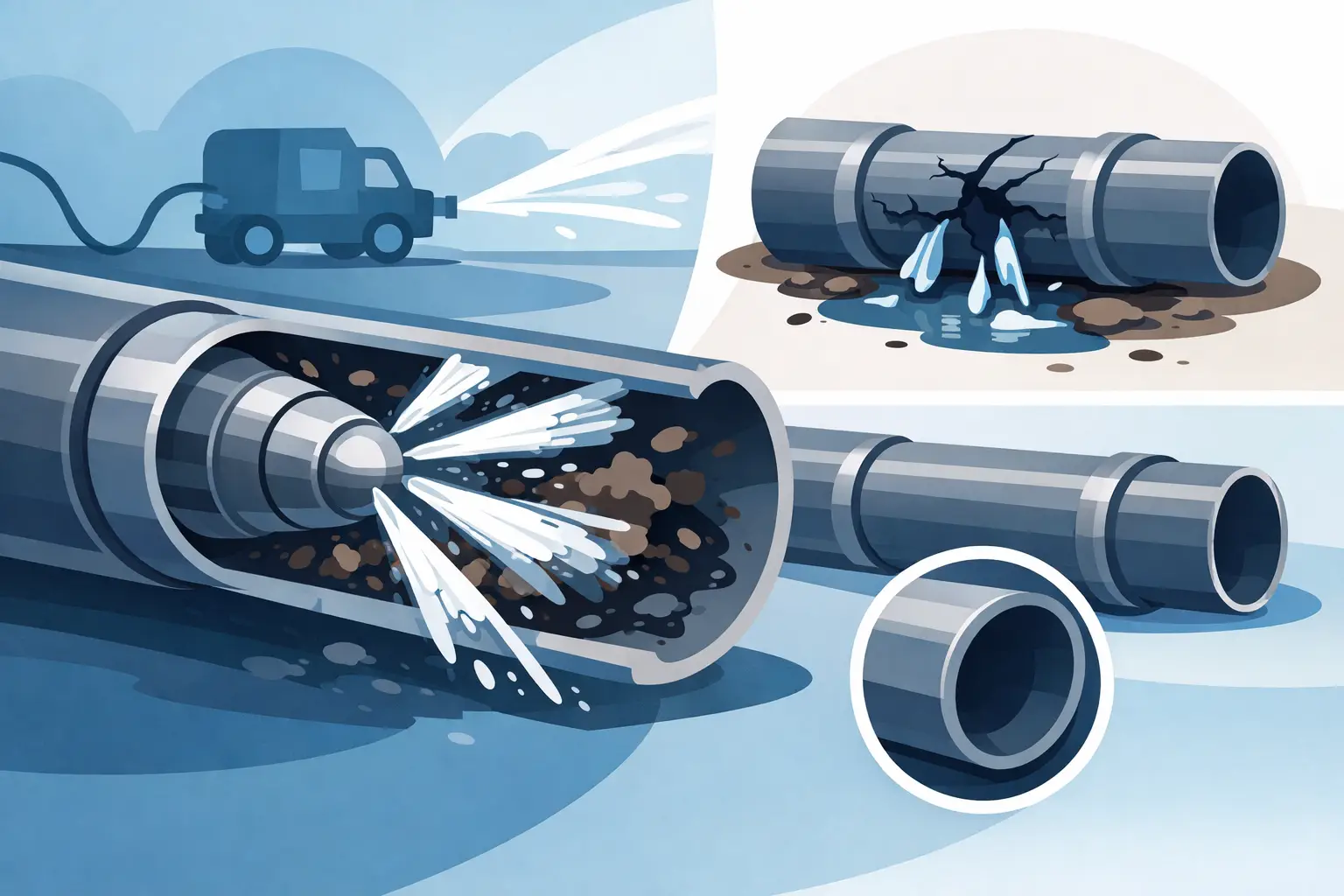
Hydro jetting uses a specialized hose and nozzle to send pressurized water through a drain or sewer line. The water breaks apart grease, sludge, roots, scale, and other debris that a basic cable machine may only punch a hole through. It is powerful equipment, which is exactly why the condition of the pipe needs to be understood before the work begins.
When Is Hydro Jetting Safe for Pipes?
Hydro jetting is generally safe for sound drain and sewer pipes. Professionals do not simply turn on maximum pressure and hope for the best. They choose the proper nozzle, water flow, and pressure for the size of the line, the type of blockage, and the pipe material.
For many homes and businesses, it is an excellent choice for recurring clogs. Restaurant and commercial kitchen lines often collect grease and food residue. Older homes may have years of soap buildup, mineral scale, or tree roots in their sewer laterals. Hydro jetting cleans the inside of the pipe wall far more thoroughly than methods designed only to reopen a small path through the clog.
The key difference is professional assessment. A drain line that is structurally sound can handle the cleaning process. A line with a major crack, separated joint, severe corrosion, or a partial collapse may need repair instead of aggressive cleaning.
Pipe Material Matters, But Condition Matters More
Modern PVC sewer and drain pipes usually handle properly performed hydro jetting very well. Cast iron, clay, and older metal pipes can also be cleaned safely when they remain in good condition.
Age alone does not automatically rule out hydro jetting. A 60-year-old cast iron line might still be a good candidate if an inspection shows solid walls and intact connections. On the other hand, a newer pipe that was poorly installed or damaged by ground movement can have weak spots. The real question is not simply, “How old is the pipe?” It is, “What shape is the pipe in right now?”
Can Hydro Jetting Damage Pipes That Are Already Failing?
Yes. Hydro jetting can expose or worsen a problem in a pipe that has already reached the end of its useful life. It does not usually create a healthy pipe failure out of nowhere, but pressurized water can find existing weak points.
For example, an old cast iron sewer line may be badly rusted inside, with thin sections hidden beneath years of scale. A clay pipe may have shifted at a joint, allowing roots and soil to enter. If the line has collapsed or has a large hole, high-pressure water is not the right fix. The blockage may clear temporarily, but the pipe still needs to be repaired or replaced.
That is why a camera inspection is often the smart first step, especially when a property has repeat backups, slow drains in several rooms, visible root intrusion, or an older sewer line. A camera lets the technician see what is causing the problem before deciding whether hydro jetting is the right service.
Problems That Need Inspection Before Hydro Jetting
Some symptoms are a clear sign that a drain or sewer line should be inspected before any heavy cleaning starts. One slow sink is often a local clog. Multiple slow drains, toilet bubbling, sewage odors, or water backing up into a tub can point to a main sewer line issue.
Pay close attention if your property has had frequent sewer clogs. Repeated backups are not normal, and repeatedly snaking the same line may only provide short-term relief. Roots, pipe scale, a belly in the line, or a broken section can keep catching debris until the underlying problem is addressed.
A qualified drain specialist may recommend a camera inspection before hydro jetting if there is concern about:
- Old cast iron, clay, Orangeburg, or galvanized drain piping
- Heavy root intrusion or a history of root-related backups
- A suspected broken, offset, sagging, or collapsed sewer line
- Recent foundation movement, excavation, or damage near the sewer route
- Backups that return soon after the line has been cabled or cleaned
This is not about adding unnecessary work. It is about avoiding a guess. Seeing the inside of the line helps determine whether cleaning is likely to solve the problem or whether the pipe needs a different repair plan.
Why DIY Hydro Jetting Is a Bad Bet
The biggest risk usually is not hydro jetting itself. It is using the equipment without the training to control it, guide it through the line, and recognize when to stop.
High-pressure drain equipment can cause injury, damage fixtures, flood a building, or push a blockage into a worse location when used incorrectly. The operator also needs to know where to access the line and how to work around bends, branch connections, and problem areas. A sewer line may run dozens of feet underground, and there is no way to judge its condition from a cleanout opening alone.
Chemical drain cleaners are not a safer shortcut. They can sit in a clog, produce fumes, and damage certain pipes or fixtures over time. They also do little for major grease buildup, roots, or a blockage in the main sewer line. Water-based hydro jetting, when it is the right method, avoids relying on harsh chemicals while delivering a much deeper cleaning.
Hydro Jetting vs. Snaking: Which Is Better?
Neither method is automatically better for every clog. A drain cable or auger is often the right tool for a simple obstruction, such as a small blockage near a fixture. It can quickly restore flow and is useful when a line does not need a full wall-to-wall cleaning.
Hydro jetting is often the better answer for recurring clogs and heavy buildup. Instead of boring a narrow opening through grease or sludge, it flushes material out of the line. For a restaurant, rental property, or busy household with ongoing drain trouble, that deeper clean can reduce how often the problem returns.
There are trade-offs. Hydro jetting takes more setup, requires the right access point, and may not be appropriate for a severely damaged line. Snaking can be less expensive for a minor clog, but it may leave buildup behind. A good recommendation should be based on what the pipe needs, not on a one-size-fits-all service.
How a Professional Helps Protect Your Sewer Line
A careful hydro jetting service starts before the water pressure is applied. The technician looks at the symptoms, identifies the likely location of the blockage, and checks available cleanouts. When the line’s condition is uncertain, a sewer camera inspection can confirm whether cleaning is safe and worthwhile.
During the job, the operator uses equipment suited to the line and blockage. Different nozzles are designed for flushing debris, cutting grease, or working through root intrusion. The goal is controlled cleaning, not brute force. Afterward, the line can be checked to make sure water is flowing and the blockage has been properly removed.
For property owners in Burlington and nearby communities, Drain Pros LLC can help determine whether hydro jetting is the right fit for a stubborn drain or sewer issue. Clear answers matter when you are dealing with a backup, a tenant complaint, or a business interruption.
If your drains keep slowing down or your sewer line has backed up more than once, do not assume the strongest cleaning method is automatically the right one. Get the line evaluated, choose the fix that matches its condition, and give your pipes the best chance to keep flowing for years to come.