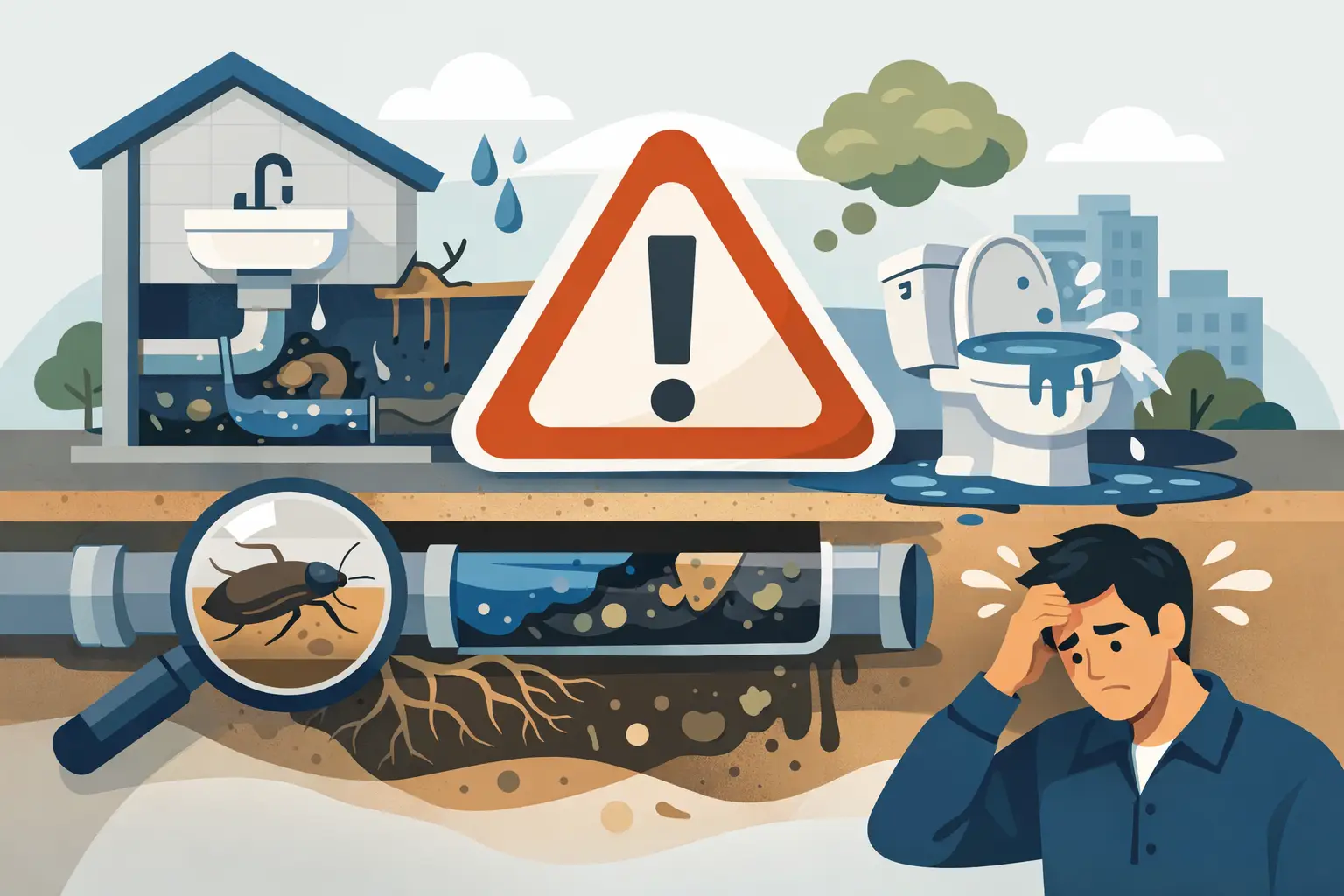
A sewer blockage rarely starts with a dramatic backup. More often, it starts with a toilet that gurgles after a shower, a drain that suddenly slows down, or an unpleasant smell near a floor drain. Knowing the warning signs of sewer blockage gives you time to act before wastewater reaches a basement, bathroom, kitchen, or business floor.
A clogged sink is usually a local problem. But when several fixtures act up at once, the issue may be in the main sewer line that carries wastewater away from the property. That is when a quick call for professional sewer cleaning can prevent a much larger mess.
1. Multiple Drains Are Slow at the Same Time
One slow bathroom sink can be caused by hair, soap buildup, or a small clog close to the drain. A kitchen sink may slow down because of grease or food debris. Those problems are frustrating, but they do not always point to a sewer line blockage.
The concern rises when more than one fixture drains slowly. If the shower, toilet, sink, and washing machine all seem sluggish, the blockage may be farther down the line. Pay close attention if the lowest drains in the building are affected first, such as a basement floor drain or a first-floor shower.
Do not assume the problem will clear on its own because water is still moving. Partial sewer blockages often get worse as toilet paper, grease, wipes, roots, or other debris catch on the restriction.
2. Toilets Gurgle or Bubble
A toilet should flush smoothly and refill without strange noises. Gurgling, bubbling, or a changing water level can mean air is trapped in the drain system because wastewater cannot move freely through the sewer line.
You may notice the toilet bubbling when a nearby sink drains, when the washing machine empties, or after someone takes a shower. That cross-connection between fixtures is a strong clue that the problem is beyond one toilet.
A plunger may help a toilet that is locally clogged. It will not solve a blockage farther down the main sewer line. Repeated plunging can also push water up through another fixture if the line is already restricted.
3. Water Backs Up Into a Tub, Shower, or Floor Drain
This is one of the clearest warning signs of a sewer blockage. When you flush a toilet and water rises in the shower or tub, the wastewater is looking for the lowest available opening. The same can happen when a washing machine drains and water appears in a floor drain.
Stop running water as soon as you see this. Avoid flushing toilets, starting the dishwasher, doing laundry, or taking another shower. Every gallon sent into the system can add to the backup.
If sewage or dirty water has already come up through a drain, keep people and pets away from the area. Wastewater can contain harmful bacteria, and cleanup may be more involved than simply mopping the floor.
4. Sewer Odors Inside or Outside the Property
A sewer smell is not something to ignore, especially if it returns after you clean the area or open a window. Odors near drains, toilets, utility rooms, basements, or crawl spaces can point to trapped wastewater, a developing blockage, or a drain issue that needs inspection.
Outside, check around the sewer cleanout, yard, or area near the foundation. A persistent sewage odor may mean wastewater is not moving properly through the buried line. Wet spots or unusually green patches in the yard can also be worth investigating, although they do not always mean the same thing.
A dry floor drain can sometimes create an odor because its water seal has evaporated. Pouring water into that drain may help. But if the odor continues along with slow drains or gurgling toilets, treat it as a sewer-line warning.
5. The Same Drain Keeps Clogging
A drain that clogs once may need normal cleaning. A drain that clogs again and again is telling you there is an underlying problem. Store-bought chemical cleaners may burn through a small amount of buildup, but they often leave the real restriction in place.
Harsh chemicals also bring trade-offs. They can damage some pipes, create fumes, and make the line less safe for anyone who later works on it. More importantly, they do not remove tree roots, heavy grease, damaged pipe sections, or a serious mainline blockage.
Recurring clogs deserve a professional assessment. A sewer camera inspection can show where the problem is and whether cleaning, hydro-jetting, or repair planning makes the most sense.
6. The Washing Machine Causes a Backup
A washing machine releases a large amount of water quickly. If the drain line or sewer line is restricted, that surge can expose a blockage that smaller fixtures do not.
Watch for water rising in a nearby sink, toilet, shower, or floor drain while the washer empties. This is especially common in older homes where the laundry drain connects near a floor drain or bathroom group. It can also happen in rental properties and small commercial spaces with heavy laundry use.
Do not keep running loads to test the issue. The next drain cycle could push wastewater over the edge of a drain and onto the floor.
7. A Basement Floor Drain Has Standing Water
A floor drain is often the first place a main sewer problem becomes visible because it sits lower than other fixtures. Standing water, dark debris around the drain, or water that appears after flushing a toilet can all signal a developing backup.
Check the floor drain before leaving a property vacant for several days, after heavy household water use, and when you notice slow drains elsewhere. For landlords and property managers, a quick check can catch a problem before a tenant reports a major overflow.
Standing water can have other causes, including groundwater or a drain trap issue. The timing matters. If it appears whenever plumbing fixtures are used, sewer blockage is much more likely.
8. You Have Mature Trees Near the Sewer Line
Tree roots naturally seek moisture, and small openings in aging sewer pipes can attract them. Once roots enter, they can spread inside the line and trap paper, grease, and waste until drainage slows or stops.
Root intrusion is common in older neighborhoods throughout Southeast Iowa and West-Central Illinois, particularly where clay, cast-iron, or older pipe materials are still in service. The issue may be seasonal, but it does not disappear just because drains begin flowing again for a while.
Professional sewer camera inspection takes the guesswork out of it. It can identify roots, cracks, offset joints, collapsed sections, and buildup without digging up the yard first.
9. Your Sewer Cleanout Is Overflowing
The sewer cleanout is an access point to the main line, often located outside near the home or in a basement or utility area. If water or sewage is coming from the cleanout, the blockage is likely downstream from that point.
Do not remove a cleanout cap if you suspect the line is full. Pressurized wastewater can spill out quickly. Keep clear of the area and call a drain and sewer specialist instead.
An overflowing cleanout is not a wait-and-see situation. The line needs prompt attention before wastewater backs up through indoor fixtures.
10. The Problem Returns After Temporary Fixes
The most expensive sewer problems are often the ones that gave repeated warnings. If plunging, snaking a drain, or using a chemical product seems to help for a few days and then the symptoms come back, the blockage may be deeper in the system.
A professional cable machine can break through many clogs. Hydro-jetting may be a better fit when grease, sludge, scale, or root debris coats the inside of the pipe. The right solution depends on the pipe material, the condition of the line, and what an inspection finds. Cleaning a severely damaged line without understanding its condition can be a short-term fix, not a permanent answer.
What to Do When You Notice Sewer Blockage Warning Signs
If multiple fixtures are slow, gurgling, or backing up, reduce water use immediately. Do not run laundry, the dishwasher, or extra showers while you wait. If wastewater has entered the building, avoid contact and document the affected area for your records.
Next, get the main line diagnosed rather than treating each fixture as a separate clog. A camera inspection can locate the issue, while professional drain cleaning or hydro-jetting can restore flow when the pipe is structurally sound. Drain Pros LLC helps homeowners, landlords, and businesses in Burlington and nearby communities get clear answers and dependable sewer solutions without unnecessary runaround.
A sewer blockage does not always give you much notice, but the early symptoms are easy to miss only once. When drains start working together in the wrong way, act early and keep a small drainage problem from becoming a cleanup job.