A shower that turns into an ankle-deep puddle is more than an annoyance. Standing water leaves soap residue behind, slows down the morning routine, and can be an early warning that buildup is getting deeper in the line. Knowing how to unclog a shower drain starts with using the least aggressive method that can actually reach the blockage.
For many homes, the clog is a mix of hair, soap scum, body oils, and mineral deposits sitting near the drain opening. That is usually a manageable job. If the drain keeps backing up after you clear it, however, the problem may be farther down the pipe – and forcing it with harsh chemicals or the wrong tool can make a small problem worse.
Start With the Simple, Safe Fixes
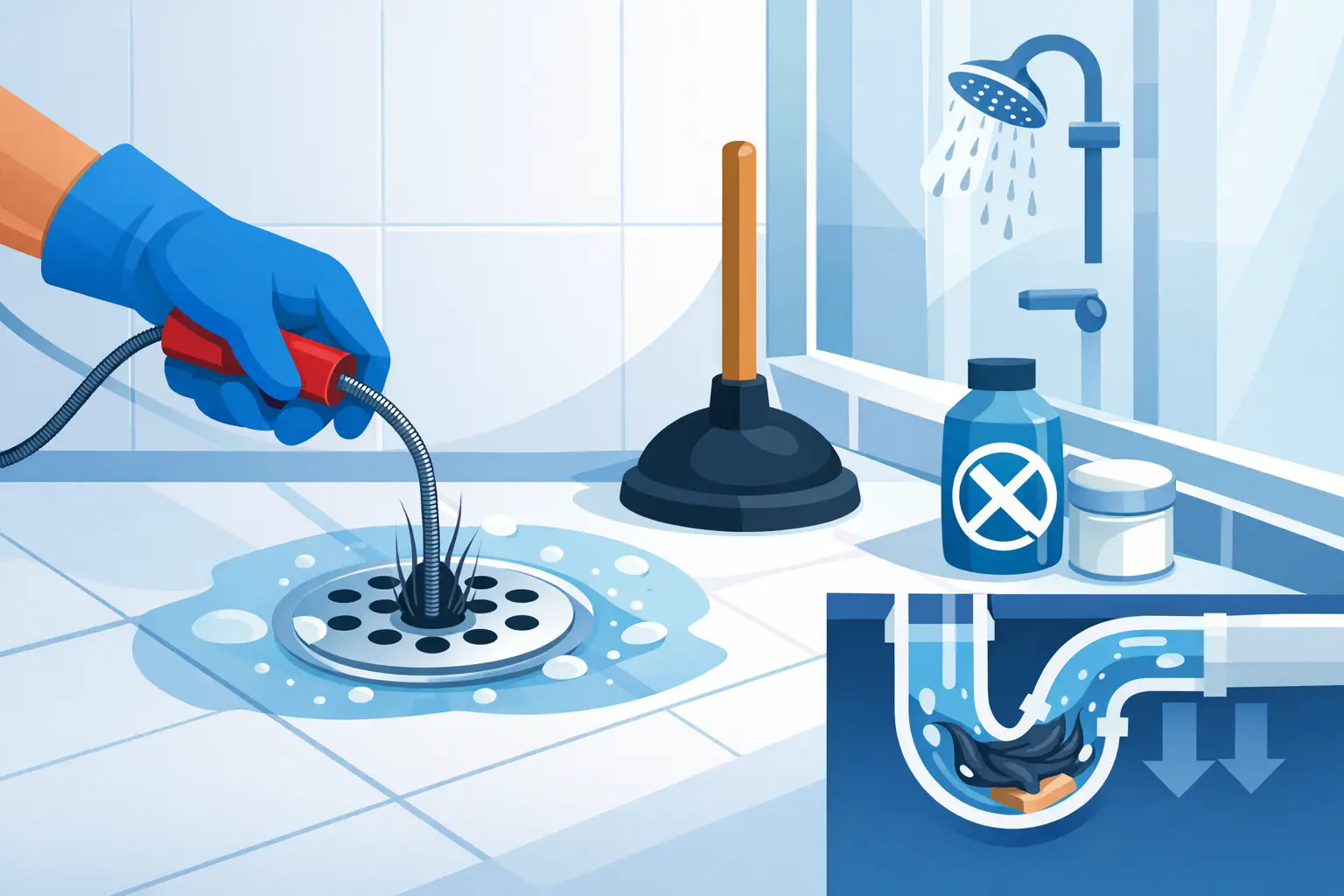
Before buying a chemical cleaner or taking apart plumbing, remove the drain cover and look inside with a flashlight. Put on gloves. Hair often collects right below the cover or around the stopper, where it can be pulled out by hand, tweezers, or a plastic drain-cleaning strip.
Work slowly and keep a small trash bag nearby. The material you pull out may be unpleasant, but removing it is more effective than trying to dissolve it. Avoid pushing hair farther down the drain, where it can bind with soap buildup and become harder to reach.
If your shower has a removable stopper, lift it out and clean the underside. Some stoppers need to be loosened with a small screw, while others simply twist or pull free. Take a quick photo before disassembling anything so you know how it goes back together.
Once the visible debris is gone, run warm water for a minute or two. If the shower drains normally, rinse the cover, reinstall it, and move on to prevention. If water still pools, try the next step.
How to Unclog a Shower Drain With a Plunger
A flat-bottom sink plunger is often the best choice for a shower drain. It creates a seal over the opening and uses water pressure to loosen a clog that is just beyond reach.
Add enough water to cover the rubber cup. If your shower has an overflow opening, cover it with a wet rag to help the plunger hold pressure. Position the plunger directly over the drain and make 10 to 15 steady strokes. Do not yank aggressively. The goal is a firm seal and controlled pressure, not brute force.
Remove the plunger and see whether the water drains. Repeat once or twice if you notice improvement. If there is no change at all, the clog may be too dense or too far down the line for plunging to help.
A plunger works best on a partial blockage. It is less likely to solve a drain packed with hair or a line narrowed by years of soap scum and mineral scale.
Use a Drain Snake Carefully
A hand-crank drain snake can reach farther than a plastic strip and may pull out a stubborn hair clog. Feed the cable slowly into the drain without forcing it. When you feel resistance, turn the handle gently to catch or break apart the blockage, then pull the cable back out.
This method takes patience. Spinning too hard or forcing a larger cable through a small shower drain can damage older pipes, scratch fixtures, or push the clog deeper. If the snake comes back with hair and debris, clean it off, flush the drain with warm water, and test the flow.
Do not keep feeding a snake if it hits a hard stop and will not advance. You may be meeting a pipe bend, not the clog. That is a good time to stop rather than risk damaging the drain line.
Skip the Harsh Chemical Cleaner
Chemical drain openers are tempting when water is sitting in the shower, but they are rarely the best first move. Many products generate heat or use strong acids or bases to attack organic material. They may not fully dissolve a heavy hair clog, and repeated use can be rough on older metal pipes, seals, and septic systems.
They also create a safety problem for anyone who works on the drain afterward. A technician cannot safely snake or open a line that may contain caustic chemical cleaner without knowing it is there. If you have already used a product, tell the drain specialist exactly what you used and when.
A gentler rinse of hot tap water can help clear leftover soap residue after you physically remove the clog. Do not use boiling water in a shower drain, especially if your home has PVC piping. Extremely hot water can affect some plastic fittings and may not solve the real problem anyway.
Baking soda and vinegar are common home remedies, but expectations should stay realistic. They can freshen a drain and help with light residue, but they do not have the force to remove a thick ball of hair or a deep blockage. When the shower is draining poorly, physical removal or professional cleaning is usually the more reliable path.
Signs the Clog Is More Than a Shower Problem
One slow shower drain does not always mean a major sewer issue. But certain signs point to a blockage farther down the line, where a homeowner-level fix is unlikely to hold.
Watch for water backing up in the shower when you flush a toilet, run the bathroom sink, or use the washing machine. Listen for gurgling from nearby drains. Notice whether more than one fixture is slow, or whether the shower has been clogged repeatedly even after hair is removed. Those symptoms can mean the branch line or main sewer line needs attention.
For rental properties and small businesses, recurring drainage problems deserve a faster response. Repeated backups can damage flooring, interrupt tenants or customers, and turn a simple drain-cleaning visit into a larger cleanup. Addressing the cause early is usually easier on the property and the budget.
When to Call a Drain Cleaning Specialist
Call for professional help when plunging and basic debris removal do not restore normal flow, when multiple drains are affected, or when sewage odor or wastewater is coming back into the shower. These are not situations to solve by adding more chemicals.
A drain specialist can use the right-sized cable equipment to clear the line and determine whether roots, scale, grease, damaged pipe, or a deeper obstruction is causing the backup. For stubborn or recurring buildup, hydro-jetting can clean the inside of suitable drain lines with high-pressure water instead of relying on harsh chemical products. A sewer camera inspection can also show what is happening inside the pipe before guessing at a repair.
For homeowners and property managers around Burlington and Southeast Iowa, Drain Pros LLC provides focused drain and sewer service when a shower clog will not stay cleared. Fast diagnosis matters, especially when there is a risk of a bathroom backup or a larger mainline issue.
Keep the Shower Drain Flowing
The best prevention is simple: catch hair before it enters the drain. A removable hair catcher is inexpensive and should be emptied regularly, especially in households with long hair, pets bathed in the tub or shower, or several people sharing one bathroom.
Clean the stopper and drain cover every few weeks instead of waiting for water to slow down. Use hot tap water after heavy soap or shaving product use, but do not treat it as a cure for an established clog. If your home has hard water, mineral buildup may make regular cleaning even more valuable.
Never rinse paint, construction debris, mop water, cooking grease, or chemical products into a shower drain. They can settle in the line and create a blockage that a basic hair tool cannot reach.
A clear shower drain should disappear from your to-do list. If the water still rises around your feet after a careful attempt, stop fighting the same clog and get the line checked before the next shower turns into a backup.