A sewer backup rarely starts as a dramatic emergency. More often, it begins with a toilet that gurgles, a basement drain that runs slow, or a stubborn clog that keeps returning. Sewer lateral maintenance helps catch those problems before wastewater comes back into a home, rental property, restaurant, or shop.
Your sewer lateral is the underground pipe that carries wastewater from your building to the public sewer main or, in some areas, a private septic system. It is out of sight, but it should not be out of mind. A little preventive attention can help protect your property from a messy, expensive interruption.
What Sewer Lateral Maintenance Really Covers
The sewer lateral serves every drain in the building. Sinks, toilets, tubs, floor drains, laundry lines, and commercial fixtures all depend on it to move wastewater away. When the lateral begins to narrow or block, the issue can show up in more than one room at once.
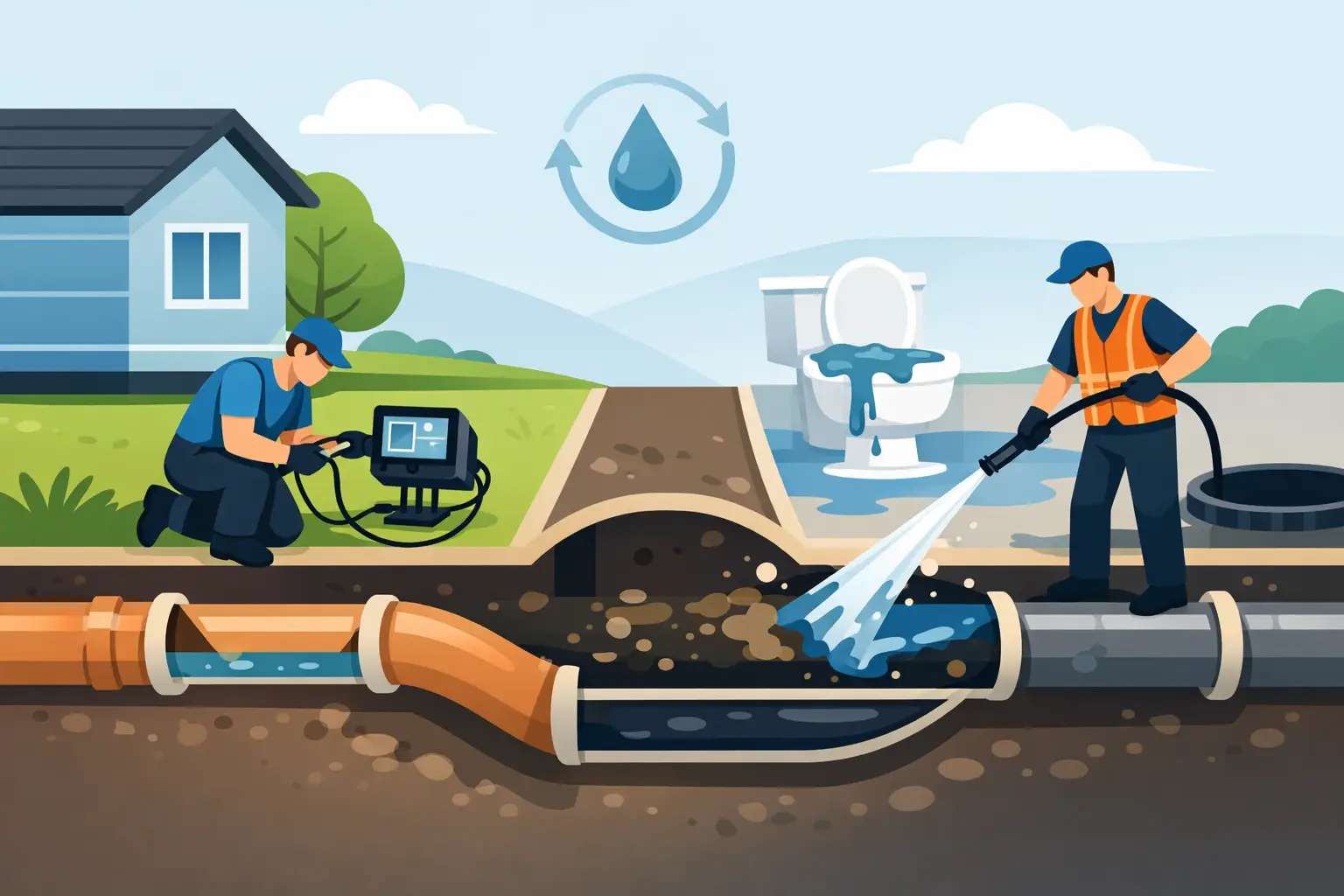
Maintenance is not just running a cable through a pipe after it stops draining. Good sewer lateral maintenance starts with finding out what is happening inside the line. A sewer camera inspection can identify root intrusion, grease buildup, scale, broken pipe, a sagging section of line, or debris collecting at a connection. Once the cause is clear, the right cleaning method can be chosen instead of guessing.
For many lines, professional hydro-jetting is the most thorough cleaning option. It uses controlled, high-pressure water to clear grease, sludge, roots, and buildup from the inside of the pipe without relying on harsh drain chemicals. Mechanical cabling can be the better choice for certain tough obstructions or for opening a line quickly, but it may not clean the pipe walls as completely as hydro-jetting.
The right approach depends on the pipe material, the condition of the line, and what the inspection shows. Older or damaged piping needs a careful plan. Cleaning a failing pipe aggressively without first checking its condition is not the answer.
Signs Your Sewer Lateral Needs Attention
A single slow sink may be a local drain problem. But when several fixtures act up together, the main sewer lateral deserves attention. Watch for patterns, especially if they are becoming more frequent.
Common warning signs include:
- Toilets that bubble or gurgle when a sink, shower, or washing machine drains
- Water rising in a tub or shower when a toilet is flushed
- Slow drains throughout the building instead of in one fixture
- Sewage odors near floor drains, bathrooms, or outside cleanouts
- Water or wastewater appearing at a basement floor drain
- Recurring clogs that return soon after plunging or snaking
A backup at the lowest drain in the building is a serious clue. In a home, that may be a basement floor drain, shower, or laundry drain. In a business, it may be a restroom drain, utility sink, or mop basin. Do not keep running water to “test” the problem. That can turn a partial blockage into a full backup.
Outdoor Clues Matter Too
Some sewer lateral problems show up outside before they cause an indoor mess. A patch of unusually green grass, a soft spot in the yard, foul odors near the route of the sewer line, or a cleanout that overflows can all point to trouble underground.
Tree roots are a common concern in older neighborhoods across Southeast Iowa and West-Central Illinois. Roots naturally seek moisture and can enter through small gaps in aging pipe joints. Once inside, they catch paper, grease, and waste until the line restricts flow. Cutting roots can restore service, but repeated root growth may mean the line needs scheduled cleaning or a closer look at repair options.
How Often Should a Sewer Lateral Be Cleaned?
There is no one schedule that fits every property. A newer home with a sound PVC sewer line and careful water use may go years without professional cleaning. An older property with clay tile, cast iron, large trees, or a history of backups may need service more often.
For many homes, a camera inspection and cleaning every one to three years is a reasonable preventive starting point when there is a known history of roots or recurring buildup. Landlords and property managers may choose a more regular schedule for buildings with frequent tenant turnover, older plumbing, or a past record of sewer calls.
Restaurants, commercial kitchens, and businesses that send grease or food residue down drains often need more frequent service. Grease does not simply wash away. It cools and sticks to pipe walls, gradually reducing the opening inside the line. A maintenance plan costs less than losing a busy service day to a sewer backup.
The best schedule comes from the condition of your specific line. A camera inspection gives you a baseline, so future maintenance can be planned around real conditions rather than a calendar alone.
Everyday Habits That Protect the Line
Professional cleaning handles what is already in the sewer lateral. Daily habits help slow future buildup. Keep wipes, paper towels, feminine hygiene products, cotton swabs, and disposable cleaning cloths out of toilets, even when packaging says they are flushable. They do not break down like toilet paper and can snag in rough pipe, roots, or fittings.
In kitchens, let grease cool in a container and dispose of it in the trash. Wiping greasy pans before washing them also helps. Coffee grounds, pasta, rice, eggshells, and stringy food scraps belong in the garbage, not the drain.
For commercial properties, make sure staff know where grease belongs and what should never enter a floor drain. A few simple procedures can prevent a costly after-hours call.
Avoid pouring chemical drain cleaners into a slow or backed-up line. These products often fail to reach the actual blockage in a sewer lateral, and repeated use can create fumes, damage certain pipes, and make later service less safe. If the clog is recurring, the line needs a diagnosis, not another bottle of chemicals.
Inspection Helps You Make the Right Call
A sewer camera inspection is one of the most useful tools in preventive maintenance. It allows a technician to see the inside of the line and locate the trouble area. That matters because roots, grease, a shifted joint, and a collapsed section can all cause slow drainage, but they require different next steps.
If the camera shows a line that is structurally sound but dirty, cleaning may be all that is needed. If it reveals cracks, separation, a belly where waste collects, or severe deterioration, repeated cleaning may only be buying time. Knowing that early gives property owners a chance to plan repairs instead of facing a surprise emergency.
Camera work can also help establish whether a blockage is likely on the private lateral or farther out in the public sewer. Responsibility can vary by location and utility rules, so documenting the condition and location of an issue is valuable.
When to Call for Service Right Away
Preventive maintenance is ideal, but some situations should not wait. Call a drain and sewer specialist promptly if wastewater is backing up indoors, multiple drains are stopped, a cleanout is overflowing, or sewage odors are strong and persistent.
If you have a partial blockage, reduce water use until the line is inspected. Do not run the dishwasher, washing machine, or long showers. Keep people away from wastewater, particularly children and pets, and avoid trying to open a cleanout yourself if the line is backed up. Pressurized sewage can spill out quickly.
For Burlington-area homes and businesses, Drain Pros LLC provides focused sewer clearing, hydro-jetting, and camera inspection services to help identify the cause and get lines moving again. The goal is straightforward: clear the immediate problem, explain what caused it, and help you avoid another backup when possible.
A sewer lateral does not need attention every day, but it does reward early action. When drains begin sending repeat signals, schedule an inspection before the next flush or load of laundry turns a manageable issue into a cleanup job.