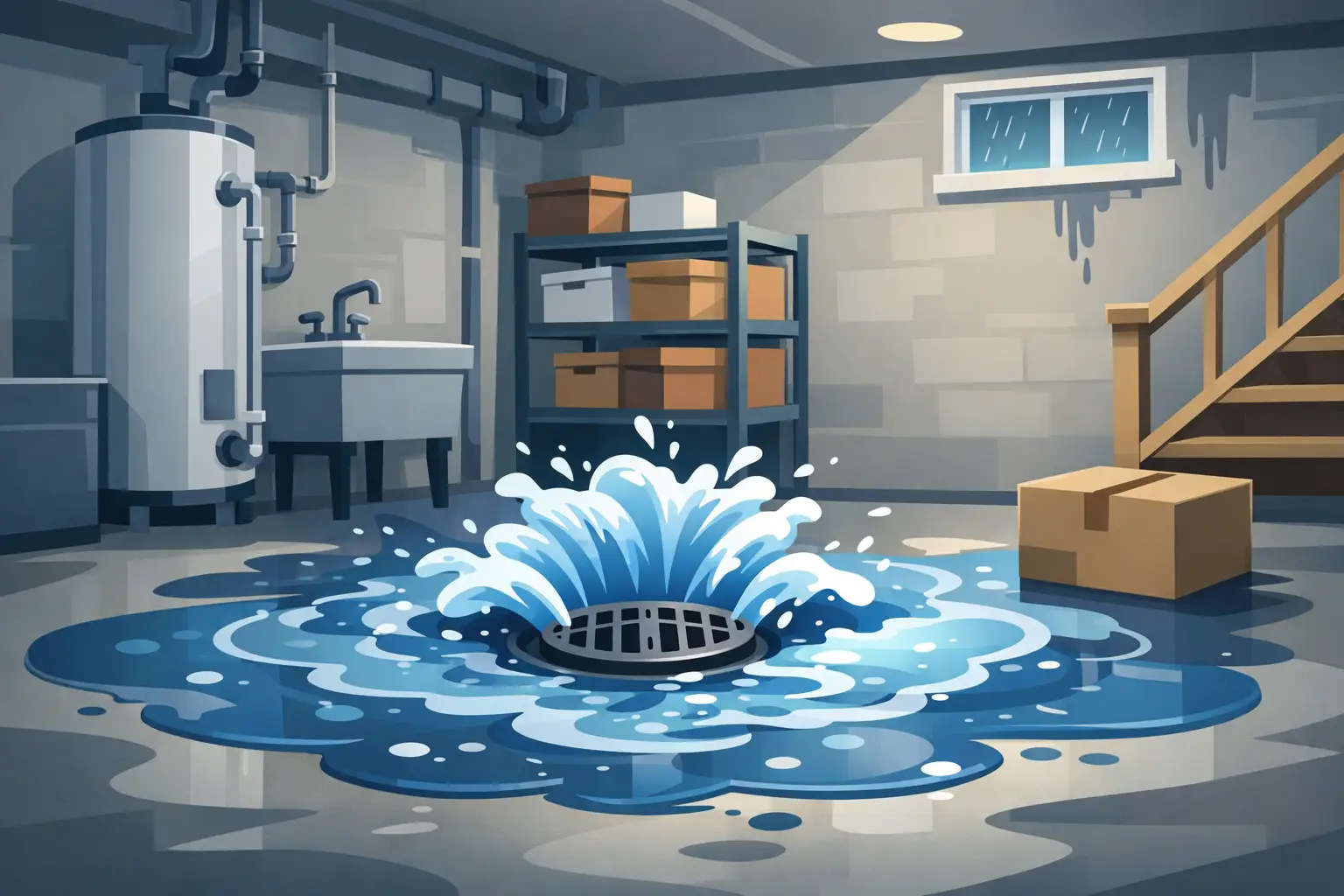
Basement floor drain backing up? Stop using water and call Drain Pros LLC at 319-380-4712. We can determine whether the problem is in the floor drain or main sewer line and clear the blockage with the right equipment.
A basement floor drain overflow is more than a messy basement problem. It can be an early warning that wastewater has nowhere else to go. If the water is gray, brown, foul-smelling, or contains debris, treat it as a possible sewer backup. Acting quickly can limit damage to flooring, walls, stored belongings, and your home’s air quality.
The good news is that a floor drain overflow does not always mean a broken sewer line. Sometimes the issue is a local clog. Other times, it points to a blockage farther down the main sewer line. The key is knowing what to do first, what not to do, and when the problem needs professional drain cleaning.
What to Do During a Basement Floor Drain Overflow
Start by stopping water use inside the building. Do not flush toilets, run the dishwasher, take a shower, or start a load of laundry. Every gallon sent down a drain may add to the backup and force more water out through the lowest opening – often the basement floor drain.
If it is safe to do so, move boxes, furniture, rugs, and valuables away from the affected area. Keep children and pets out of the basement, especially if sewage may be present. Wear gloves and waterproof boots if you must enter the area, but avoid direct contact with contaminated water.
Take these steps while you arrange service:
- Turn off appliances that could send water into the drain system, including washing machines and water softeners.
- Do not pour chemical drain cleaners into the floor drain. They rarely clear a mainline blockage and can create a hazardous mess for anyone working on the line.
- Do not remove a cleanout cap unless you know it is safe to do so. A blocked sewer can release wastewater under pressure.
- Check whether nearby sinks, tubs, or toilets are draining slowly or backing up. This information helps identify whether the issue is local or in the main sewer line.
- If water is close to electrical outlets, appliances, or the furnace, avoid the area and contact a qualified professional right away.
A shop vacuum may help with a small amount of clean water from a simple overflow, but do not use it on suspected sewage unless it is designed for contaminated-water cleanup. Cleanup is only part of the job. The blockage still needs to be found and cleared.
Why Basement Floor Drain Overflows Happen
Your basement floor drain sits at one of the lowest points in your drainage system. When a drain line cannot carry water away, that low opening becomes the place where water appears first. The cause may be close to the drain, but it may also be outside the home or farther along the sewer connection.
A slow drain in one bathroom can be a fixture-specific clog. A floor drain that overflows when you flush, shower, or run the washing machine is more likely connected to a larger drainage problem. If multiple fixtures are affected at once, a main sewer line blockage should be high on the list of possibilities.
Heavy rain can complicate the picture. In some older neighborhoods, stormwater can overload sewer systems or enter damaged sewer lines through cracks and bad connections. But rain is not always the cause. If the drain backs up on dry days whenever water is used, the issue is usually within the building drain or sewer lateral.
Common Causes of a Basement Floor Drain Overflow
A Clogged Main Sewer Line
This is one of the most common reasons for a basement backup. Grease buildup, wipes, paper products, debris, and accumulated sludge can restrict the main line over time. Once the pipe is partially blocked, regular household water use can overwhelm it.
Many products labeled flushable do not break down like toilet paper. Wipes, feminine hygiene products, paper towels, and heavy amounts of grease belong in the trash, not the drain. They can travel a short distance before catching on buildup or roots and forming a serious clog.
Tree Roots in the Sewer Line
Tree roots naturally seek moisture. Small cracks, loose joints, and aging pipe connections can let roots enter a sewer line. Once inside, they grow and trap toilet paper and other debris until water flow is restricted.
Root intrusion often causes recurring trouble. The line may drain better after a basic clearing, then clog again months later because the roots are still present. A sewer camera inspection can show whether roots are the real issue and help determine whether cleaning, repair, or ongoing maintenance makes the most sense.
Grease, Scale, and Buildup
Kitchen grease does not stay liquid forever. As it cools, it coats the inside of drain lines and catches food particles, soap residue, and other waste. Older cast-iron pipes can also develop heavy scale buildup that reduces the usable opening inside the pipe.
For stubborn buildup, hydro-jetting can be a strong option. It uses high-pressure water to clean the pipe walls without relying on harsh chemical cleaners. However, hydro-jetting is not right for every pipe. A professional should evaluate older, damaged, or questionable lines before choosing the cleaning method.
A Local Floor Drain Clog
Sometimes the issue is limited to the floor drain itself. Dirt, leaves, pet hair, sediment, or construction debris can block the drain trap or the short line connected to it. This is more likely when the floor drain overflows only after water is poured directly into it and other fixtures are working normally.
A local clog is usually simpler than a mainline backup, but it still deserves a proper inspection. Guessing can waste time and may leave a larger issue untouched.
Municipal Sewer or Septic Problems
If neighbors are reporting backups too, the issue may be in the city sewer system. For homes on septic systems, a full tank, failing drain field, or blocked septic outlet can also push wastewater back toward the home. In either case, stop water use and get the appropriate service provider involved.
Signs the Problem Is in Your Main Line
A basement drain overflow becomes more urgent when it comes with other warning signs. Toilets that bubble when a sink drains, tubs that fill when the washing machine runs, sewage odors, and repeated clogs in different rooms all point toward a shared drainage issue.
Pay attention to timing. If the basement drain backs up after several fixtures run, the main line may be restricted. If it happens mainly during laundry, the washing machine’s fast discharge may be exposing a partial blockage. If it returns after being temporarily cleared, roots, pipe damage, or heavy buildup may be involved.
These details matter because the right repair starts with the right diagnosis. Clearing a clog without knowing its cause can solve today’s emergency while leaving you with the same backup next month.
How Professionals Find and Clear the Blockage
Professional drain service begins with locating the trouble area. Depending on the symptoms and access points, a technician may use a drain cable machine to break through a clog, then use a sewer camera to inspect the condition of the line. Camera inspection can reveal roots, collapsed sections, offset joints, heavy scale, or objects lodged in the pipe.
For grease, sludge, and heavy buildup, hydro-jetting may provide a more thorough cleaning than simply punching a small opening through the blockage. The goal is to restore flow and remove the material that is likely to catch debris again.
At Drain Pros LLC, the focus is on straightforward drain and sewer solutions: identify the problem, clear the line properly, and explain what was found. That gives homeowners, landlords, and business owners a clearer path forward without unnecessary guesswork.
Preventing Another Basement Drain Backup
Not every overflow is preventable, especially when aging pipes or severe storms are involved. Still, regular maintenance can reduce the odds of a surprise backup. Keep grease, wipes, and paper towels out of drains. Address slow drains before they become complete blockages. If your property has a history of roots or older sewer piping, periodic cleaning and camera inspections can be a practical investment.
A rarely used floor drain should also have water in its trap. Pour a gallon or two of water into it every few months to help maintain the water seal and reduce sewer odors. This will not prevent a mainline clog, but it helps keep the drain functioning as intended.
A basement floor drain overflow is your property telling you to stop and investigate. Shut down water use, protect the space, and get the line checked before a small backup becomes a much larger cleanup.