A sewer problem rarely starts with a dramatic backup. More often, it starts with a toilet that bubbles after a shower, a floor drain that smells off, or a kitchen sink that drains slower every few weeks. If you are asking when should sewer lines be inspected, the best answer is before those small warnings turn into wastewater on the floor.
A professional sewer camera inspection shows what is happening inside the line without guessing or digging up the yard. For homeowners, landlords, and business owners around Southeast Iowa and West-Central Illinois, it is one of the clearest ways to find a blockage, root intrusion, damaged pipe, or buildup before the line stops moving waste altogether.
When Should Sewer Lines Be Inspected?
There is no single schedule that fits every property. The age of the building, type of sewer pipe, nearby trees, occupancy, and recent drain trouble all matter. Still, certain moments call for an inspection sooner rather than later.
When multiple drains slow down at once
One slow sink can be a local clog near that fixture. But when the shower, toilet, laundry drain, and sinks are all slow, the problem may be in the main sewer line. Water has only one place to go once it leaves the house, and a restriction in that main line can affect several fixtures.
Watch for toilets that gurgle when another drain runs or water that rises in a tub after flushing. Those are common signs that the line is partially blocked and needs a closer look.
After a sewer backup or repeated clog
A sewer backup should always be inspected after the immediate mess is handled. Clearing the line may restore flow, but it does not always explain why the blockage happened. A camera inspection can reveal whether the issue was grease buildup, wipes, roots, a broken section of pipe, or an offset joint.
The same is true for recurring clogs. If you have had the main line cleared more than once in a year, do not keep paying to treat the symptom without identifying the cause. An inspection helps determine whether routine cleaning is enough or whether the pipe has a condition that needs further repair.
Before buying an older home or commercial property
A general property inspection does not always include a detailed view inside the sewer line. That can leave buyers surprised by a major expense shortly after closing.
For an older home, especially one with mature trees or original cast iron or clay piping, a sewer camera inspection is a practical part of due diligence. It can show root intrusion, cracks, bellies where waste collects, corrosion, or sections that have shifted over time. The same applies to small commercial buildings, rental properties, and mixed-use spaces where a backup could interrupt tenants or customers.
Before a remodel or adding new fixtures
Adding a bathroom, laundry room, commercial kitchen equipment, or other plumbing fixtures can increase the demand on an existing sewer line. Inspecting the line before the work begins gives you a better picture of whether it is flowing properly and whether there are existing issues worth addressing first.
This is especially useful when remodeling an older property. New fixtures will not fix an aging line, and a backup after the remodel can damage new floors, walls, or finishes.
When trees are near the sewer route
Tree roots naturally seek moisture. Even a small opening at a pipe joint can attract roots, which then grow inside the line and catch toilet paper, grease, and other debris. Over time, that turns into a stubborn blockage.
Properties with large, established trees should be more proactive, particularly if the sewer line has a history of root issues. Depending on the pipe material and conditions, an inspection every one to two years may make sense. A camera check lets you see whether roots are starting to enter the pipe before they create a full stoppage.
How Often Should You Schedule a Preventive Inspection?
For a newer home with no drainage concerns, a sewer inspection is often most useful before a purchase, before a major remodel, or when warning signs appear. There is usually no need to inspect a problem-free newer line every year.
Older homes deserve closer attention. If your home is several decades old, has clay or cast iron sewer pipe, sits near large trees, or has experienced previous backups, consider an inspection about every two to three years. If roots have been found before, yearly inspection and cleaning may be the better choice.
Rental owners and property managers may also benefit from a regular schedule. Multiple occupants, heavier use, and the risk of damage between tenants can make preventive service less costly than an emergency response. For restaurants, salons, daycare facilities, and other businesses with frequent drain use, the right schedule depends on what goes down the drains and the building’s history.
Signs You Should Not Wait to Inspect
Some sewer problems need prompt attention. Call for a professional inspection if you notice sewage coming up through a floor drain, toilet, tub, or shower. You should also act quickly if wastewater is pooling near an exterior cleanout or if there is a persistent sewer odor inside or outside the building.
Other signs are less urgent but still worth checking soon: frequent plunging, a toilet that will not flush normally, slow drains throughout the property, gurgling sounds, or unusually green and wet patches in the yard near the sewer route. A soft or sunken area of ground can sometimes point to a damaged underground line.
Do not rely on chemical drain cleaners to solve these issues. Harsh chemicals can be tough on some pipes, may not reach a mainline blockage, and will not remove roots or repair a damaged section. If the problem is farther down the sewer, a camera inspection gives the technician the information needed to choose the right solution.
What a Sewer Camera Inspection Can Find
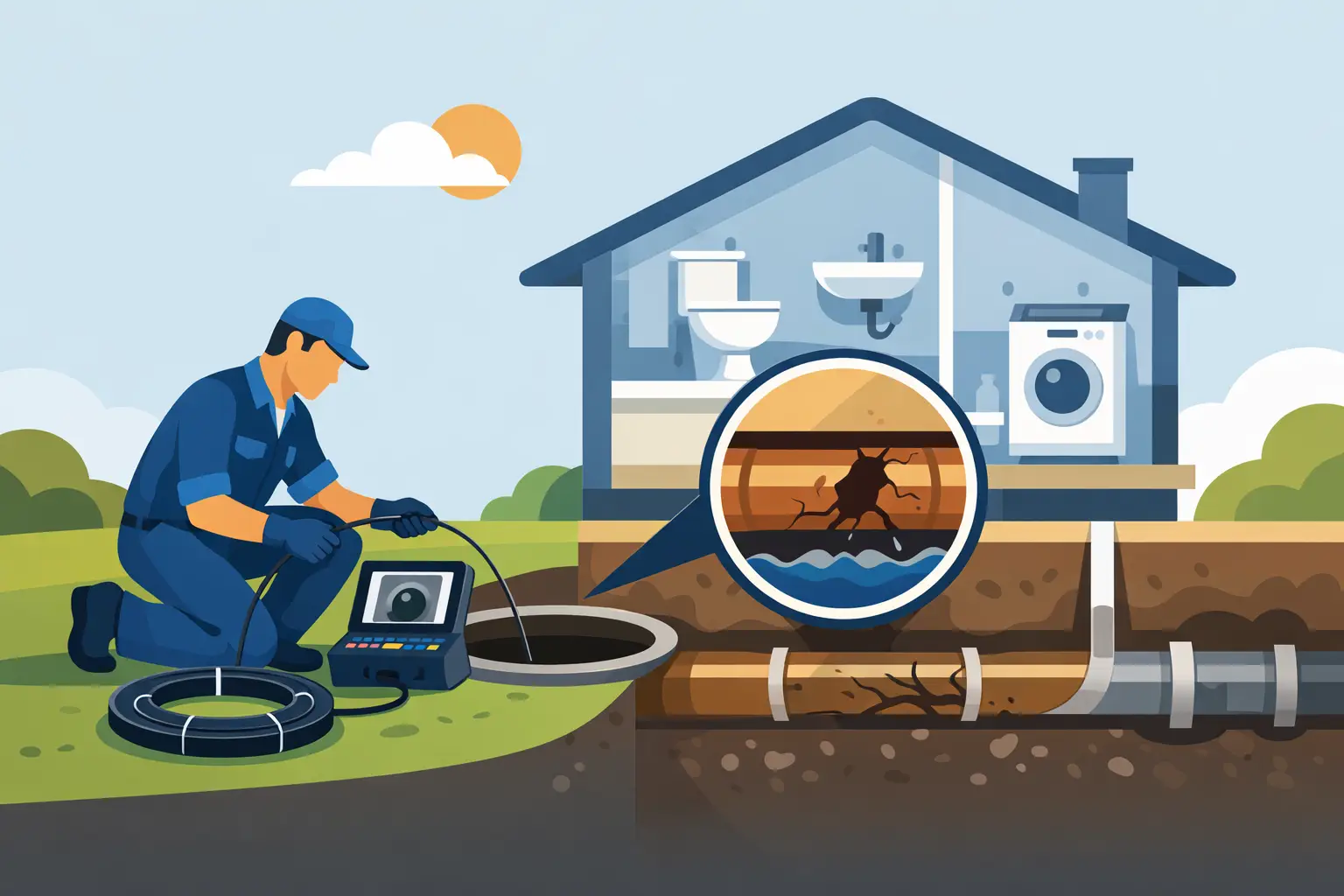
A sewer camera is fed through an accessible cleanout or drain opening and sends live video from inside the pipe. This allows the technician to locate the blockage or defect and assess its condition without unnecessary excavation.
An inspection can identify several common issues:
- Root intrusion at joints, cracks, or pipe openings
- Grease, soap residue, sludge, and heavy paper buildup
- Broken, cracked, collapsed, or corroded pipe sections
- Offset joints, separated connections, and low spots that hold waste
- Foreign objects that do not belong in the sewer line
Not every finding means the line needs to be replaced. That is where a clear diagnosis matters. Heavy buildup may respond well to professional drain cleaning or hydro-jetting. Roots may require cutting and ongoing maintenance. A collapsed or severely damaged pipe may call for repair. Seeing the condition first helps avoid recommending more work than the line actually needs.
Why Clearing a Line Is Not Always the Same as Inspecting It
A cable machine or hydro-jetting service can clear many blockages and get water moving again. That is often the immediate priority. But clearing the pipe and inspecting the pipe serve different purposes.
Cleaning removes the obstruction. Inspection explains the reason it formed and checks whether the pipe itself is in good shape. If the sewer has a crack, recurring roots, or a low spot where debris settles, flow may return today but the same issue can come back later.
For a one-time clog caused by too much paper or a foreign object, a camera inspection may not always be necessary. For recurring or whole-house drainage problems, it is usually the smarter next step. A local sewer specialist can explain what the camera finds in plain language and recommend only what fits the condition of your line.
Protect Your Property Before the Next Backup
Sewer line inspections are not about looking for problems that are not there. They are about replacing uncertainty with a clear view of the line that protects your home, tenants, customers, and budget. When drains start acting differently, schedule the inspection while it is still a manageable service call instead of an after-hours cleanup.