A toilet that clogs once after a little too much paper is frustrating. A toilet that clogs every week, bubbles when the tub drains, or backs up without warning is a sign that something deeper may be wrong. Knowing what causes frequent toilet clogs can help you avoid a messy backup and get the right fix before the problem reaches other drains.
What Causes Frequent Toilet Clogs?
Recurring clogs usually come down to one of two issues: something is repeatedly getting stuck in the toilet or drain line, or the plumbing system is not moving waste through the way it should. The cause may be close to the toilet, but it can also be farther down the branch drain or main sewer line.
1. Too Much Toilet Paper at Once
Toilet paper is designed to break down in water, but a large wad can still catch in the trap inside the toilet or lodge farther down the line. This is especially common in homes with older low-flow toilets, where the flush does not have enough force to move a heavy load through the drain.
Using less paper per flush and flushing twice when needed can help. If the same toilet clogs even with normal use, though, the problem is likely not just toilet paper.
2. “Flushable” Wipes and Other Non-Flushable Items
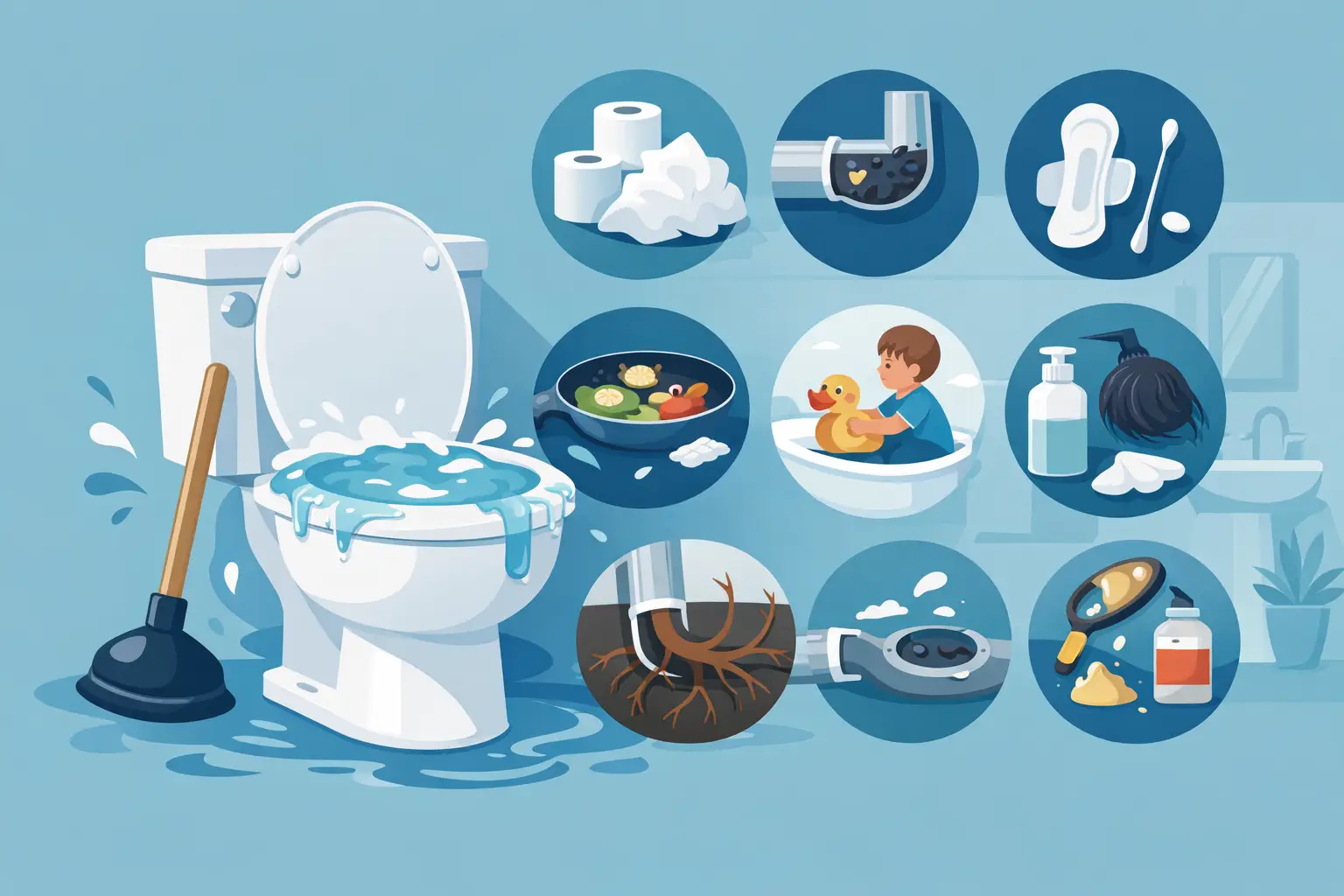
Many items labeled flushable do not break apart like toilet paper. Wipes, paper towels, feminine hygiene products, cotton swabs, dental floss, diapers, and cleaning pads can snag inside the toilet trap or collect in the drain line. Over time, one item catches another, creating a blockage that keeps returning.
Small children can also accidentally flush toys, washcloths, toothbrushes, or other objects. If a toilet began clogging suddenly after a household change or a visit from young guests, a lodged object is worth considering.
3. A Weak or Incomplete Flush
A healthy toilet should clear the bowl with a strong, steady flush. If water swirls slowly, rises too high before draining, or requires multiple flushes for normal use, the toilet may not be sending enough water through the trap and drain.
Low water in the tank, a failing flapper, mineral buildup under the bowl rim, or clogged jet openings can all weaken flushing power. In some cases, the toilet itself is old, damaged, or simply not performing well. A weak flush can turn ordinary use into a frequent clog problem.
4. Buildup in the Toilet Trap or Nearby Drain
The curved passage inside the toilet is called the trap. It holds water to block sewer gases, but its shape also makes it a common place for paper, wipes, and debris to catch. A plunger may open a partial blockage, yet leave enough material behind for the toilet to clog again days later.
Buildup can also sit just beyond the toilet in the branch drain. This is why a toilet can seem fixed after plunging but continue to have trouble. A professional cable cleaning can remove the obstruction instead of simply punching a small opening through it.
5. A Blocked Plumbing Vent
Your drain system needs air to work properly. Plumbing vents, usually routed through the roof, allow air into the pipes so water and waste can move without creating a vacuum. When a vent is blocked by leaves, a bird nest, ice, or other debris, the toilet may flush slowly or make gurgling sounds.
Vent problems are not the most common reason for a clog, but they should not be ignored. If you hear gurgling from the toilet or nearby sink, notice changing water levels in the bowl, or have slow drains without an obvious blockage, the vent system may need inspection.
6. A Main Sewer Line Blockage
When more than one fixture is acting up, the problem may be in the main sewer line instead of the toilet. Warning signs include a toilet that bubbles when the washing machine drains, water backing up into a tub or shower, slow drains throughout the building, or sewage appearing at a floor drain.
Mainline clogs can be caused by heavy paper buildup, grease, wipes, tree roots, or a foreign object. In homes, the lowest drains often back up first because wastewater has nowhere else to go. In a commercial restroom or rental property, repeated use can make a developing mainline blockage show up even faster.
7. Tree Roots in the Sewer Pipe
Tree roots naturally seek moisture. If there is a small crack, loose joint, or damaged section in an underground sewer pipe, roots can work their way inside. Once there, they trap toilet paper and waste until the line begins to clog repeatedly.
Root problems are common in older properties and homes with large, established trees. The toilet may work normally for a while after a drain cleaning, then begin slowing down again as roots catch new debris. A sewer camera inspection is the dependable way to confirm whether roots are involved and locate the affected section.
8. Damaged, Sagging, or Aging Sewer Pipes
Pipes do not last forever. Older sewer lines can crack, shift, corrode, or develop a low spot known as a belly. Waste and paper can settle in that low area instead of flowing out to the municipal sewer or septic system. The result is a clog that keeps returning no matter how often the toilet is plunged.
This is one reason recurring toilet clogs should not always be treated as a simple toilet problem. Clearing the line may restore flow, but an inspection can show whether there is pipe damage that needs a longer-term plan.
How to Tell Whether It Is a Toilet Clog or a Sewer Problem
Start by paying attention to which fixtures are affected. If one toilet is the only problem and the sink, shower, and other toilets drain normally, the blockage is often in that toilet or its nearby drain. If several fixtures are slow, gurgling, or backing up, suspect a larger drain or sewer line issue.
Timing matters too. A clog that happens right after a heavy flush may be caused by paper or an object near the toilet. A backup that appears when the dishwasher, washer, or shower drains points more strongly to a shared line. Do not keep flushing to test it. If the bowl is rising, shut off the water valve behind the toilet if necessary and wait for help.
What to Do Before the Problem Gets Worse
A plunger can be useful for a simple, fresh clog. Use a flange-style toilet plunger, make sure there is enough water in the bowl to cover the cup, and use firm, controlled strokes. If the toilet clears and then clogs again soon after, repeated plunging is unlikely to solve the real issue.
Avoid flushing wipes or using chemical drain cleaners in a toilet. Harsh chemicals can create fumes, damage some plumbing materials, and make the area more hazardous for whoever needs to clear the line. They also do little for roots, pipe damage, or an object stuck in the drain.
For repeated issues, professional drain cleaning and a sewer camera inspection provide clearer answers. Cleaning removes buildup, while a camera can show whether roots, a damaged pipe, or another obstruction is causing the trouble. For heavy buildup in appropriate sewer lines, hydro-jetting can thoroughly clean pipe walls with high-pressure water rather than harsh chemicals.
Preventing Frequent Toilet Clogs
The best prevention is simple: flush only toilet paper and human waste, use paper in reasonable amounts, and keep a covered trash can in every bathroom. If you manage a rental, office, restaurant, or other property with public restrooms, clear signage and regular drain maintenance can prevent costly emergency calls.
For homes with mature trees, older sewer pipes, or a history of backups, preventive inspection is a practical investment. Catching root growth or buildup early is usually easier and less stressful than dealing with sewage on the floor.
If your toilet keeps clogging, especially when other drains are slow or backing up, treat it as a warning instead of a nuisance. Drain Pros LLC can identify where the blockage is, clear the line properly, and help you make a practical plan to keep wastewater moving where it belongs.