A drain that keeps backing up is more than a hassle. It can shut down a kitchen, create a mess in a rental, or turn a normal workday into a stressful one fast. If you have been asking how does hydro jetting work, the short answer is this: it uses high-pressure water to cut through buildup inside your pipes and wash it out of the line.
That sounds simple, but the real value is in how thoroughly it cleans. Unlike a basic drain snake that pokes a hole through a clog, hydro jetting is designed to scour the inside walls of the pipe. For property owners dealing with recurring clogs, grease, sludge, or even tree roots, that difference matters.
How does hydro jetting work in a drain line?
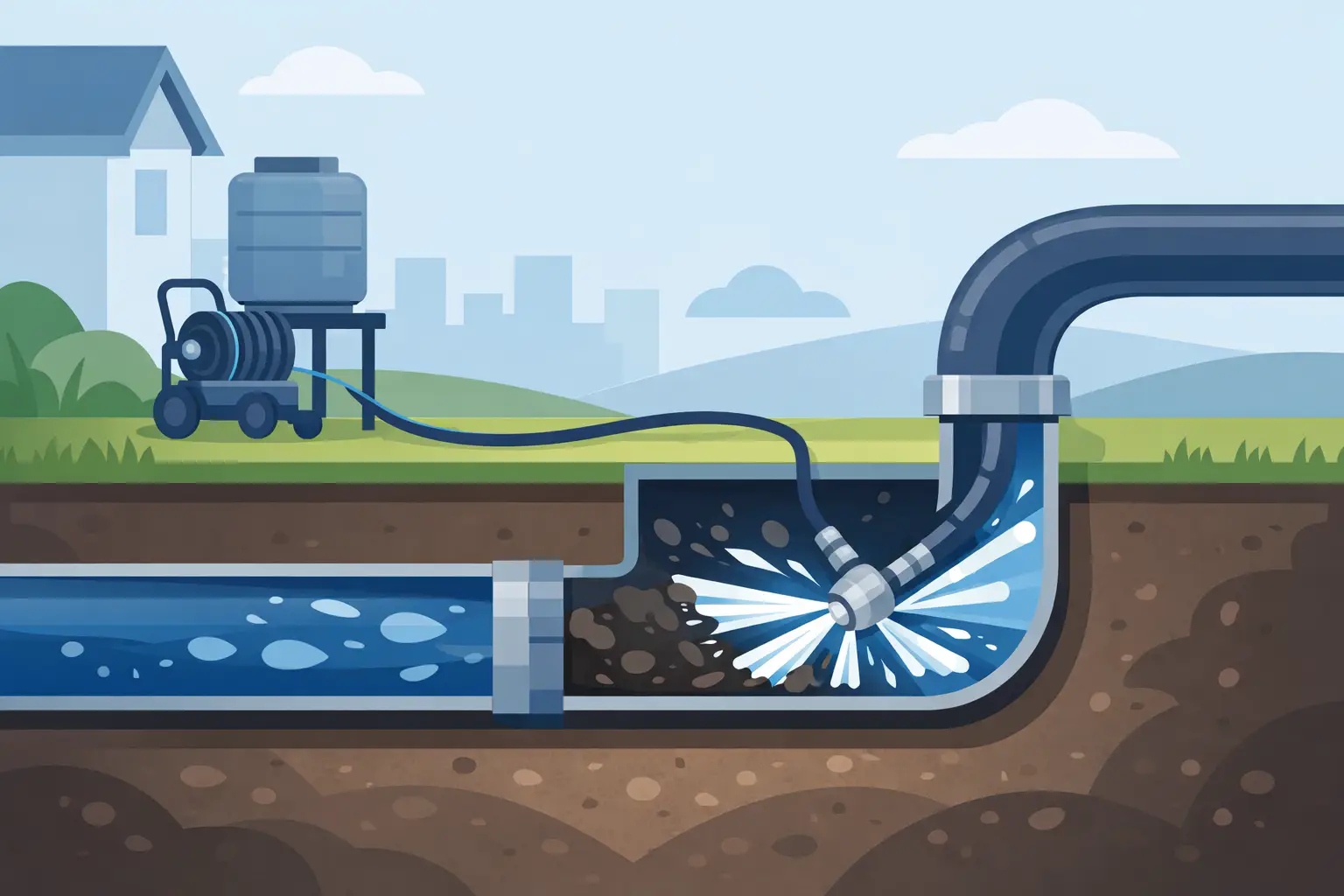
Hydro jetting starts with professional equipment that sends water through a specialized hose and nozzle at very high pressure. The nozzle is placed into the drain or sewer line, and once the machine is activated, the water sprays in multiple directions. Some jets point forward to break apart the blockage, while others spray backward to pull the hose through the pipe and clean the pipe walls at the same time.
As the hose moves through the line, the pressurized water cuts through grease, soap scum, mineral scale, sludge, and other debris that has built up over time. It does not just push that material farther down the line. It breaks it apart and flushes it out.
That is why hydro jetting is often used for tougher or repeat problems. If a line has narrowed because of years of buildup, a snake may get water moving again without fully solving the issue. Hydro jetting goes after the full obstruction and the residue left behind.
What makes hydro jetting different from snaking?
A lot of customers assume all drain cleaning methods do the same job. They do not.
A drain snake is a cable tool that punches through a clog or pulls part of it out. It works well in many situations, especially for isolated blockages. But if the inside of the pipe is coated with grease or heavy buildup, the snake may only open a path through the middle. Water starts flowing again, but the pipe is still dirty and more likely to clog again.
Hydro jetting is more like pressure washing the inside of the pipe. Instead of making a narrow opening, it cleans across the full diameter of the line. That can make a big difference in restaurants, commercial buildings, older homes, and rental properties where drain lines see constant use.
It is not about one method being better in every case. It depends on the type of blockage, the pipe condition, and the goal. Sometimes a basic cable cleaning is enough. Other times, hydro jetting is the better long-term fix.
What hydro jetting can remove
Hydro jetting is effective because water under pressure can tackle many kinds of blockage at once. In the right line, it can remove cooking grease, food waste, soap buildup, hair, paper residue, sediment, and sludge. It can also help break apart light to moderate root intrusion in some sewer lines.
Grease is one of the biggest reasons people choose this service. Grease does not just sit in one lump. It coats the pipe walls, traps debris, and gradually shrinks the opening inside the pipe. That is why a sink may drain slowly for months before it finally backs up. Hydro jetting strips that greasy layer off the pipe walls so the line can flow more normally again.
Roots are a little different. If roots have entered a sewer line, hydro jetting can cut and flush certain root masses, but it is not always the only repair needed. If the pipe is cracked, offset, or damaged, the roots may keep coming back. In those cases, a camera inspection helps show what is really going on.
Why an inspection matters first
Before hydro jetting starts, a professional often checks the condition of the line. This is especially important with older sewer lines, clay pipe, fragile piping, or lines with a history of collapse or damage.
High-pressure water is powerful, which is the whole point. But that also means the pipe needs to be strong enough to handle the cleaning process. If a line is badly broken or already deteriorating, hydro jetting may not be the right move until the condition is confirmed.
A sewer camera inspection takes out a lot of guesswork. It helps identify where the blockage is, what the blockage is made of, and whether the line is a good candidate for jetting. For property owners, that means a more honest recommendation instead of a one-size-fits-all answer.
Is hydro jetting safe for pipes?
This is one of the most common questions, and the honest answer is: usually, yes, when done by a trained professional and used on the right line.
Hydro jetting is safe for many residential and commercial drain and sewer systems. The pressure can be adjusted based on the pipe type, pipe size, and blockage. A trained technician is not just blasting water blindly. They are choosing the right nozzle, the right pressure, and the right approach for the situation.
Where people run into problems is assuming every pipe can be jetted the same way. That is not true. Older, damaged, or poorly repaired lines may need inspection first or a different solution altogether. Good service means knowing when hydro jetting is the right tool and when it is not.
When hydro jetting makes the most sense
Hydro jetting is often the right choice when drains keep clogging even after they have been snaked before. It also makes sense when there is heavy grease buildup, slow drains in multiple fixtures, foul odors from buildup in the line, or signs that the main sewer line is partially blocked.
For commercial properties, it can be a strong preventive maintenance option. Restaurants, apartment buildings, and other high-use properties often deal with recurring line buildup because of volume alone. In those settings, periodic hydro jetting can help avoid surprise backups and service interruptions.
For homeowners, it is often worth considering when a problem keeps returning. If you are paying for repeat cleanings every few months, it may be time to clean the line more thoroughly instead of treating the same symptom over and over.
What the service visit usually looks like
When a hydro jetting appointment is scheduled, the first step is evaluating the issue. That may include asking where the backup is happening, how long it has been going on, and whether the problem affects one drain or several.
If needed, the line is inspected to check for damage and locate the blockage. Then the hydro jetting hose is fed into the drain or sewer access point. Once the equipment is running, the technician works the hose through the line, breaking up debris and flushing it downstream.
After cleaning, the line may be checked again to confirm that the blockage has been removed and the pipe is flowing properly. That matters because the goal is not just temporary relief. The goal is to leave the line cleaner and more reliable than it was before.
Hydro jetting and chemical drain cleaners are not the same thing
Some property owners try chemical cleaners first because they are cheap and easy to buy. The problem is they often do very little for a serious blockage, especially in a main line or a pipe with heavy grease and sludge. On top of that, harsh chemicals can be rough on pipes and create safety issues when stronger cleaning is still needed later.
Hydro jetting uses water, not corrosive chemicals, to clean the line. That makes it a smarter option for many serious drain and sewer problems. It is still a professional service, not a DIY shortcut, but it is often a cleaner and more effective approach than repeated chemical use.
A practical fix, not a gimmick
Hydro jetting has a straightforward job: restore flow by cleaning the line thoroughly. It is not necessary for every clog, and any honest drain specialist should tell you that. But when the problem is buildup throughout the pipe, recurring backups, or a line that needs more than a quick punch-through, it can be one of the most effective tools available.
For homeowners and business owners around Southeast Iowa, that matters because drain problems rarely show up at a convenient time. You want the issue handled the right way, with a solution that fits the condition of the line and gives you a fair shot at avoiding the same headache again. That is why companies like Drain Pros focus on matching the service to the actual problem, not just the fastest temporary fix.
If you have been wondering whether hydro jetting is worth it, the best next step is usually simple: find out what is in the line first. Once you know whether you are dealing with grease, roots, sludge, or pipe damage, the right answer gets a whole lot clearer.