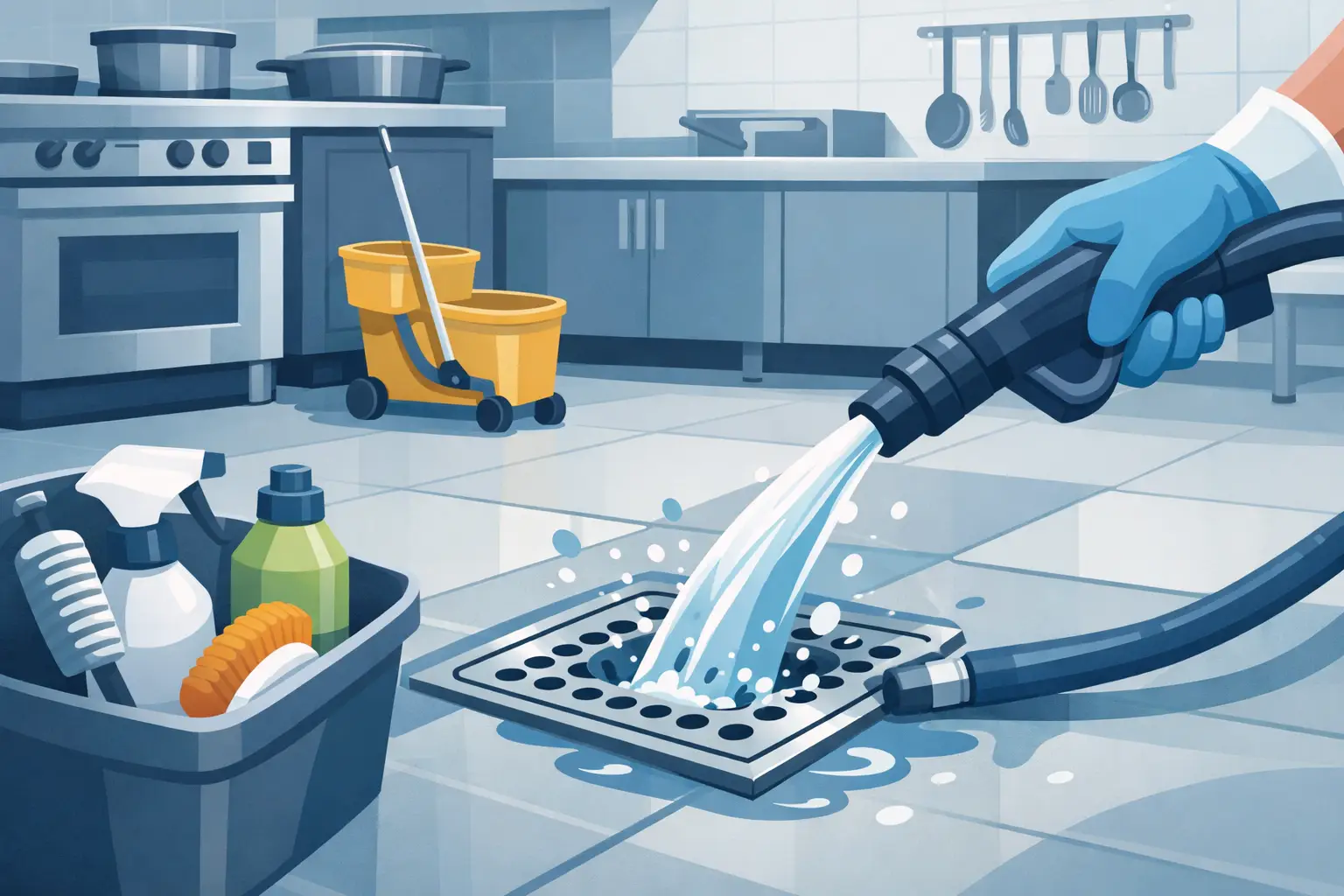
A bad floor drain usually makes itself known at the worst possible time – during lunch rush, after mop water hits the tile, or right when a health inspector walks through the door. Restaurant floor drain cleaning is one of those jobs that gets overlooked until the smell shows up, the water starts pooling, or wastewater backs up where food is being prepped and served. For restaurant owners and managers, staying ahead of that problem is a lot cheaper and easier than dealing with an emergency closure.
Why restaurant floor drains cause so many problems
Restaurant drains take more abuse than most commercial drains. Grease, food scraps, soap residue, sanitizer, dirt from shoes, and mop water all end up moving through the same system. Even when staff are careful, buildup starts forming along the pipe walls and around the drain opening.
The trouble is that floor drains often fail slowly. At first, water drains a little slower than usual. Then the smell starts. Then you notice standing water near the sink line, dish area, or walk-in cooler. By the time the drain fully backs up, the blockage has usually been building for a while.
In restaurants, that creates more than an inconvenience. Slow or backed-up drains can become a slip hazard, a sanitation issue, and a direct threat to daily operations. If wastewater is showing up where it should not, it can affect staff safety, customer experience, and compliance.
Signs your restaurant floor drain cleaning is overdue
Some warning signs are obvious, and some are easy to brush off for too long. If your staff keeps noticing a sour or sewer-like smell near the kitchen, bar, prep area, or restroom, that is often the first red flag. Floor drains are designed to move wastewater out and block sewer gas from coming back in. When buildup collects in the drain body or line, those odors start escaping.
Slow drainage is another common sign. If mop water lingers or backs up around the drain before it finally drops, there is likely a partial blockage in the line. Gurgling sounds can point to trapped air caused by restricted flow. Fruit flies and drain flies around floor drains can also signal organic buildup inside the pipe.
Sometimes the bigger clue is repetition. If staff are pouring water down the drain, using off-the-shelf products, or trying to flush it out again and again, but the same issue keeps returning, the clog is probably deeper than surface cleaning can fix.
What usually builds up inside restaurant floor drains
Grease is one of the biggest causes, even in places that use grease traps. It does not take much grease to start coating a pipe. Once that sticky layer forms, food particles, sludge, and debris begin attaching to it.
In kitchen drains, you also see starches, coffee grounds, bits of produce, proteins, and soap scum. In bar areas, citrus pulp and sugary residue can add to the mess. Restroom floor drains may collect paper debris, dirt, and mineral buildup. Over time, all of it narrows the line and makes flow less reliable.
It also depends on the drain location. A floor drain under a three-compartment sink deals with different waste than one near a walk-in cooler or one in a dishwashing station. That is why there is no one-size-fits-all fix. Some drains need routine cleaning at the opening, while others need the full line professionally cleared.
How to handle routine restaurant floor drain cleaning
Routine cleaning matters, but it needs to be done the right way. Staff can help keep drains moving by removing visible debris from strainers and drain covers, flushing drains with hot water when appropriate, and following a regular cleaning schedule for surfaces around the opening.
The key is understanding the limit of basic maintenance. Surface cleaning helps with odor control and minor residue near the top of the drain, but it does not remove hardened grease or heavy sludge farther down the pipe. That is where many restaurants get stuck. The drain looks cleaner on top, but the real restriction is still sitting below.
Harsh chemical cleaners are usually not the answer. They can damage pipes over time, create fumes in enclosed work areas, and still fail to clear thick commercial buildup. In food service settings, that trade-off rarely makes sense. If the problem keeps coming back, the line likely needs mechanical cleaning or hydro-jetting instead of another bottle off the shelf.
When a slow drain turns into a bigger issue
A recurring floor drain issue can point to more than one dirty drain opening. Sometimes the blockage is in a branch line serving several fixtures. In other cases, the problem ties back to a grease-related restriction farther down or even a main sewer issue.
That is why recurring symptoms matter. If one floor drain backs up every time nearby sinks drain, the issue may be in the shared line. If multiple drains in the building are acting up, the blockage could be larger than kitchen staff can handle. Waiting too long can lead to standing wastewater, business interruption, and more expensive service.
For restaurant operators, speed matters, but so does accuracy. You do not want a temporary fix if the line is going to back up again next week.
Professional restaurant floor drain cleaning vs. basic maintenance
Professional service is about getting past the visible mess and clearing the line where the real restriction is happening. Depending on the condition of the pipe, that may involve cable drain cleaning, inspection equipment, or hydro-jetting to break up grease, sludge, and debris along the pipe walls.
Hydro-jetting is especially useful in commercial settings where buildup is heavy and recurring. Instead of poking a small hole through the clog, it uses high-pressure water to clean the inside of the line more thoroughly. That can make a big difference in kitchens and wash areas where grease and residue have had time to layer up.
That said, it depends on the pipe condition. Older or damaged lines may need inspection first to make sure the right cleaning method is used. A good drain specialist will not guess. They will look at the symptoms, evaluate the system, and recommend the approach that fits the problem.
How often should restaurant floor drains be cleaned?
There is no perfect schedule that fits every restaurant. A busy kitchen pushing out high volumes of fried food, sauces, and dishwashing waste will need more frequent attention than a lower-volume shop with lighter drain use.
For some restaurants, monthly maintenance is the right move. Others may do well with quarterly professional cleaning, especially if staff are consistent about daily upkeep. The biggest factor is history. If a drain has backed up before, if odors are recurring, or if grease-heavy operations are part of the business, preventive cleaning is usually the better call.
Reactive service costs more in the long run. Not always in the invoice itself, but in labor delays, cleanup time, bad smells, staff frustration, and the risk of lost business during a backup.
What restaurant owners can do to reduce drain trouble
The best prevention is simple and consistent. Keep solids out of the drain as much as possible. Use strainers where they make sense. Train staff not to wash grease, food scraps, or mop debris into floor drains. Make sure cleaning routines include drain covers and surrounding areas, not just the visible floor.
It also helps to pay attention to the early signs. A drain that smells bad today can become a backed-up line by the weekend. A little pooling water near closing time can be the start of a larger obstruction. Catching those signs early gives you more options and less disruption.
For restaurants in Burlington and surrounding communities, working with a local drain specialist who understands commercial systems can save a lot of hassle. Drain Pros LLC handles urgent drain problems and preventive cleaning with the kind of fast, practical service restaurant operators need when time matters.
Don’t wait for the floor drain to fail
Restaurant floor drain cleaning is not glamorous, but it protects your kitchen, your staff, and your schedule. If a drain is slow, smells bad, or keeps backing up, that is usually your warning to act before it turns into downtime. The best time to deal with a restaurant drain problem is before it starts running back across the floor.