A drain can seem fine one week and turn into a repeat headache the next. Slow sinks, toilets that gurgle, floor drains that back up, and sewage odors often point to more than a simple clog near the opening. For tough buildup and recurring sewer trouble, hydro jetting in Stronghurst, IL can clear the inside of the pipe far more thoroughly than a basic cable machine.
Hydro jetting uses pressurized water to break apart grease, sludge, soap residue, roots, and other material sticking to sewer and drain pipe walls. It is a professional service, not something to try with a consumer pressure washer. The right equipment, nozzle, water pressure, and inspection process matter just as much as the jetting itself.
What Hydro Jetting Actually Does
A drain snake is useful for punching through many blockages. It creates a path for water to move again, which is often exactly what a simple clog needs. But a cable does not always remove the greasy coating and packed debris left along the pipe walls. That leftover buildup can catch more waste and lead to another backup sooner than expected.
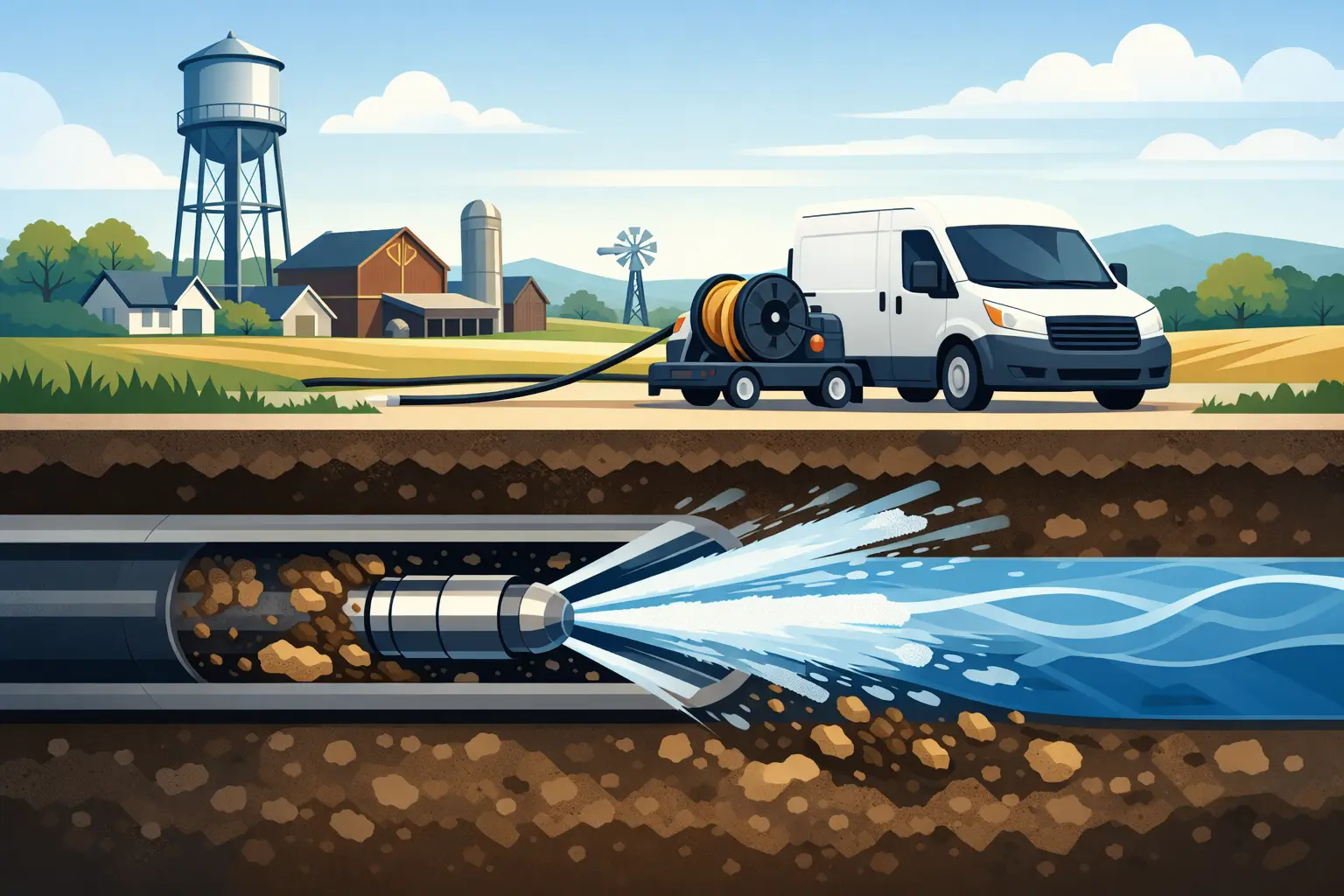
Hydro jetting works differently. A specialized hose is sent through the cleanout or drain access point. Rear-facing water jets pull the hose through the line while cleaning the pipe, and forward-facing jets help cut through the blockage. The result is a more complete cleaning of the line rather than a narrow hole through the middle of the clog.
This makes hydro jetting especially useful for main sewer lines, commercial kitchen drains, laundry lines, and drains that keep slowing down after previous cleaning. It uses water instead of harsh chemical drain openers, which can be a better option for clearing organic buildup without pouring corrosive products into the system.
When Hydro Jetting in Stronghurst, IL Makes Sense
Not every stopped-up drain needs hydro jetting. A bathroom sink clogged by hair near the stopper may be resolved with a simpler drain cleaning service. The best approach depends on where the clog is located, what is causing it, and the condition of the pipe.
Hydro jetting is often worth considering when a property has recurring mainline clogs, several drains backing up at once, thick grease buildup, or tree roots entering a sewer line. It can also be a smart preventive service for businesses where a drain shutdown can interrupt daily operations. Restaurants, rental properties, shops, and older homes can all benefit when buildup has become a regular problem.
Watch for these signs that the issue may be deeper in the line:
- Multiple fixtures drain slowly or back up at the same time.
- Toilets bubble or gurgle when a sink, shower, or washing machine drains.
- A floor drain backs up during laundry or heavy water use.
- The same sewer line needs to be snaked again and again.
- There is a sewer smell indoors, around a cleanout, or near the yard.
- Water or waste comes up at the lowest drain in the building.
A main sewer backup should be handled quickly. Continuing to run water can send more wastewater into the home or business, creating a larger cleanup and repair problem.
Why a Camera Inspection May Come First
Before high-pressure cleaning begins, a sewer camera inspection may be recommended. This is not an unnecessary extra. It gives the technician a clear look at what is in the pipe and helps confirm whether hydro jetting is the right tool.
A camera can reveal grease, scale, roots, a collapsed pipe section, offset joints, or a foreign object. If the line is badly broken or deteriorated, forcing water through it may not be the best first move. In those cases, the real solution could involve repairing or replacing the damaged section.
For a line that is structurally sound but packed with debris, hydro jetting can restore much better flow. A follow-up camera view may also show how well the pipe was cleaned and whether there are underlying concerns to plan for. That clear information helps property owners make decisions based on the condition of the line, not guesswork.
What Happens During the Service Call
A professional hydro jetting visit starts with finding the correct access point and understanding the symptoms. The technician may ask when the problem started, which fixtures are affected, whether the line has been cleaned before, and if there are large trees near the sewer route. Those details can help narrow down the cause.
If jetting is appropriate, the technician selects a nozzle suited to the blockage and pipe. Water pressure is controlled for the job at hand. The hose is advanced through the sewer or drain line, clearing material as it moves. Afterward, water flow is tested, and camera inspection may be used to confirm the condition of the pipe.
The process is thorough, but it is not magic. Hydro jetting cannot repair a crushed sewer pipe, reconnect a separated joint, or correct a line with a major slope issue. It can, however, remove the buildup that is making an otherwise serviceable line slow, dirty, and unreliable.
Hydro Jetting for Homes, Rentals, and Businesses
Homeowners often call after a messy backup or when drains keep slowing down. For homes with older sewer lines or mature trees, root intrusion and scale can become ongoing concerns. Cleaning the line thoroughly can reduce the chance of another surprise backup, though a damaged line may still need repair later.
Landlords and property managers need a solution that protects both the building and the people living in it. When several units share a mainline, one blockage can affect multiple tenants. A prompt inspection and drain cleaning service helps identify whether the trouble is a localized branch drain or a larger sewer-line issue.
For small businesses, grease and food debris can build up quickly in drain lines. Waiting until a kitchen sink is fully stopped or a floor drain backs up can mean lost work time, cleanup, and unhappy customers. Planned hydro jetting can help keep high-use drains moving, especially when paired with good grease-handling habits.
How to Help Your Drains Stay Clear After Jetting
A freshly cleaned line still needs reasonable care. Avoid treating the drain like a trash can. Wipes, paper towels, feminine hygiene products, dental floss, coffee grounds, and cooking grease do not belong in toilets or sinks. Even products labeled “flushable” can create problems once they reach the sewer line.
In the kitchen, collect cooled grease in a container and throw it away instead of rinsing it down the drain. Use sink strainers to catch food scraps and hair. If tree roots have been found in a sewer line, keep an eye on recurring slow drains and schedule inspection before the problem becomes an emergency.
For commercial properties, preventive cleaning intervals depend on the type of business and daily drain use. A busy food service operation may need attention more often than a low-traffic office. The right schedule should be based on the building’s real usage and history, not a one-size-fits-all promise.
Get the Right Answer Before the Backup Gets Worse
When drains are slow, it is tempting to keep trying store-bought chemicals or wait for the problem to pass. That can waste time and sometimes make conditions worse. A professional evaluation can identify whether a cable, camera inspection, hydro jetting, or sewer repair is the sensible next step.
Drain Pros LLC provides focused drain and sewer service for Stronghurst-area homes and businesses, with straightforward communication and no weekend up-charge. If a recurring clog is disrupting your property, getting the line checked now can help you avoid the stress of a full backup later.