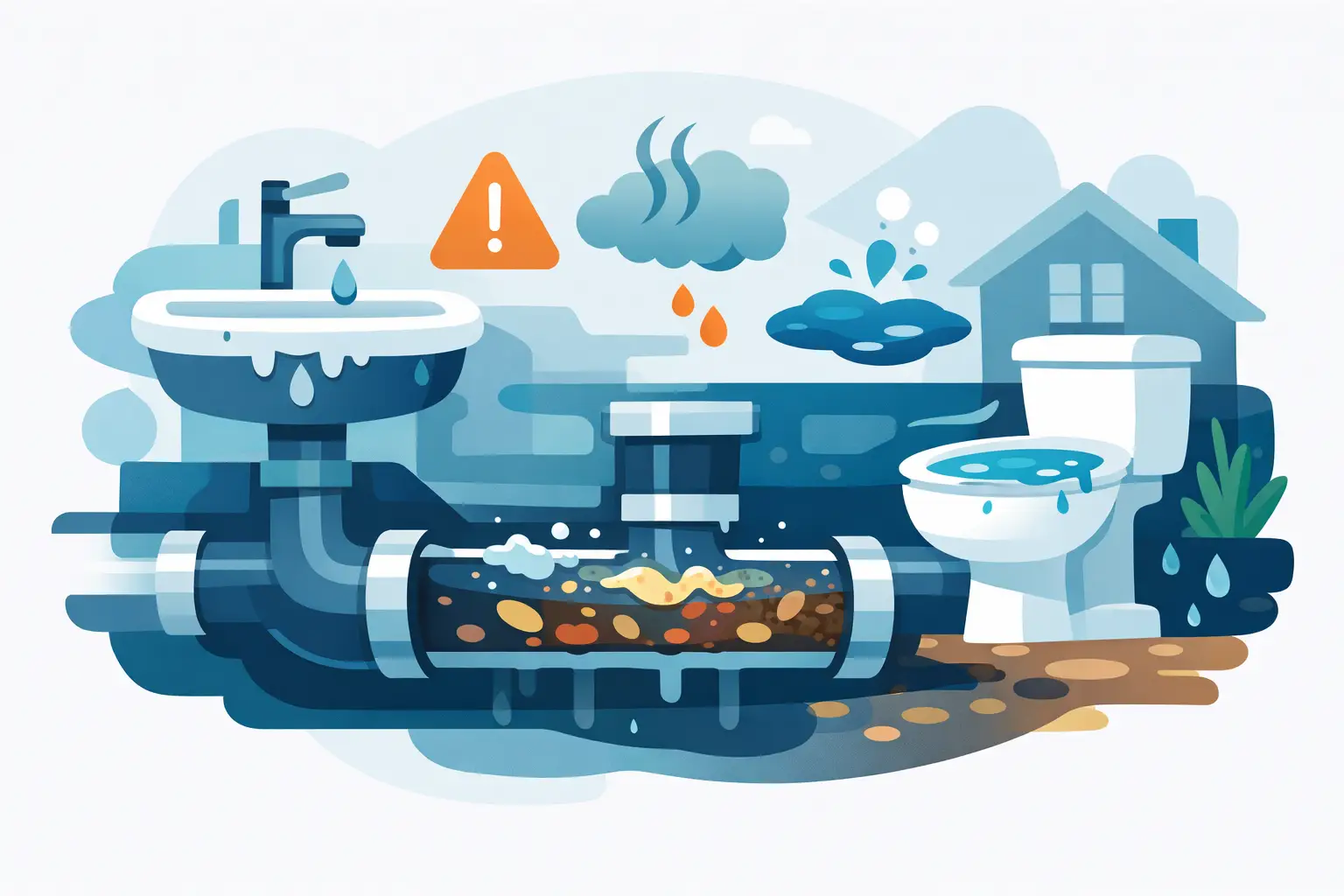
A kitchen sink that drains slowly is annoying. A toilet that makes the shower drain gurgle is a different kind of problem. Those are mainline clog warning signs, and they can mean the pipe carrying wastewater away from your entire property is starting to back up.
A main sewer line clog rarely fixes itself. The longer you wait, the more likely you are to face wastewater backing up through a low drain, a messy cleanup, and damage to floors or belongings. Knowing what to watch for gives you a chance to act before the situation turns into an emergency.
What Is a Mainline Clog?
Your main sewer line is the larger pipe that carries wastewater from your toilets, sinks, tubs, showers, laundry, and floor drains out to the municipal sewer connection or septic system. A clog in one branch drain usually affects one fixture. A clog in the mainline can affect several fixtures at once.
Grease buildup, wipes, paper products, tree roots, broken pipe sections, shifting soil, and scale inside older lines can all restrict the flow. In some cases, the line is not fully blocked yet. Water can still get past the buildup, just not fast enough when several fixtures drain. That is why early warning signs matter.
9 Mainline Clog Warning Signs
1. Multiple Drains Are Running Slowly
One slow bathroom sink may be hair, soap residue, or buildup in that fixture’s drain. But when the kitchen sink, shower, and toilet all seem slow, the problem may be farther down the line.
Pay attention to whether the issue spreads from room to room. Multiple slow drains are especially concerning when they appear around the same time or return soon after you clear an individual drain.
2. Toilets Gurgle When Other Fixtures Drain
A toilet should not bubble, gurgle, or change its water level when you run the washing machine or empty a bathtub. Those sounds can happen when wastewater is struggling to move through a restricted mainline and air is being pushed back through the plumbing system.
This is one of the clearer signs that the problem is beyond a simple toilet clog. Avoid repeated flushing or running large amounts of water until the line is checked.
3. Water Backs Up Into a Tub or Shower
A tub or shower is often one of the lowest drains inside a home. When the mainline cannot carry water away, wastewater may come back through that low point.
You might flush a toilet and see water rise in the nearby tub. Or the washing machine may drain and leave dirty water in a basement shower. Treat this as an urgent issue. Continued use can quickly turn a small backup into a larger mess.
4. A Floor Drain Starts Filling With Dirty Water
Basement floor drains are designed to handle occasional water, not sewage backups. If water, sludge, or a sewer odor is coming up through a floor drain, stop using water fixtures if you can.
A floor-drain backup can point to a mainline blockage, but the exact cause depends on how the building is plumbed. A professional inspection can determine whether the restriction is in the building sewer, a branch line, or another part of the drainage system.
5. The Problem Gets Worse After Laundry Day
A washing machine sends a large volume of water into the drain in a short period. When a main sewer line is partially clogged, that sudden flow can overwhelm the remaining opening in the pipe.
If the washer causes gurgling toilets, slow showers, or water at a floor drain, do not assume the laundry drain alone is the problem. It may simply be exposing a restriction already building in the mainline.
6. You Smell Sewer Gas Indoors or Near the Cleanout
A persistent sewer smell is never something to ignore. A clog can trap waste in the line and force odors back through drains, floor drains, or cleanout areas. You may notice the smell in a basement, utility room, bathroom, or outside near the sewer cleanout.
A dry drain trap can also cause an odor, so the smell alone does not confirm a mainline clog. But when sewer odor shows up with slow drains or gurgling, it is time to have the line evaluated.
7. Drain Problems Keep Coming Back
A plunger or small drain snake may restore flow for a while, especially if water is getting through a narrow opening in the pipe. If the same drains clog again in days or weeks, the blockage may be deeper than the fixture.
Recurring trouble is common when roots, heavy grease, mineral scale, or pipe damage is involved. Clearing the immediate symptom without addressing the material farther down the line can leave you dealing with the same problem again.
8. You Have Mature Trees Near the Sewer Route
Tree roots naturally seek moisture. Small openings at pipe joints, cracks, or aging connections can provide it. Once roots enter a sewer line, they can catch paper and waste until the flow becomes restricted or completely blocked.
Older homes and properties with clay, cast-iron, or aging sewer piping are often more vulnerable, but any line with a weak connection can be affected. A camera inspection is the practical way to confirm whether roots are the cause and whether the pipe itself needs further attention.
9. You See Sewage Outside or Near the Sewer Cleanout
Wet, smelly ground near the sewer line, sewage around a cleanout, or wastewater pooling outdoors can indicate that the line is blocked or damaged. This can be a health concern, especially around children, pets, customers, or tenants.
Keep people away from the area and avoid trying to open a pressurized cleanout yourself. A blocked line can release wastewater suddenly when the cap is removed.
When a Mainline Clog Becomes an Emergency
Some drain issues can wait for a scheduled appointment. A mainline problem should be treated as urgent when wastewater is backing up inside, toilets will not flush without affecting other drains, or a floor drain is filling with sewage.
The best immediate move is simple: stop adding water to the system. Do not run the dishwasher, washing machine, showers, or faucets. Avoid flushing unless absolutely necessary. Every gallon sent down the drain has fewer places to go when the mainline is blocked.
If you manage a rental, restaurant, office, or other small business, quick action protects more than the building. A backup can interrupt operations, create sanitation concerns, and affect tenants, staff, or customers. Calling early is usually less costly than cleaning up after the line fully backs up.
Why Store-Bought Drain Cleaners Are a Poor Fix
Chemical drain cleaners are not a dependable answer for main sewer line clogs. They often cannot reach or dissolve the real blockage, particularly when roots, wipes, hardened grease, or damaged pipe are involved. They can also sit in the pipe and create a hazard for anyone working on the drain later.
A proper clearing method depends on what is in the line and what the pipe condition looks like. Cable machines can cut through certain obstructions. Hydro-jetting uses high-pressure water to break up grease, sludge, and buildup along pipe walls. A sewer camera inspection helps identify roots, collapsed sections, offsets, or other conditions that cleaning alone may not solve.
There is no one-size-fits-all method. Hydro-jetting can be an excellent option for a sound pipe with heavy buildup, while a damaged or fragile older line may need a more cautious approach. The right service starts with an honest diagnosis.
How to Reduce the Chance of Another Backup
You cannot prevent every sewer issue, especially where roots or aging pipes are involved. Still, good habits reduce the strain on your drains. Keep grease, coffee grounds, food scraps, wipes, hygiene products, and heavy paper products out of toilets and sinks. Even products labeled flushable can contribute to blockages.
For properties with a history of recurring mainline trouble, preventive cleaning and camera inspections can catch buildup before it becomes a backup. This is particularly useful for rental properties, restaurants, older homes, and buildings with mature trees near the sewer route.
Get the Line Checked Before the Backup Gets Bigger
Mainline clogs do not always start with a dramatic flood. More often, they give you smaller warnings first: a gurgling toilet, a slow tub, a floor drain acting strange, or several fixtures draining poorly at once. Paying attention to those changes can save you from a much larger cleanup.
For homeowners and businesses in Burlington and nearby communities, Drain Pros LLC provides focused drain cleaning, sewer clearing, hydro-jetting, and camera inspection services with straightforward answers and reliable local service. If the warning signs are showing up in more than one drain, stop using excess water and get the line checked before it backs up where you least want it.