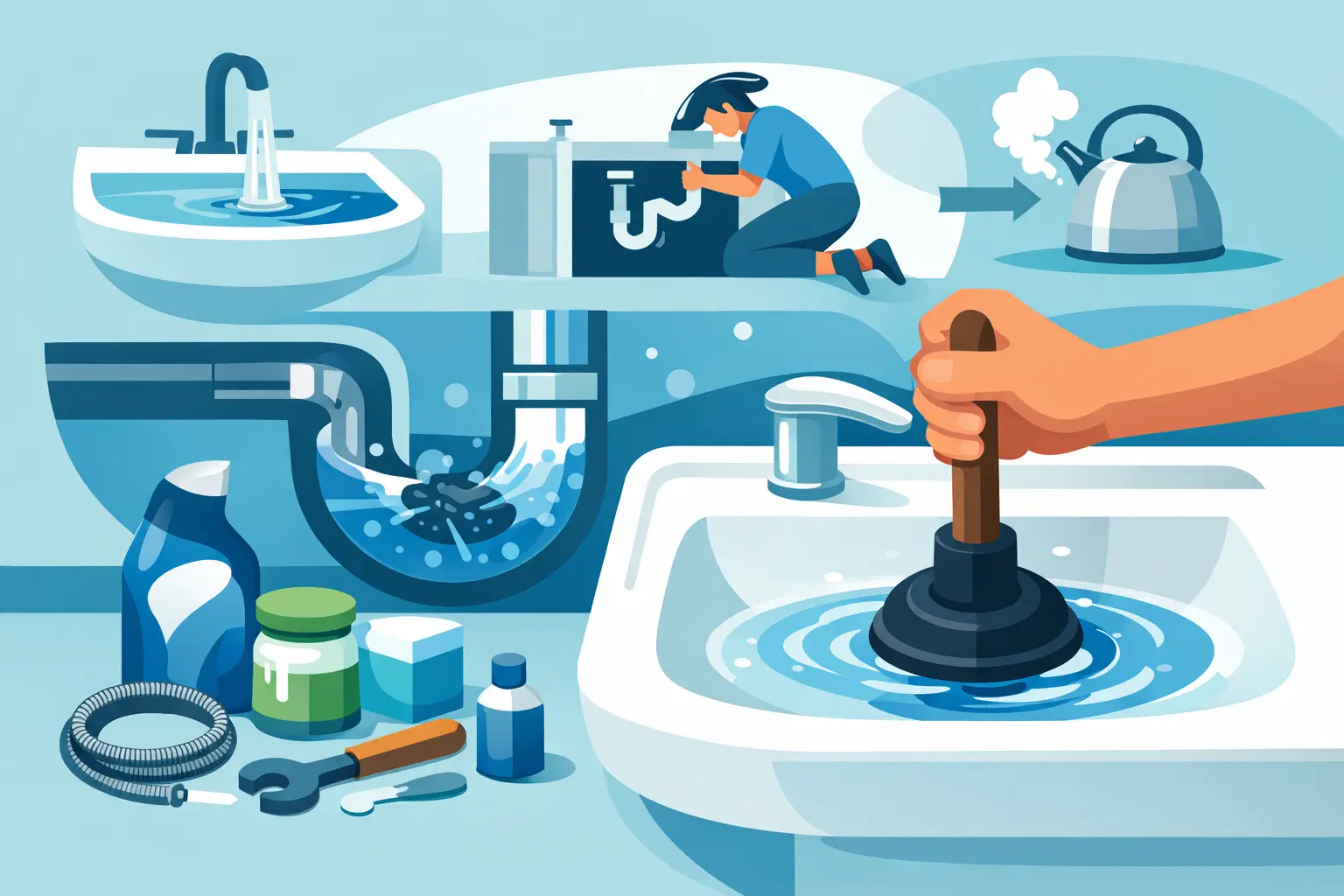
A sink that takes forever to empty is more than a small annoyance. Water pools around the drain, toothpaste and food scraps linger, and eventually the sink can stop draining altogether. The right slow draining sink solutions depend on what is causing the restriction – and acting early can often prevent a messy backup.
In many homes and businesses, the problem is close to the drain opening and can be handled with basic cleanup. But when slow drainage keeps coming back, affects more than one fixture, or comes with sewer odors and gurgling, it is time to look beyond a quick fix.
Start With the Simple Slow Draining Sink Solutions
A slow sink is usually caused by buildup. Bathroom sinks collect hair, soap residue, toothpaste, and lotion. Kitchen sinks pick up grease, coffee grounds, food particles, and detergent film. Over time, that material sticks to the inside of the pipe and narrows the path for water.
Start by removing the stopper or drain cover. Many bathroom sink stoppers lift out, while others connect to a pivot rod under the sink. Put a small bucket or towel below the drain before taking anything apart. Pull away visible hair and debris, then rinse the stopper clean before reinstalling it.
Next, run hot water for a few minutes. Hot water can help soften light soap or grease buildup, especially in a kitchen sink. It will not remove a heavy clog, but it is a good first step after clearing debris from the opening.
Do not count on boiling water for every sink. Very hot water may be hard on older pipes, certain plastic fittings, or a porcelain sink with existing damage. Hot tap water is the safer choice when you do not know the condition of the plumbing.
Use a Plunger the Right Way
A plunger can clear a soft clog that sits in the trap or just beyond it. Use a clean cup-style plunger for sinks, not the same tool used for a toilet.
Fill the basin with enough water to cover the plunger cup. If the sink has an overflow opening near the top of the bowl, block it with a wet rag. That helps the plunger create pressure where it matters. Use short, firm strokes for 15 to 20 seconds, then check whether the water drains more quickly.
For a double kitchen sink, seal the second drain opening with a wet rag or stopper while plunging the clogged side. Without that seal, pressure escapes through the other basin instead of pushing against the clog.
If a few rounds of plunging make no difference, stop forcing it. A tougher blockage farther down the line will not usually respond to more effort, and aggressive plunging can loosen old pipe connections.
Clean the P-Trap When the Clog Is Close
The curved pipe below the sink is called the P-trap. It holds water to block sewer gas from coming up through the drain, but it is also a common place for debris to collect. If your sink is still slow after cleaning the stopper and plunging, the P-trap may be worth checking.
Place a bucket underneath the trap, loosen the slip nuts, and carefully remove the curved section. Expect dirty water and trapped debris. Clean the trap, inspect the washers, and reinstall everything hand-tight before testing for leaks.
This is a reasonable do-it-yourself repair when the fittings are accessible and in good shape. If pipes are corroded, glued in place, difficult to reach, or leaking after reassembly, it is better to call a drain specialist than turn a slow drain into a water-damage problem.
Be Careful With Chemical Drain Cleaners
Chemical drain cleaners promise a fast answer, but they are rarely the best long-term solution. Strong products can sit in the pipe without fully clearing the clog. They may damage older metal pipes, weaken certain fittings, and create a hazard for anyone who later has to open the drain or cable the line.
They also do not remove the real source of many repeat clogs. Grease, scale, hair, and heavy buildup often remain on the pipe walls even when a chemical opens a small channel through the blockage. Water starts moving again for a while, then the same problem returns.
For a minor sink clog, mechanical cleaning is usually more dependable. For a stubborn or recurring restriction, professional drain cleaning gives you a clearer answer without relying on harsh chemicals.
Know When the Sink Is Warning You About a Bigger Problem
One slow sink does not always mean the main sewer line is blocked. Still, certain signs point to a clog deeper in the plumbing system. Pay attention if multiple sinks are draining slowly, the tub or shower backs up when another fixture runs, or toilets gurgle after you use a nearby sink.
Bad odors are another warning. A dirty P-trap can smell, but sewer-like odors that keep returning may signal a blockage, venting issue, or problem farther down the line. Water coming up in a floor drain is more urgent and should not be ignored.
For commercial properties, a slow restroom or break-room sink can affect customers, employees, and daily operations. Restaurants and food-service businesses should take repeat kitchen drainage problems especially seriously. Grease buildup can move beyond the sink line and create a larger blockage that shuts down a busy workday.
Recurring Clogs Need More Than a Quick Fix
If you clear the sink and it slows down again within days or weeks, something is still in the line. The clog may be farther down than the P-trap, or buildup may be coating a longer section of pipe. Repeatedly plunging or pouring products into the drain treats the symptom, not the cause.
A professional drain cable can break through many blockages. When a line has thick grease, sludge, scale, or widespread buildup, hydro-jetting may be the better option. Hydro-jetting uses high-pressure water to clean the pipe walls, not just poke a small hole through the clog. It is often a strong choice for repeat problems, but the pipe condition should be assessed first, particularly in older properties.
A sewer camera inspection can also remove the guesswork. It helps identify whether the issue is buildup, a damaged pipe, root intrusion, a sagging line, or another obstruction. That information matters because each problem needs a different repair approach.
Prevent the Next Slow Drain
The best prevention is simple: keep material that does not belong in the drain out of it. In bathroom sinks, use a hair catcher and clean it regularly. In kitchen sinks, wipe grease from pans into a container before washing them. Letting grease cool and harden before disposal is far better than rinsing it down with hot water.
Avoid putting coffee grounds, eggshells, pasta, rice, and fibrous food scraps down a kitchen sink. A garbage disposal can break food into smaller pieces, but it does not make those materials disappear. They still have to travel through the drain line.
For rental properties and busy commercial spaces, regular drain maintenance can save a call at the worst possible time. A scheduled cleaning is usually easier to manage than an after-hours backup, damaged flooring, or a closed restroom.
When to Call a Drain Cleaning Specialist
Call for professional help when the sink will not drain, the clog returns, more than one fixture is affected, or you notice gurgling, sewage smells, or water backing up elsewhere. These are signs that the problem may be beyond what a plunger or cleaned P-trap can solve.
Drain Pros LLC serves Burlington and surrounding Southeast Iowa communities with focused drain cleaning, sewer clearing, hydro-jetting, and camera inspection services. The goal is straightforward: find the blockage, clear it properly, and help you avoid the same trouble again.
A slow sink rarely fixes itself. Clear the easy debris early, skip the harsh shortcuts, and get the line inspected when the warning signs point to a deeper clog. A fast call now can keep a minor drainage issue from becoming the next major cleanup.