A sewer backup has a way of making every decision feel urgent. You want the line working again, but you also do not want to pay for a yard or floor to be torn up without a clear reason. That is where camera inspection versus excavation becomes the key question. One helps find the problem from inside the pipe. The other gives a crew access to repair or replace the damaged section.
For most drain and sewer problems, a camera inspection is the sensible first move. It gives you facts before anyone starts digging. But a camera cannot repair a broken pipe, a collapsed sewer line, or a section that has shifted apart. The right answer depends on what the camera finds, where the line runs, and whether cleaning can restore dependable flow.
Camera Inspection Versus Excavation: Start With Facts
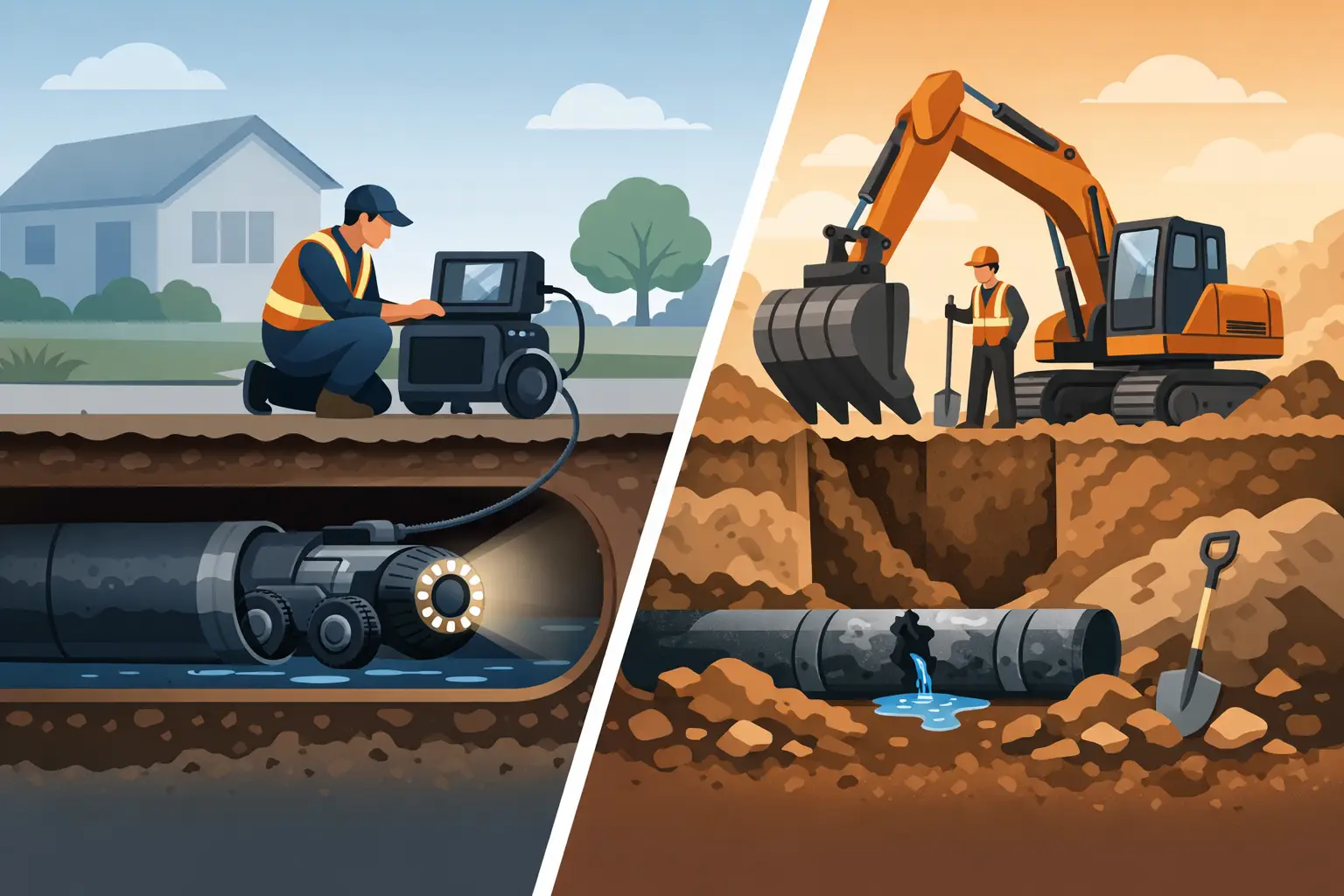
A sewer camera inspection uses a small waterproof camera attached to a flexible cable. The technician feeds it through a cleanout or another suitable access point and watches the inside of the drain line in real time. This allows the technician to see buildup, roots, cracks, standing water, separated joints, pipe bellies, and other conditions that may be causing trouble.
The goal is not to make a complicated problem sound technical. The goal is to avoid guessing. A recurring toilet backup might come from tree roots near the street, grease buildup in a commercial kitchen line, a damaged pipe under a driveway, or a simple clog that needs professional cleaning. Those problems can look alike from inside the building, but they call for different fixes.
Excavation means exposing the buried pipe so it can be repaired or replaced. Depending on the location, this may involve digging in a yard, removing landscaping, opening a driveway section, or accessing a line beneath a basement floor. It is more involved work, which is why it should be based on a clear diagnosis whenever possible.
A camera inspection is usually the lower-impact option because it lets a technician inspect the line through an existing opening. Excavation becomes necessary when the pipe itself has failed and there is no practical way to restore it from the inside.
When a Camera Inspection Is the Right First Step
If your drains are slow, your main sewer line backs up occasionally, or you have had more than one clog in the same area, a camera inspection can save time and unnecessary repair work. It is especially useful after a line has been cleared with a cable machine or hydro-jetting. Cleaning may restore flow, but the camera can show whether the blockage was a one-time issue or a sign of a deeper problem.
Camera inspections are often a good fit when roots are suspected. Roots can enter old clay tile, cast iron, or PVC connections through small gaps. Hydro-jetting may clear the roots and get the line moving again, but the camera helps show how severe the intrusion is and whether the pipe has started to break down.
They are also helpful for homebuyers, landlords, and property managers. A sewer line is out of sight, but it can be one of the more expensive systems to repair. Inspecting the line before purchasing a property, turning over a rental, or planning a major remodel can reveal issues that would otherwise stay hidden until a backup happens.
For businesses, a camera inspection can pinpoint repeated trouble in restrooms, floor drains, or kitchen drains. Instead of shutting down an area and hoping the issue is gone, you can make a repair decision based on what is actually inside the pipe.
What a Sewer Camera Can Find
A camera does not just confirm that water is not moving. It can help identify the condition causing the backup. Common findings include heavy grease or sludge, wipes and foreign objects, root intrusion, cracked or corroded pipe, offset joints, and low spots where waste and water collect.
Some of these issues may respond well to cleaning. Grease buildup, scale, loose debris, and smaller root masses can often be removed with the right equipment. Hydro-jetting uses high-pressure water to scour the inside of the line without relying on harsh drain chemicals. For many lines, that can restore flow and help prevent another quick clog.
Other findings point toward repair. If the camera shows a collapsed section, a major crack, a hole, or pipe sections that have pulled apart, cleaning alone is not a long-term answer. Waste can continue to catch in the damaged area, roots can return, and backups may become more frequent.
A good inspection should include a straightforward explanation of what was found, where it appears to be, and what your realistic options are. You should not be pressured into excavation simply because a clog was difficult to clear.
When Excavation Is Necessary
Excavation is generally the right call when the sewer line has structural damage that cannot be cleaned away. A fully collapsed pipe is the clearest example. If the camera cannot pass through a crushed section, water and waste will keep backing up until that portion is repaired or replaced.
Digging may also be needed when there is a severe belly in the line. A belly is a sagging section of pipe where water and solids settle instead of flowing downhill. A small low spot may be manageable with periodic maintenance, but a deep belly can cause recurring blockages even after thorough cleaning.
Separated joints and badly offset pipe sections can also require excavation. Over time, soil movement, aging materials, freezing conditions, or poor original installation can shift a sewer line out of alignment. The camera may show a visible lip where waste catches or a gap where roots have entered. Repairing that section from the outside may be the most dependable solution.
The location matters, too. A damaged line in an open yard is often simpler to access than one under a concrete slab, road, garage, or mature landscaping. That does not mean you should avoid necessary repairs. It means the repair plan should account for access, restoration, permits where required, and the condition of the full line.
Cost Is About More Than the First Visit
It is understandable to compare the price of a camera inspection with the cost of excavation. An inspection is generally far less expensive because it is diagnostic work. Excavation includes labor, equipment, materials, access work, and restoration after the repair is complete.
But the cheapest choice on the first day is not always the best value over time. Repeated emergency drain cleaning can add up if the line is collapsed or severely damaged. On the other hand, digging up a line that only needed hydro-jetting is money and disruption you may not have needed.
The practical approach is to start with the least invasive option that can provide a reliable answer. If the line can be cleaned and the camera shows sound pipe, you may avoid excavation entirely. If the camera reveals a serious defect, you can move forward knowing why repair is recommended.
Do Not Wait for a Major Backup
A sewer line rarely fails at a convenient time. Warning signs include multiple slow drains, gurgling toilets, water backing up into a tub or floor drain, sewage odors, wet spots in the yard, and clogs that return soon after clearing. If more than one fixture is affected, the issue may be in the main sewer line rather than a single branch drain.
Fast action can limit water damage, protect your property, and give you more options. When wastewater is backing up, stop using water fixtures if possible until the line is checked. Running another load of laundry or flushing repeatedly can make the backup worse.
For property owners in Burlington and surrounding communities, Drain Pros LLC can inspect, clean, and explain what the line is telling you. The point is simple: clear the problem when cleaning is the right fix, and recommend repair only when the pipe condition calls for it.
Before you agree to excavation, ask what the camera showed and whether the damaged area was located clearly. A clear answer today can spare you from another messy, expensive surprise later.