A busy Friday dinner rush can turn into a costly mess when a floor drain backs up or foul odors reach the dining room. Good grease trap management keeps fats, oils, and grease out of the plumbing system before they harden into a blockage. For restaurants, bars, cafeterias, convenience stores, and other commercial kitchens, it is one of the most practical ways to protect daily operations.
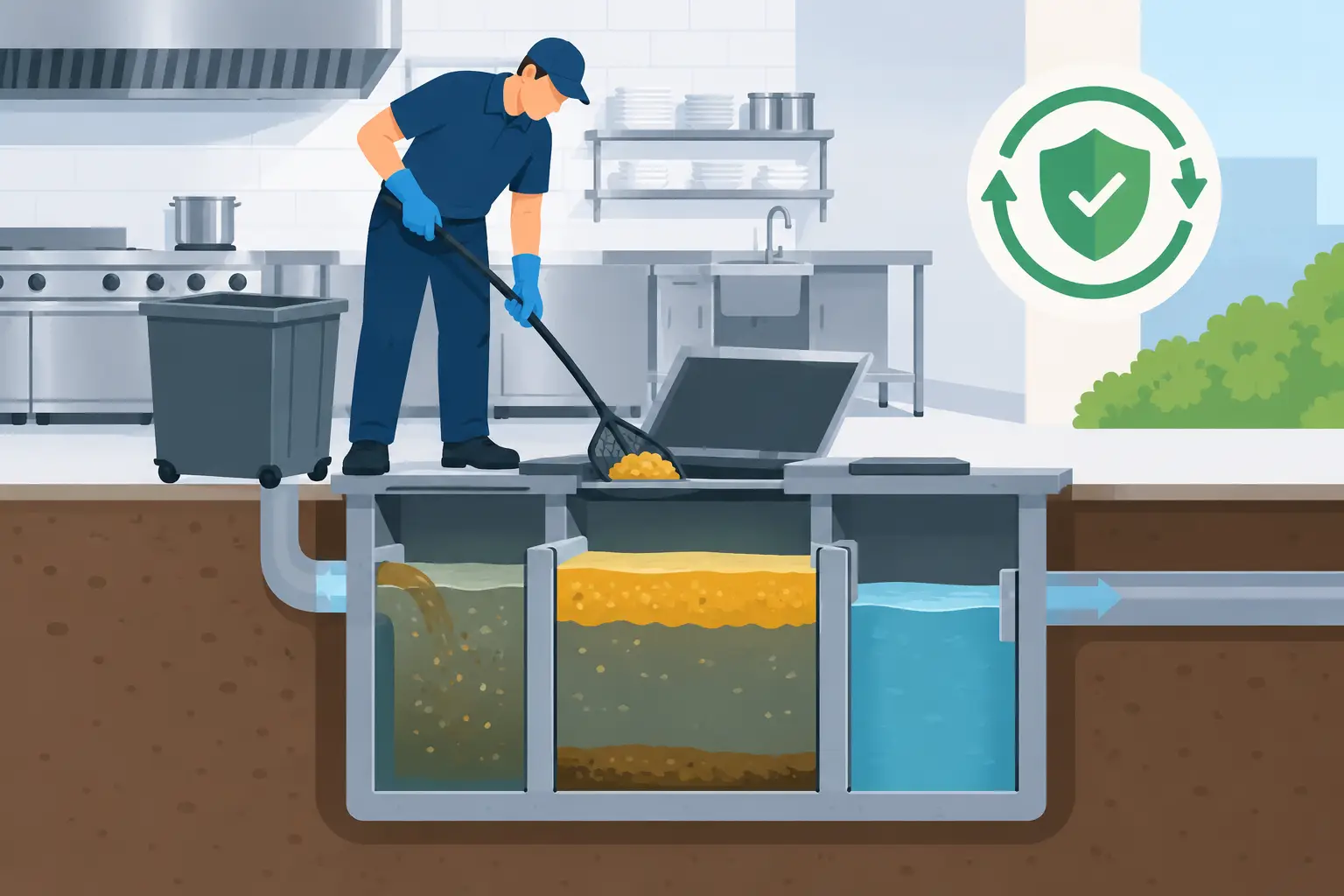
Grease does not stay liquid for long. As hot cooking oil, meat drippings, sauces, and food residue move into cooler drain lines, they coat the pipe walls. Over time, that buildup narrows the line, catches food particles, and can create a full backup. A grease trap or larger grease interceptor slows the wastewater down so grease can separate and be removed before it reaches the sewer.
The trap only works when it is maintained. Waiting until there is an odor, slow drain, or backup usually means the system is already overdue for service.
What Good Grease Trap Management Looks Like
Grease trap management is more than having the unit pumped when it becomes a problem. It is a routine that combines kitchen habits, scheduled cleaning, recordkeeping, and professional drain service when buildup reaches the lines beyond the trap.
The right schedule depends on the size of the trap, the volume of food prepared, the type of cooking, and the number of hours the kitchen operates. A small coffee shop or limited-menu operation may have different needs than a high-volume restaurant with fryers, grills, and a full dishwashing station. There is no one schedule that fits every kitchen.
Still, the basic goal stays the same: remove collected grease and solids before they take up too much of the trap’s working capacity. Many commercial kitchens follow the 25 percent rule. When grease and solids fill roughly one-quarter of the trap or interceptor, it is time for cleaning. Letting it get fuller reduces separation and allows grease to move downstream.
A reliable management plan should include regular inspections, scheduled pumping or cleaning, proper disposal practices, and a clear record of each service. Those records are useful for managers, property owners, and any local inspection requirements. They also make it easier to spot a pattern, such as a trap filling much faster than it used to.
Signs Your Grease Trap Needs Attention
Kitchen staff are often the first to notice trouble. Slow drainage at the three-compartment sink, dish machine, or floor drains may point to grease buildup. So can bubbling sounds, standing water around drains, or odors that return shortly after cleaning.
Other warning signs include grease visible in unexpected places, recurring clogs in the same line, and wastewater backing up during peak dishwashing hours. Do not assume a chemical drain cleaner will solve these problems. Harsh chemicals can damage plumbing components, create safety concerns for staff, and often do little against a heavy grease blockage farther down the line.
A trap that overflows or allows grease into the sewer line can create a much bigger cleanup. It may interrupt service, damage flooring, affect neighboring tenant spaces, or lead to sanitation concerns. Acting when drains first start slowing down is usually less expensive than handling an emergency backup.
Kitchen Habits That Reduce Grease Buildup
A grease trap is not a garbage disposal. The best maintenance plan starts before anything reaches the sink. Staff should scrape plates, pans, and cookware into the trash before washing. Wipe greasy surfaces with paper towels when practical, especially fry baskets, sheet pans, grill tools, and pots with heavy residue.
Used cooking oil should go into a designated collection container, not down a drain. Even hot water does not make grease safe for the plumbing. It may look like it has washed away, but it cools as it travels and can solidify farther down the line.
Train new employees on these habits from day one. In many kitchens, recurring grease problems are not caused by one major mistake. They are caused by small amounts of oil, food scraps, dairy products, and sauces going down the drain during every shift. Consistency matters more than a once-in-a-while cleanup.
Be careful with food grinders, too. A grinder may reduce particle size, but it does not remove grease. Fine food solids can still collect in the trap and add to the load on downstream pipes. If your operation uses one, your service schedule may need to be more frequent.
Cleaning the Trap Is Not Always Enough
A properly cleaned grease trap protects the drain line, but it cannot reverse years of buildup already inside the piping. If grease has moved past the trap, the kitchen may still experience slow drains or recurring clogs after the trap is serviced.
That is where professional drain cleaning can make the difference. A sewer camera inspection can identify whether the issue is grease, scale, a damaged pipe, a low spot holding waste, or another obstruction. It takes the guesswork out of repeated clogs.
For heavy grease buildup, hydro-jetting may be the right solution. Hydro-jetting uses high-pressure water to clean the inside of drain and sewer lines without relying on harsh chemical cleaners. It can clear grease, sludge, and accumulated debris from commercial kitchen lines when performed by a trained drain specialist.
Hydro-jetting is not automatically the answer for every pipe. Older, damaged, or questionable lines should be inspected first. The condition and material of the pipe matter, which is why a camera inspection and an honest assessment should come before choosing the cleaning method.
Set a Schedule That Fits Your Kitchen
A calendar-based service plan is easier to manage than waiting for warning signs. Start by tracking how quickly the trap fills after each cleaning. Note busy seasons, menu changes, new equipment, and changes in operating hours. A kitchen that adds a fryer or expands catering may outgrow its old schedule quickly.
For day-to-day checks, assign one person or shift manager to watch for odors, slow drains, and unusual water levels. For scheduled service, work with a qualified provider that can clean the trap thoroughly and let you know if they see excessive solids, damaged baffles, or signs that grease is getting into the drain line.
Keep service records in one accessible place. Include the service date, trap condition, amount removed when available, observed issues, and any recommended follow-up work. This simple habit helps property managers stay ahead of maintenance and gives owners useful documentation if questions arise.
A good schedule also accounts for emergencies. Even well-run kitchens can have a surprise blockage from a broken dish, a dropped utensil, a heavy weekend, or an older drain line that finally gives out. Know who to call before the kitchen is standing in wastewater.
When to Call a Drain Specialist
Call for professional help when drains are repeatedly slow, wastewater backs up, odors keep returning, or the grease trap has been cleaned but the problem remains. These are signs that the issue may be in the branch line, main sewer line, or another part of the system.
For businesses in Burlington and nearby Southeast Iowa communities, Drain Pros LLC can inspect and clear commercial drain lines with professional equipment, including camera inspections and hydro-jetting when appropriate. Fast action can help limit downtime, protect the kitchen, and keep a drain problem from becoming a closed-door problem.
The most useful grease trap plan is the one your staff can follow every week: keep grease and scraps out of sinks, service the trap before it is overloaded, and address slow drains early. That gives your kitchen a better chance of staying open, clean, and ready for the next rush.