A washing machine should drain quickly when the cycle ends. If water starts rising in the standpipe, spills onto the floor, or backs up into a nearby sink, you need to remove laundry drain blockage before a small mess becomes water damage. The right solution depends on where the clog is and what is causing it.
Laundry drains collect more than water. Lint, detergent residue, fabric fibers, pet hair, dirt from work clothes, and mineral buildup can narrow the line over time. In some homes, the laundry drain also connects to a larger branch or sewer line that may already have buildup or root intrusion. That is why a blockage may return even after the visible water drains away.
Start by Identifying Where the Blockage Is
Before trying to clear the line, pay attention to what happens when the washer drains. A slow drain with no overflow often points to a partial clog close to the laundry standpipe. Water that rises quickly and spills out usually means the line cannot handle the washer’s discharge rate.
Check nearby fixtures, too. If the laundry drain backs up and a utility sink, bathroom drain, or toilet also gurgles or drains slowly, the problem may be farther down the branch line or in the main sewer line. In that situation, treating only the laundry standpipe may not solve the real issue.
A one-time clog after washing heavily soiled clothes can be a local buildup. Repeated overflows, foul odors, or backups in more than one drain deserve professional attention.
Safe Ways to Remove a Laundry Drain Blockage
Start with the simplest options before moving to more aggressive tools. Turn off the washing machine and unplug it if water has reached the area around the outlet. Keep towels and a shallow pan nearby in case water spills when you move the drain hose.
Check the Drain Hose and Standpipe
Pull the washer’s drain hose out of the standpipe and inspect the hose end for lint or residue. Do not seal the hose tightly into the standpipe. It needs an air gap so the washer can drain correctly and so wastewater cannot siphon back toward the machine.
Look into the top of the standpipe with a flashlight. If you see lint, a small object, or residue near the opening, carefully remove what you can reach. Avoid pushing debris farther down the pipe with a screwdriver, coat hanger, or other sharp object.
Use Hot Water Carefully
For a slow drain caused by soap residue, a few gallons of hot tap water may help loosen buildup. Pour it slowly into the standpipe and watch how the line responds. Stop if the water level rises instead of draining.
Do not rely on boiling water in older piping or use it as a fix for a complete blockage. Hot water may soften residue, but it will not clear a packed lint clog, roots, grease farther down the line, or a damaged pipe.
Use a Drain Snake the Right Way
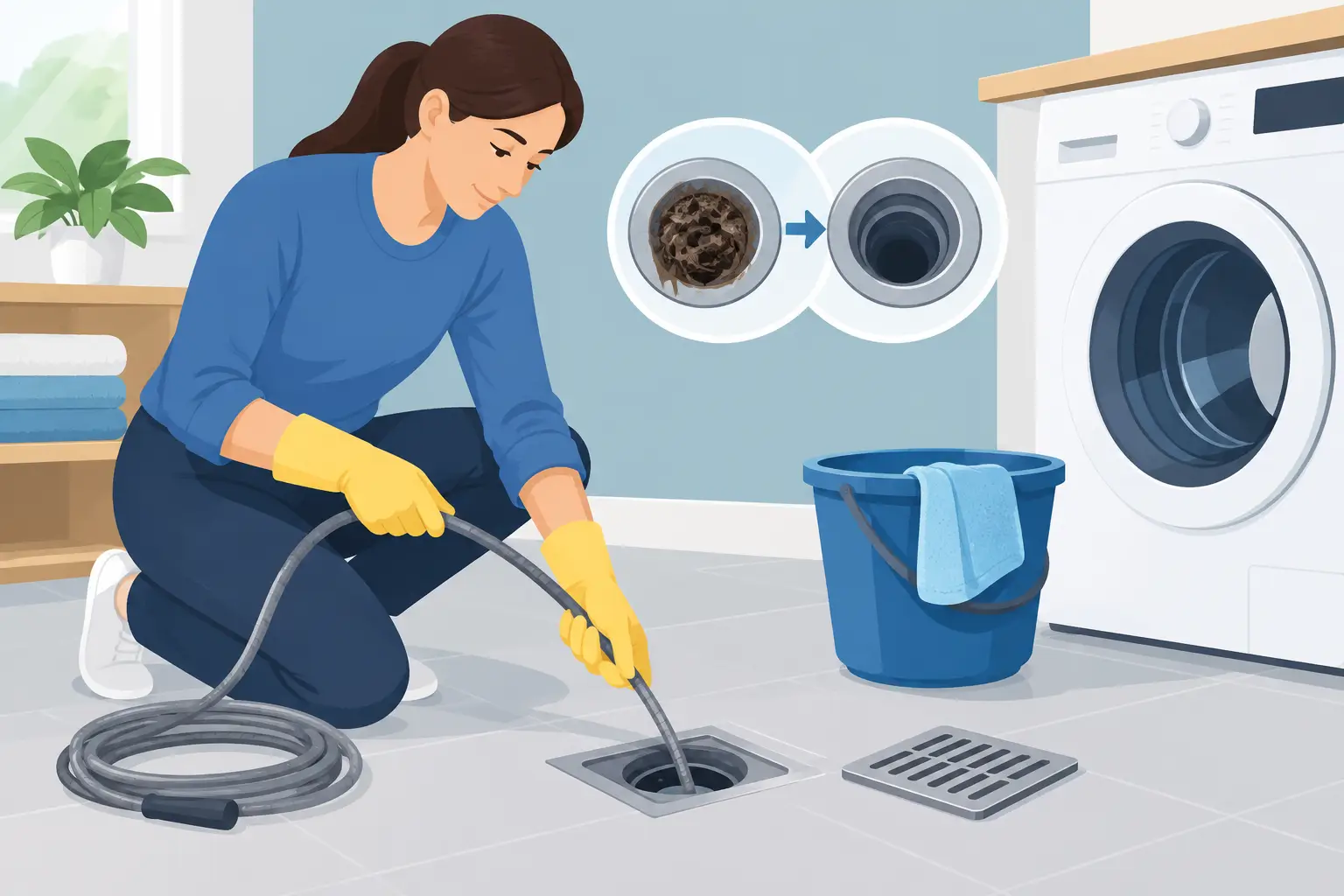
A hand auger can sometimes clear a clog near the laundry drain opening. Feed the cable into the standpipe slowly, turning the handle as you go. When you hit resistance, avoid forcing the cable hard. Work it gently, pull it back, clean the cable, and test the drain with water.
This approach can work for a small, accessible blockage. It also has limits. A homeowner-grade snake may punch a small hole through soft buildup without fully removing it, leaving material behind that catches lint again. Using the wrong cable or pushing too aggressively can also damage certain drain lines or create a mess when the cable comes back out.
Skip Harsh Chemical Drain Cleaners
Chemical cleaners are a poor match for most laundry drain blockages. They often do little against lint and packed detergent residue, and they can leave dangerous chemicals sitting in the pipe when the clog does not clear. That creates a hazard for anyone who later opens the line or uses drain-cleaning equipment.
A laundry drain that repeatedly clogs needs the buildup removed, not just burned through in one small spot. Mechanical cleaning or hydro-jetting is often a more thorough approach when the line and its condition are appropriate for that method.
Signs the Clog Is Beyond a Simple DIY Fix
A slow laundry drain is frustrating. An overflowing standpipe can damage flooring, walls, stored items, and nearby electrical connections. Stop using the washer and arrange professional drain cleaning if you notice any of these issues:
- Water overflows from the standpipe every time the washer enters its drain cycle.
- Multiple fixtures are draining slowly, gurgling, or backing up at the same time.
- The blockage returns soon after you clear the standpipe.
- Sewage odor, dark wastewater, or debris comes up through the laundry drain.
- You have tried a hand snake and water still will not flow freely.
These symptoms often point to a deeper blockage in the branch line or sewer line. Common causes include heavy buildup, compacted lint, roots entering a sewer line, or a pipe with damage or poor drainage slope. Cleaning can remove blockage and restore flow, but a collapsed or broken pipe requires evaluation and repair by an appropriately qualified contractor.
Professional Cleaning Gets Past the Visible Clog
A professional drain-cleaning service has equipment built for longer lines and tougher blockages. Cable machines can cut through packed debris and retrieve some obstructions. For buildup along the inside of a suitable pipe, hydro-jetting uses high-pressure water to scour residue from the line walls without relying on harsh chemical cleaners.
The best method depends on the pipe material, the type of blockage, and the condition of the line. Hydro-jetting is not a repair for a damaged or collapsed pipe, which is why a camera inspection can be valuable when backups are recurring or the cause is unclear.
A sewer camera inspection gives a clear view inside the line. It can help identify roots, a sagging section, heavy buildup, offsets, or damage that would otherwise stay hidden. That means less guesswork and a better plan for cleaning or recommending the next step.
For homes, rental properties, and businesses in Burlington and surrounding Southeast Iowa and West-Central Illinois communities, Drain Pros LLC focuses on drain and sewer cleaning, hydro-jetting, and camera inspections. The goal is straightforward: clear the blockage, explain what caused it, and help you avoid another backup.
Keep the Laundry Drain Flowing After It Is Cleared
Once the line is draining properly, a few practical habits can reduce future trouble. Use the recommended amount of HE detergent rather than adding extra soap. Excess detergent does not make clothes cleaner, but it can leave residue inside the drain.
Clean the washer’s lint filter if your machine has one, and consider using a washable lint catcher on the end of the discharge hose where appropriate. Check it often. A neglected lint catcher can restrict flow just as easily as a dirty drain.
If the washer has been moved, make sure the drain hose is not kinked or shoved too far down the standpipe. Also pay attention to early warning signs. A drain that starts gurgling or draining slower after wash day is easier to address before it becomes an overflow.
For commercial laundry areas, rental properties, or homes with frequent heavy loads, preventive drain cleaning may make sense. The right schedule depends on usage, the age of the drain system, and the history of backups. A property with recurring lint buildup needs a different plan than one dealing with roots in an older sewer line.
Do not wait for the next wash cycle to test an overflowing drain. If water is already rising from the standpipe or the clog keeps coming back, stop using the machine and get the line checked. A clear explanation and the right cleaning method can protect your property and get laundry day back to normal.