A drain that gurgles after you flush the toilet, run the dishwasher, or empty a sink is not just being noisy. That sound usually means air is getting trapped and pushed back through the plumbing instead of moving freely through the pipe. Knowing how to fix gurgling drains starts with recognizing the difference between a small fixture clog and a larger sewer line problem.
A slow drain can wait a short time. Gurgling that affects more than one fixture, especially with sewage odors or water backing up elsewhere, needs attention quickly. The longer a blockage builds, the more likely it is to turn into a messy and expensive backup.
Why Drains Gurgle in the First Place
Your plumbing system needs both water flow and proper airflow. Drain pipes carry wastewater away while vent pipes allow air into the system. When a clog, obstruction, or vent issue interrupts that balance, air bubbles may force their way through standing water in a sink trap, toilet bowl, shower drain, or floor drain. That is the gurgling sound you hear.
A gurgle from one bathroom sink may be caused by hair, toothpaste residue, soap buildup, or a small object caught close to the drain. A toilet that gurgles when the washing machine drains may point to a partial clog farther down the branch line. If several drains make noise at once, the main sewer line is often the concern.
Tree roots, grease, wipes, paper products, scale buildup, broken pipe sections, and a sagging sewer line can all restrict mainline flow. In older homes around Southeast Iowa and West-Central Illinois, aging sewer materials and root intrusion are common reasons a once-minor gurgle becomes a repeat problem.
How to Fix Gurgling Drains Safely
Start with the simplest check: identify which fixtures are affected. Run water in one sink, flush each toilet once, and listen to nearby drains. Do not keep testing if water begins rising in a tub, shower, toilet, or floor drain. More water can push a partial blockage into a full backup.
Clear a single slow sink or tub drain
If only one sink, shower, or tub gurgles and drains slowly, the clog may be close to that fixture. Remove visible hair or debris from the drain opening. A small hand auger or plastic drain tool can pull out buildup that is sitting just below the surface.
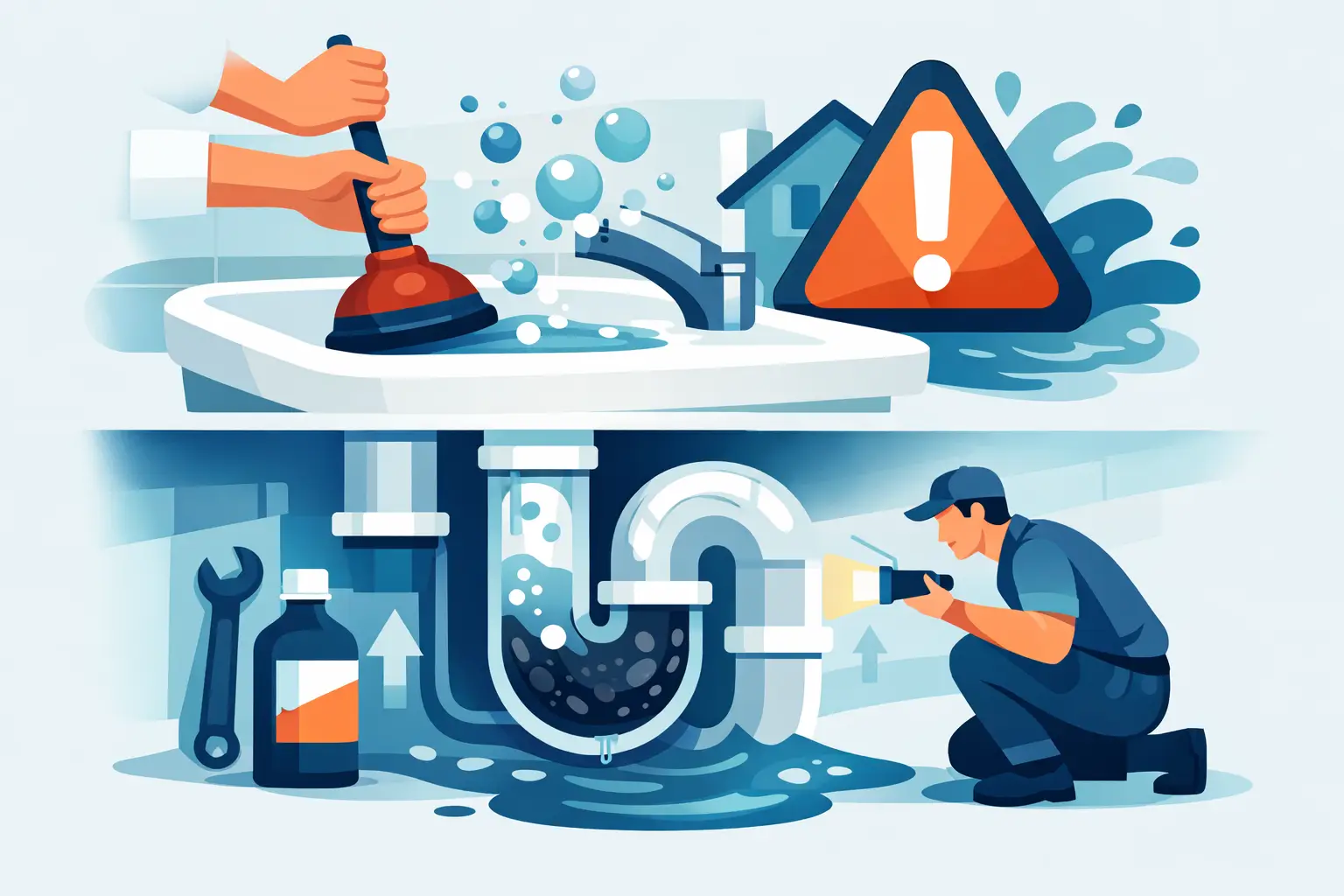
A plunger can also help, but use the right approach. For a sink, cover the overflow opening with a wet rag before plunging so pressure stays in the drain. For a double-basin kitchen sink, plug the opposite side first. Use steady, firm strokes rather than wild pumping.
Avoid reaching for harsh chemical drain cleaners. They often fail to clear a serious clog, can damage older pipes, and may leave dangerous chemicals sitting in the line for whoever works on it next. If you have already used a chemical product, tell the drain technician before service begins.
Check the P-trap when it makes sense
For a bathroom or kitchen sink with a problem isolated to that fixture, the P-trap beneath the sink may hold the blockage. Put a bucket under the trap, carefully loosen the slip nuts, and remove the curved section. Clean out debris, then reinstall the trap and test the sink.
This is a reasonable DIY step only when the pipes are accessible, the connections are in good condition, and the issue is clearly limited to one sink. If you find heavy sludge, damaged fittings, repeated buildup, or water still drains poorly after cleaning the trap, the obstruction is likely farther down the line.
Use a toilet auger for a toilet-only issue
A toilet that gurgles, flushes weakly, or rises higher than normal may have a blockage in the toilet trap. A toilet auger is made for this job and is less likely to scratch the porcelain than a standard drain snake. Feed it gently, rotate the handle, and pull back slowly.
Do not keep flushing a toilet that is close to overflowing. Shut off the water supply valve behind the toilet if needed, remove the tank lid, and lift the flapper closed if water continues entering the bowl.
Signs the Main Sewer Line May Be Clogged
A mainline clog is different from a clogged sink. It affects the shared pipe that carries wastewater from the home or building to the municipal sewer or septic system. Basic plunging and store-bought cleaners will not solve root growth, a collapsed pipe, or heavy buildup in that line.
Call for professional drain service if you notice several of these signs:
- Toilets bubble when a sink, shower, washing machine, or dishwasher drains.
- Water backs up into a lower-level tub, shower, or floor drain.
- More than one fixture drains slowly or makes gurgling sounds.
- Sewer odors are coming from drains, the basement, or around the property.
- The same clog returns after you clear a fixture.
- You see wastewater at an outdoor cleanout or around a drain.
The lowest drain in the building often shows the first signs of a mainline problem because it is the easiest place for backed-up water to escape. In a home with a basement, that may be a floor drain or laundry sink. In a commercial building, it may be a restroom floor drain, mop sink, or utility area.
When a Vent Problem Is the Cause
Sometimes the drain line is clear enough, but the plumbing vent is blocked. A vent stack may be obstructed by leaves, nests, debris, ice, or other material near the roof. Without enough air entering the system, drains can gurgle and traps can lose water.
Vent issues can be difficult to separate from drain clogs without experience. Roof work also carries real safety risks, so climbing up to inspect a vent is not the best first move for most property owners. If drains gurgle but there is no obvious slow drain or backup, a professional inspection can determine whether the issue is in the vent system or the sewer line.
Why Recurring Gurgling Needs More Than a Quick Fix
A plunger may restore flow temporarily, but repeat gurgling tells you something remains in the pipe. Grease can coat kitchen lines over time. Flushable wipes do not break down like toilet paper. Roots can grow through tiny openings and catch debris until the line narrows. A damaged or offset pipe can keep collecting material no matter how often a fixture gets snaked.
This is where a sewer camera inspection earns its keep. A camera shows what is actually inside the pipe and where the problem sits. Instead of guessing, a drain specialist can see whether the line needs cabling, hydro-jetting, repair, or a different solution.
Hydro-jetting is especially useful for grease, sludge, scale, and root-related buildup in suitable pipes. It uses high-pressure water to clean the inside of the line rather than relying on harsh chemicals. It is not the answer for every damaged pipe, which is why inspection matters first.
For homeowners, landlords, and business owners in the Burlington area, Drain Pros LLC can clear blocked lines, inspect sewer pipes, and help prevent the next backup without a weekend up-charge. The goal is not just to quiet the noise. It is to get the system flowing the way it should.
What Not to Do When Drains Start Gurgling
Do not pour repeated rounds of chemical cleaner into a drain that is already slow. Do not run the washing machine, dishwasher, or multiple showers while you suspect a mainline blockage. And do not remove a sewer cleanout cap unless you know exactly what you are dealing with – pressurized wastewater can spill out quickly.
It also helps to avoid mixing products. Combining drain cleaners, bleach, vinegar, or other chemicals can create harmful fumes or make a later repair more dangerous. Keep children and pets away from any area where wastewater has backed up, and clean contaminated surfaces carefully once the source has been addressed.
Keep a Small Gurgle From Becoming a Backup
After the drain is cleared, a few habits can reduce the chance of another blockage. Keep grease out of kitchen sinks, use strainers where hair and food scraps are common, and flush only toilet paper. If your property has large trees near the sewer route or a history of line trouble, scheduled inspection and cleaning can be less costly than waiting for an emergency.
A gurgling drain is your plumbing system asking for help. Address it while it is still a sound, before it becomes standing water where it does not belong.