A sewer backup is frustrating. A recurring backup with no clear reason is worse. Camera inspection findings take the guesswork out of the problem by showing what is actually inside the drain or sewer line – not just what the symptoms suggest.
For homeowners, landlords, and business owners, that clarity can prevent wasted money on the wrong service. A slow kitchen drain may be grease buildup. A toilet that backs up every few months may point to roots in the main line. A camera inspection helps separate a cleanable blockage from a pipe condition that needs attention from an appropriately qualified repair contractor.
What a Sewer Camera Inspection Can Show
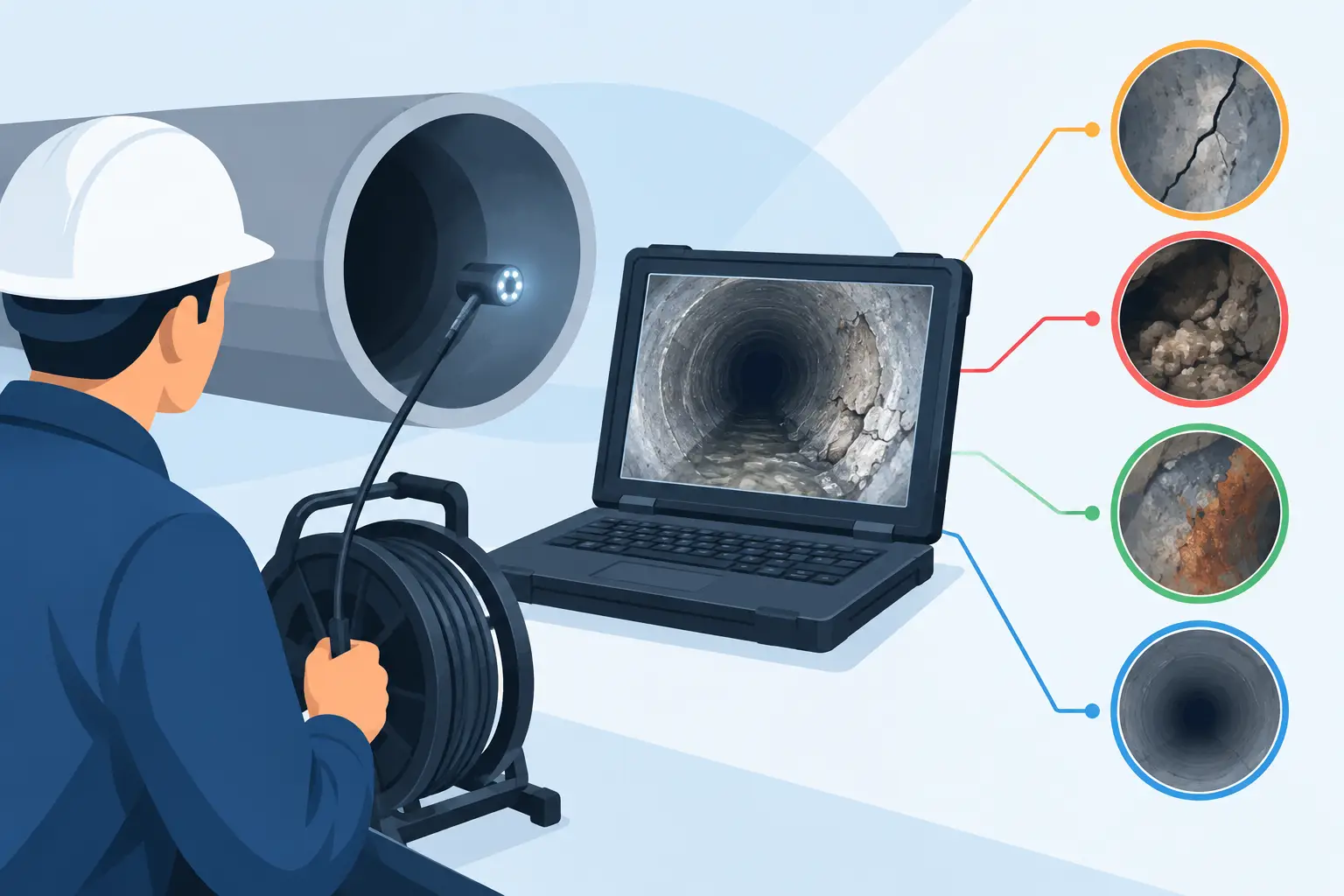
A drain camera is sent through an accessible cleanout or drain opening to view the inside of the line. The camera sends a live image to the technician, allowing them to identify the location and likely cause of a blockage or recurring flow problem.
The best camera inspection findings do more than say, “there is a clog.” They help answer practical questions: Is the line full of roots? Is grease coating the pipe? Is there an object lodged in the line? Is the pipe damaged, shifted, or holding water? Those details matter because the right solution depends on what the camera sees.
In many cases, cleaning the line is the next step. In others, the camera may reveal a structural issue that cleaning alone cannot correct. An honest inspection gives you a clearer path forward before more work is recommended.
Common Camera Inspection Findings
Roots entering the sewer line
Tree roots naturally seek moisture. Small openings around pipe joints, cracks, or aging connections can give roots a way into the sewer line. Once inside, they catch paper and waste, creating repeat blockages.
Root intrusion can often be cleared with professional drain cleaning or hydro-jetting when the pipe is still structurally usable. However, if the camera shows severe root damage, separated joints, or a broken section of pipe, cleaning may restore flow without fixing the underlying pipe condition. A qualified repair contractor can advise on repair options if needed.
Grease and buildup in kitchen lines
Grease does not stay liquid for long inside a drain. As it cools, it sticks to the pipe walls and collects food particles, soap residue, and debris. Over time, the opening inside the line gets smaller until water begins draining slowly or backing up.
Camera footage can show whether buildup is light, heavy, or concentrated in one area. For homes, professional cleaning can remove the restriction and help restore normal flow. For restaurants and commercial kitchens, regular grease-line cleaning may be needed to keep waste lines moving. Grease-line cleaning is different from grease-trap pumping or interceptor service.
Wipes, paper, and foreign objects
Items marked “flushable” do not always break down like toilet paper. Wipes, paper towels, feminine products, and hygiene items can snag on rough pipe areas, roots, or buildup. Children’s toys and other dropped objects can also cause a sudden blockage.
A camera can help identify the type of obstruction and its location. That helps the technician choose the safest cleaning method instead of repeatedly trying to force material through a line without knowing what is there.
Broken, cracked, or collapsed pipe sections
Some findings are not cleaning problems. A damaged or collapsed pipe may cause repeated backups because waste cannot pass through properly. Cracks can allow soil and roots to enter, while a collapse can significantly restrict or stop flow.
A camera inspection can document these conditions, but hydro-jetting and drain cleaning do not repair a broken or collapsed pipe. If the line is damaged, the footage gives you useful information to share with an appropriately qualified contractor about repair options.
Offset joints and separated connections
Older sewer lines may shift over time because of settling soil, age, or previous ground movement. When pipe sections no longer line up properly, debris can catch at the joint. These offset areas often become repeat trouble spots.
Depending on the condition, cleaning may remove the immediate blockage and improve flow. Still, an offset joint remains a place where paper, roots, and waste can collect again. Knowing it is there helps property owners plan maintenance and make informed decisions if problems continue.
Bellies and standing water
A sewer line should have enough slope for waste to move through it. A low section, often called a belly, can hold water and solids. The camera may show standing water, slow-moving debris, or material collecting in the same section of pipe.
Cleaning can remove buildup from a belly, but it does not change the slope of the line. The right next step depends on how severe the low spot is, how often it causes trouble, and whether the line can still be maintained effectively.
Why the Finding Changes the Cleaning Method
Not every drain problem should be handled the same way. A cable machine may be effective for cutting through certain blockages, while hydro-jetting uses high-pressure water to scour grease, sludge, roots, and buildup from the pipe walls. The camera helps determine which approach makes sense for the line and its condition.
Hydro-jetting is especially useful when a line is coated with grease or heavy buildup that a basic opening may not fully remove. It uses water rather than harsh chemical drain cleaners, which can be a better choice for many systems when performed by a trained drain specialist.
There are trade-offs. A line with major damage, a collapse, or questionable structural condition may need careful evaluation before high-pressure cleaning. The goal is not to sell a one-size-fits-all service. The goal is to clear the line safely when possible and explain clearly when a cleaning service is not the full answer.
When to Schedule a Camera Inspection
A camera inspection makes the most sense when the problem keeps coming back, when the source of a blockage is unclear, or when a main sewer line has backed up. It is also useful after cleaning a difficult line to confirm what caused the restriction and whether there are conditions that may lead to another blockage.
Property managers can benefit from camera inspections when dealing with repeated tenant complaints or older drain systems. Restaurants, offices, and other commercial properties may use inspections to investigate slow drains before a busy day turns into a sewer interruption.
For a home purchase or a property with an unknown sewer history, an inspection can also provide useful information about the line’s current condition. It cannot predict every future problem, but it can reveal issues that should not be ignored.
What to Ask After Reviewing Camera Findings
Once the inspection is complete, ask what was found, where it is located, and whether the issue can be cleaned or requires a repair evaluation. You should also ask whether the line appears likely to clog again and what maintenance may help reduce that risk.
A straightforward explanation matters. You do not need a technical lecture to understand whether roots are growing through a joint, grease is narrowing a kitchen line, or a damaged pipe needs a different kind of contractor. Good camera work turns a confusing drain problem into a practical next step.
Drain Pros LLC provides drain cleaning, hydro-jetting, and sewer camera inspections for properties in Burlington and surrounding Southeast Iowa and West-Central Illinois communities. If your drains are slow, your sewer line has backed up, or the same clog keeps returning, a camera inspection can show what is happening before the problem gets bigger. One clear look inside the line can save a lot of second-guessing.