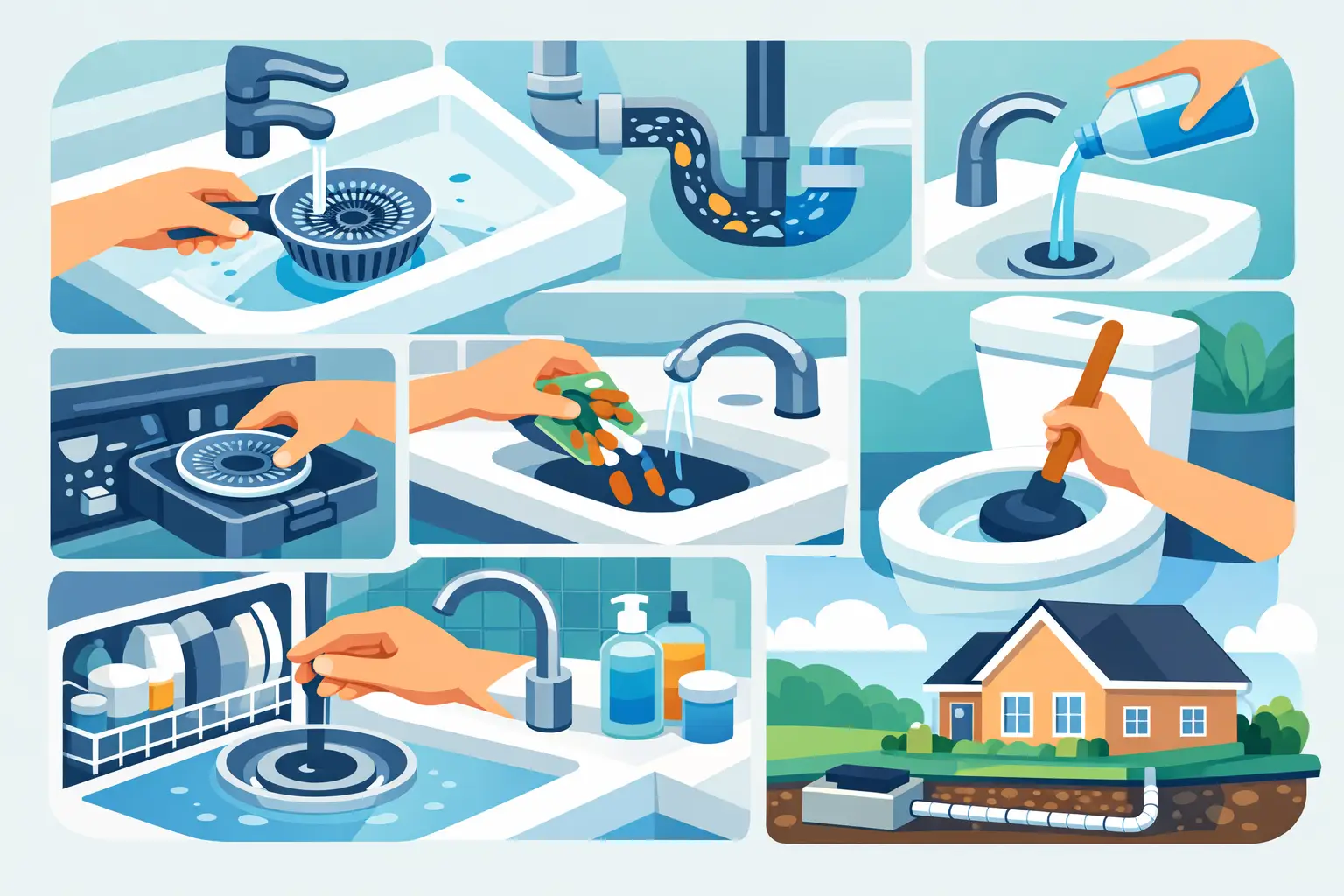
A slow drain rarely starts as an emergency. It starts with a little standing water in the shower, a kitchen sink that takes longer to empty, or a toilet that needs a second flush. The best ways to prevent clogs are simple habits done consistently, plus professional help when a recurring problem points deeper into the line.
For homeowners, landlords, and business owners around Burlington and Southeast Iowa, prevention means fewer messy backups, fewer disruptions, and less chance of an after-hours sewer problem. Here is what makes the biggest difference.
1. Keep Grease and Food Waste Out of the Kitchen Drain
Grease is one of the most common causes of kitchen drain clogs. It may look harmless when it is hot and liquid, but it cools inside the pipe and sticks to the walls. Over time, grease traps food particles, soap residue, and other debris until water has nowhere to go.
Let cooking grease cool in a can or disposable container, then throw it in the trash. Wipe greasy pans with a paper towel before washing them. This matters even if you have a garbage disposal. A disposal breaks food into smaller pieces, but it does not make grease safe for your drain line.
Avoid putting coffee grounds, eggshells, pasta, rice, flour, and fibrous vegetable scraps down the disposal. These materials can swell, clump, or wrap around moving parts. If your kitchen sink is already draining slowly, skip store-bought chemical cleaners. They often do little against grease buildup and can be hard on older pipes.
2. Use Drain Screens Where Hair and Debris Collect
Bathroom sink, tub, and shower clogs are usually caused by hair mixed with soap scum. A simple screen or stopper basket catches hair before it enters the drain, where it can form a tight blockage several feet down the pipe.
Clean the screen regularly instead of waiting until water starts pooling around your feet. It is a small chore, but it is one of the best ways to prevent clogs in bathrooms. In homes with long hair, pets, or several family members sharing one shower, this step is especially worthwhile.
Do not rinse loose hair down the sink after brushing or shaving. Toss it in the trash. The same goes for thick lotions, facial wipes, cotton pads, and dental floss. They do not break down the way toilet paper does.
3. Treat the Toilet Like a Toilet
Toilets are designed for human waste and toilet paper. That is it. Even products labeled “flushable” can create trouble, especially in older plumbing systems, rental properties, or homes with a septic system.
Keep wipes, paper towels, feminine hygiene products, cotton swabs, diapers, and cleaning pads out of the toilet. These items can snag on roots, pipe joints, or buildup in the main sewer line. One item may pass through today, but repeated flushing can create a blockage that affects every drain in the building.
If you have young children, keep the toilet lid closed or use a lid lock if toys are making their way into the bowl. A toy lodged in a toilet trap is not a problem that a plunger should be forced to solve.
4. Be Careful With What Goes Into Commercial Drains
Restaurants, break rooms, salons, rental properties, and small offices all have different drain risks. A business kitchen may deal with grease and food waste. A salon can accumulate hair, product residue, and thick waxes. A rental unit may have tenants who are unaware of what should stay out of a drain.
Set clear expectations and provide trash containers where people need them. In a shared commercial space, a quick reminder near a restroom or break-room sink can prevent a costly service call. For kitchens that handle a lot of food or oil, regular professional cleaning is usually a smarter option than waiting for a backup.
5. Flush Drains the Right Way
Running hot water after washing dishes can help move small amounts of soap and residue along, but it is not a cure for grease buildup. Use warm water for a minute or two after the sink has handled normal dishwashing, especially if you use a garbage disposal.
For bathroom sinks and showers, remove visible hair and rinse the drain area regularly. You can also use a mild enzyme-based drain maintenance product if it is appropriate for your plumbing. Follow the product directions closely. Enzyme treatments work gradually on organic material, so they are for maintenance, not for clearing a solid blockage.
Avoid mixing cleaners or pouring harsh chemicals into a drain that is fully clogged. Chemical reactions can create fumes, damage pipe materials, and make the drain more hazardous for the technician who eventually has to clear it. When water is standing or backing up, the safer move is to stop using that fixture and get the cause checked.
6. Pay Attention to Early Warning Signs
The fastest way to turn a small drain issue into a major problem is to ignore it. A drain that gurgles, smells bad, drains slowly, or backs up occasionally is telling you something is building inside the line.
One slow fixture may be a local clog near that drain. Multiple slow drains, water coming up in a tub when the toilet flushes, or a backup at the lowest drain in the building can point to a main sewer line issue. Tree roots, broken pipe, heavy buildup, or a blockage farther down the line may be involved.
Do not keep plunging or flushing when several fixtures are affected. Extra water can turn a manageable sewer blockage into an indoor cleanup. A sewer line inspection can show what is happening without guessing, which helps determine whether cleaning, hydro-jetting, or repair is the right next step.
7. Schedule Preventive Cleaning for Recurring Problems
Some drains need more than good daily habits. Older homes, properties with mature trees, restaurants, multi-unit rentals, and buildings with a history of backups may benefit from planned drain or sewer cleaning.
The right schedule depends on the property. A household with no history of trouble may only need service when warning signs appear. A busy commercial kitchen or a rental with repeated buildup may need regular maintenance to keep lines open. There is no one-size-fits-all interval, and an honest inspection should guide the recommendation.
Professional hydro-jetting can be a strong option for grease, sludge, scale, and heavy buildup. It uses high-pressure water to clean the inside of the pipe rather than relying on harsh chemicals. It is not necessary for every clog, and it should only be used after a technician confirms the pipe condition is suitable. For the right line, though, it can provide a much more thorough clean than simply punching a small hole through a blockage.
8. Protect Outdoor Drains and Sewer Access Points
Leaves, mulch, dirt, and debris can block outdoor drains, catch basins, and downspout connections. Keep these areas clear, especially before heavy rain. Make sure downspouts direct water away from the foundation instead of flooding an area near your sewer line or basement drains.
If your property has a sewer cleanout, keep it accessible. Do not cover it permanently with landscaping, concrete, or stored items. An accessible cleanout can help a drain specialist reach the main line faster if a backup occurs.
Tree roots deserve attention, too. Roots naturally seek moisture and can enter tiny cracks or weak joints in sewer pipes. You do not always need to remove a healthy tree, but recurring root intrusion calls for a camera inspection and a realistic plan. Clearing roots may restore flow, while a damaged line may need repair to stop the cycle.
When a Clog Needs a Professional
A plunger can handle many simple toilet or sink clogs. Once the same drain keeps clogging, water is backing up in more than one fixture, or you notice sewage odors, it is time to stop guessing. Repeated DIY fixes can push debris farther into the line or hide a developing sewer problem.
Drain Pros LLC helps homeowners and businesses identify the cause with professional drain cleaning, hydro-jetting, and sewer line inspections. The goal is not just to get water moving for the moment. It is to clear the line properly and help prevent the next backup.
A clear drain is easier and less expensive to maintain than an emergency backup is to clean up. Catch the slow drains early, keep the wrong materials out of your pipes, and call for help before a small warning turns into a bigger mess.