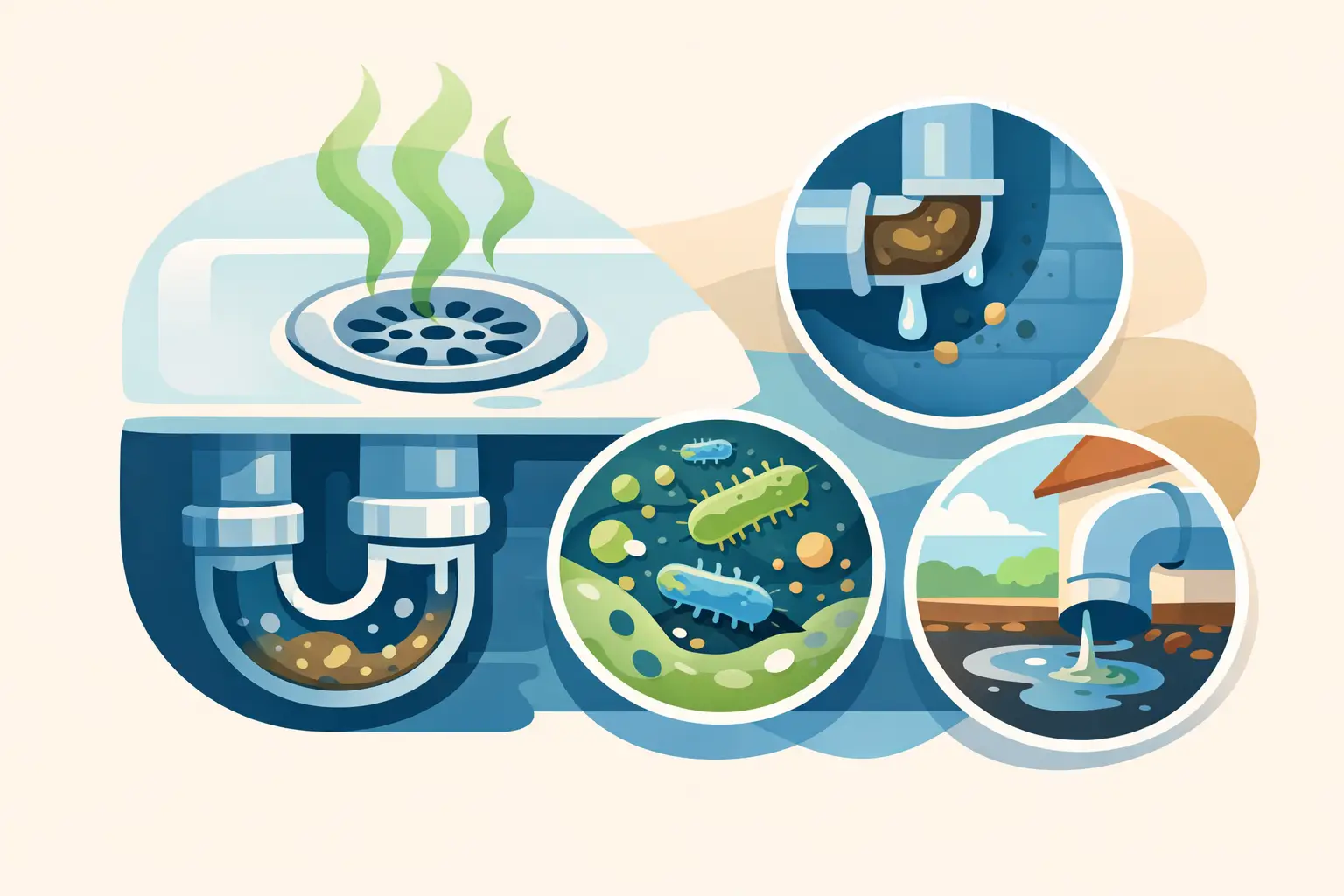
A drain can look like it is working normally and still make the whole room smell unpleasant. If you are asking, why do drains smell bad, the answer is usually not the pipe itself. The odor often comes from trapped food, grease, bacteria, sewer gas, or a drainage issue farther down the line. Finding the source early can keep a small smell from turning into a messy backup.
Why Do Drains Smell Bad in the First Place?
Your drains move wastewater away from sinks, tubs, floor drains, and appliances. Along the way, they also collect residue. Soap film, hair, grease, food particles, toothpaste, coffee grounds, and other debris can cling to the inside of pipes. Over time, bacteria feed on that buildup and create the sour, musty, or rotten odor you notice near the drain.
Some smells point to a simple cleanup job. Others can signal a dry trap, blocked vent, sewer line problem, or developing clog. The location and type of smell matter. A kitchen drain that smells like spoiled food has different likely causes than a basement floor drain that smells like sewage.
The Most Common Reasons Drains Smell
Food and grease buildup in kitchen drains
Kitchen drains handle more than water. Even if you use a garbage disposal, small food particles can remain in the disposal chamber, splash guard, trap, or branch line. Grease is another frequent problem. It may go down as a liquid, but it cools and sticks to the pipe walls, where it catches food debris and creates a stubborn odor.
A garbage disposal can make the smell stronger when residue builds underneath the rubber splash guard. If the odor gets worse after running the disposal, that area is a good place to check first.
Hair, soap scum, and bacteria in bathroom drains
Bathroom sinks, showers, and tubs commonly smell because hair and soap scum build up just below the drain opening. Add lotion, toothpaste, shaving products, and body oils, and you have a damp layer that bacteria can grow in.
A slow drain often goes along with this type of smell. Water may still go down, but the partial blockage holds dirty residue in the pipe longer than it should. Cleaning the visible drain opening can help, but recurring odors usually mean there is buildup farther inside.
A dry P-trap letting sewer gas into the room
Most fixtures have a curved section of pipe called a P-trap. It holds a small amount of water that acts as a barrier between your home and the sewer system. When that water evaporates, sewer gas can rise through the drain.
This is especially common in guest bathrooms, utility sinks, basement floor drains, and vacant commercial spaces that are not used often. The fix may be as simple as pouring water into the drain. For a floor drain or rarely used fixture, adding a small amount of mineral oil after the water can slow evaporation.
If the sewer smell returns quickly after you add water, the trap may be leaking, a vent may be blocked, or there may be a larger drainage issue worth inspecting.
A partial clog holding dirty water and debris
A clog does not have to stop a drain completely to cause trouble. Partial blockages create low spots where wastewater, soap residue, grease, or organic material sits and breaks down. That is why a drain may smell bad before it becomes fully blocked.
Warning signs include slow draining, gurgling sounds, water backing up in another fixture, or an odor that comes and goes after you use water. These are signs to address the line before it turns into an emergency.
Sewer line or venting problems
Strong sewage odors, especially around multiple drains, can point to a main sewer line issue. Tree roots, grease buildup, damaged pipe, or a blockage in the line can prevent wastewater and sewer gas from moving correctly. A blocked plumbing vent can create similar symptoms by disrupting the air pressure that helps your drains work.
These problems are not good candidates for guesswork or repeated chemical treatments. A professional sewer inspection can identify whether the issue is buildup, a blockage, root intrusion, or pipe damage.
What the Smell Can Tell You
A rotten-food smell usually points to a kitchen sink, disposal, or grease buildup. A musty smell often means bacteria and soap scum in a bathroom drain. A sharp sewer or rotten-egg smell may mean a dry P-trap, vent issue, or sewer problem.
The timing also gives useful clues. If the smell appears only after running water, residue in the drain or overflow opening may be the issue. If it is present all the time, even when the fixture has not been used, check for a dry trap or sewer gas. If several drains smell at once, look beyond the individual fixture.
Safe Ways to Freshen a Smelly Drain
Start with simple cleaning, especially if the drain is still flowing normally. Remove hair and visible debris from the stopper or drain cover. Clean the sink overflow opening if there is one, since that hidden passage can hold slime and bacteria. For a kitchen sink, scrub the disposal splash guard and flush the disposal with cold water while it runs.
For bathroom sinks and tubs, a gentle drain brush or plastic hair-removal tool can pull out the buildup near the top of the line. Then flush with hot water that is safe for your plumbing. If a rarely used drain smells like sewer gas, run water for a minute to refill the trap.
Avoid relying on harsh chemical drain cleaners. They can damage certain pipes, create fumes, and make professional service more hazardous if the product remains in the line. They also rarely remove the full layer of grease, scale, roots, or packed debris causing a recurring problem.
When a Smelly Drain Needs Professional Cleaning
A one-time odor that clears after basic cleaning may not be a major concern. But repeated smells are your drain system telling you something is still inside the pipe. Call a drain and sewer specialist when the smell keeps returning, the drain is slow, multiple fixtures are affected, or sewage backs up into a sink, tub, toilet, or floor drain.
Professional drain cleaning removes buildup that household methods cannot reach. For heavier grease, scale, sludge, and mainline blockages, hydro-jetting can clean the inside of the pipe with high-pressure water instead of harsh chemicals. A camera inspection can also show exactly what is causing the odor, which helps avoid paying for the wrong fix.
For rental properties and small businesses, do not wait for a customer, tenant, or employee to report a backup. Odors around restrooms, break-room sinks, utility drains, or floor drains can be an early warning that a line needs service.
Preventing Drain Odors From Coming Back
The best prevention is keeping the wrong material out of the drain and cleaning before residue gets thick. Keep grease, cooking oil, coffee grounds, wipes, paper towels, and food scraps out of sinks. Use a hair catcher in showers and tubs, and clean it regularly. Run water in seldom-used bathrooms, floor drains, and utility sinks every few weeks so the traps do not dry out.
A disposal should be treated as a helper, not a trash can. Use cold water while running it, and avoid feeding it grease, fibrous vegetables, large food scraps, or expandable foods. If your home, rental, or business has a history of recurring slow drains, scheduled professional cleaning can be less expensive and far less stressful than an after-hours sewer backup.
Drain Pros LLC helps homeowners and businesses in Southeast Iowa identify and clear the drain and sewer issues behind persistent odors. A clean, free-flowing line does more than make a room smell better – it helps protect your property from the next blockage or backup.