A drain can look clear one week and back up again the next when scale is narrowing the pipe from the inside. So, can jetting remove scale? Often, yes. Professional hydro jetting can break up and flush away many types of mineral buildup, grease, sludge, and loose deposits. But the right answer depends on what the scale is, how thick it is, and whether the sewer pipe itself is still in sound condition.
For homeowners, landlords, and business owners, the goal is not just getting water moving today. It is finding the reason a line keeps slowing down and cleaning it in a way that helps prevent another messy backup.
Can Jetting Remove Scale From Sewer Pipes?
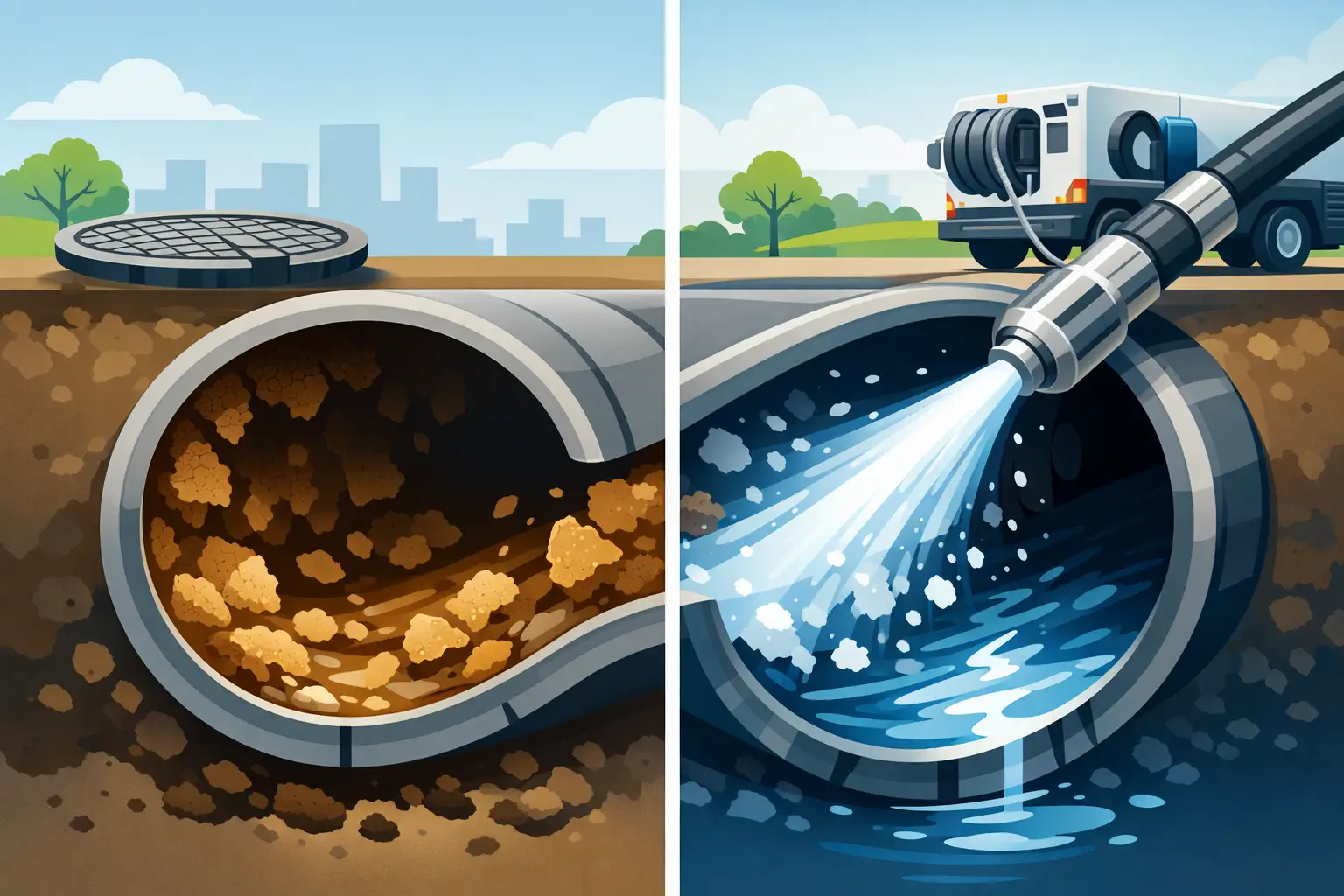
Hydro jetting uses high-pressure water sent through a specialized hose and nozzle. The nozzle cleans forward and backward as it travels through the line, cutting through buildup and carrying debris toward the sewer. Unlike a basic drain snake, which may punch a small opening through a clog, jetting is designed to clean more of the pipe wall.
That makes hydro jetting very effective against moderate scale deposits, especially when the buildup is mixed with grease, soap residue, paper, sediment, and other material that catches inside older drain lines. It is also a chemical-free cleaning method, which is a better fit for many homes and commercial properties than repeatedly pouring harsh drain cleaners into the system.
Still, jetting is not magic. Heavy mineral scale can harden into a thick, rough layer over years. In some older cast-iron pipes, corrosion may create a surface that looks and acts like scale but is actually damaged pipe material. High-pressure water can remove loose buildup and improve flow, but it cannot restore pipe that has rusted through, cracked, shifted, or collapsed.
What Scale Looks Like Inside a Drain Line
Scale is a general term for buildup that sticks to the inside of a pipe. In Southeast Iowa and West-Central Illinois, property owners may see recurring issues from a mix of water minerals, aging pipe materials, and everyday waste moving through the drains.
Mineral scale often forms when hard water leaves calcium or magnesium deposits behind. Over time, those deposits reduce the inside diameter of the pipe. Grease makes the problem worse. It sticks to rough areas, then catches food particles, soap scum, wipes, and other debris until a once-wide pipe has only a narrow channel left for wastewater.
Cast-iron sewer lines can create another problem. As the metal ages, the interior may corrode and become uneven. Waste catches on that rough surface, and the line may develop repeated clogs even after it has been snaked. A camera inspection can help tell the difference between removable buildup and a pipe that needs a different repair plan.
When Hydro Jetting Is a Good Fit
Jetting is often the right next step when a drain snake has opened the line but recurring clogs keep coming back. It is especially useful for main sewer lines, restaurant or commercial kitchen drains with grease buildup, and older lines that have collected years of sludge and mineral deposits.
A professional technician should inspect the line before choosing high-pressure cleaning, particularly when the pipe is old or the history is unknown. A sewer camera shows where the restriction is, how severe it is, and whether there are roots, breaks, bellies, or other conditions that could affect the cleaning method.
When the pipe is structurally sound, hydro jetting can provide a much more thorough clean than simply boring a hole through the blockage. Water pressure and the correct nozzle work together to remove buildup along the pipe walls, helping wastewater move freely again.
Signs scale may be the issue
Scale or heavy buildup may be contributing to your problem if drains run slowly throughout the building, the main line clogs repeatedly, or snaking only provides short-term relief. You may also notice gurgling toilets, water backing up in a tub or floor drain, unpleasant drain odors, or a sewer line that needs cleaning more often than it should.
Those symptoms can also point to roots or pipe damage, which is why guessing is expensive. A line that keeps backing up deserves a clear look inside before money is spent on the wrong fix.
When Jetting May Not Remove the Problem Completely
Hydro jetting works by cleaning and flushing. It does not repair structural damage. If a camera inspection finds a collapsed section, separated joint, severe offset, or a pipe belly where waste settles, cleaning may improve flow temporarily without solving the underlying issue.
Extremely hard scale can also require more than water pressure alone. A drain specialist may need to use mechanical descaling tools or another method to break up stubborn deposits before or along with jetting. This is most common in badly corroded cast-iron systems, where the line may have substantial internal rust and buildup.
Tree roots are another separate concern. Jetting can cut through smaller root intrusions and clear debris around them, but roots will return if they are entering through a cracked pipe or failed joint. In that situation, cleaning gets the sewer usable again, while inspection identifies whether repair is needed to stop the repeat problem.
The key is honest diagnosis. The best service is not always the most aggressive tool. It is the method that safely addresses what is actually inside your pipe.
Why Inspection Should Come First
No homeowner should have to choose between a quick fix and a surprise repair bill. A sewer camera inspection gives you useful information before a major cleaning decision is made. It can show the location of the blockage, the condition of the pipe, and whether scale is truly the main restriction.
This matters even more for older homes, rental properties, and commercial buildings where the sewer layout may be unclear. If a line has been patched before or has decades of use behind it, inspection helps protect the property and prevents unnecessary work.
At Drain Pros LLC, the process is straightforward: identify the problem, explain what the camera shows, and recommend the practical next step. If hydro jetting is appropriate, the goal is a clean, free-flowing line without relying on harsh chemicals or temporary guesswork.
How to Help Prevent Scale and Buildup After Cleaning
A professionally cleaned sewer line will stay clear longer when the drains are treated with a little care. Avoid sending grease down kitchen drains, even if it is followed by hot water. Grease cools farther down the line and sticks to pipe walls, where it can trap the same debris that jetting just removed.
Use sink strainers to catch food scraps and keep wipes, paper towels, feminine products, and hygiene items out of toilets. Products labeled flushable can still collect in older pipes or get caught on rough scale. Only toilet paper and human waste belong in the toilet.
For properties with a known buildup history, scheduled maintenance may be a smart move. A small restaurant, rental building, or older home with recurring sewer issues can often avoid emergency backups by cleaning the line before it closes down again. The right schedule depends on use, pipe condition, and what an inspection finds.
A Clear Line Starts With the Right Diagnosis
If your drains are slow, the toilet gurgles, or wastewater is backing up, do not wait for a full sewer overflow to find out what is inside the line. Scale can often be cleaned effectively with professional hydro jetting, but a camera inspection is what tells you whether cleaning is the real answer. A clear view of the pipe gives you a better chance of fixing the problem once and keeping your drains moving when you need them most.