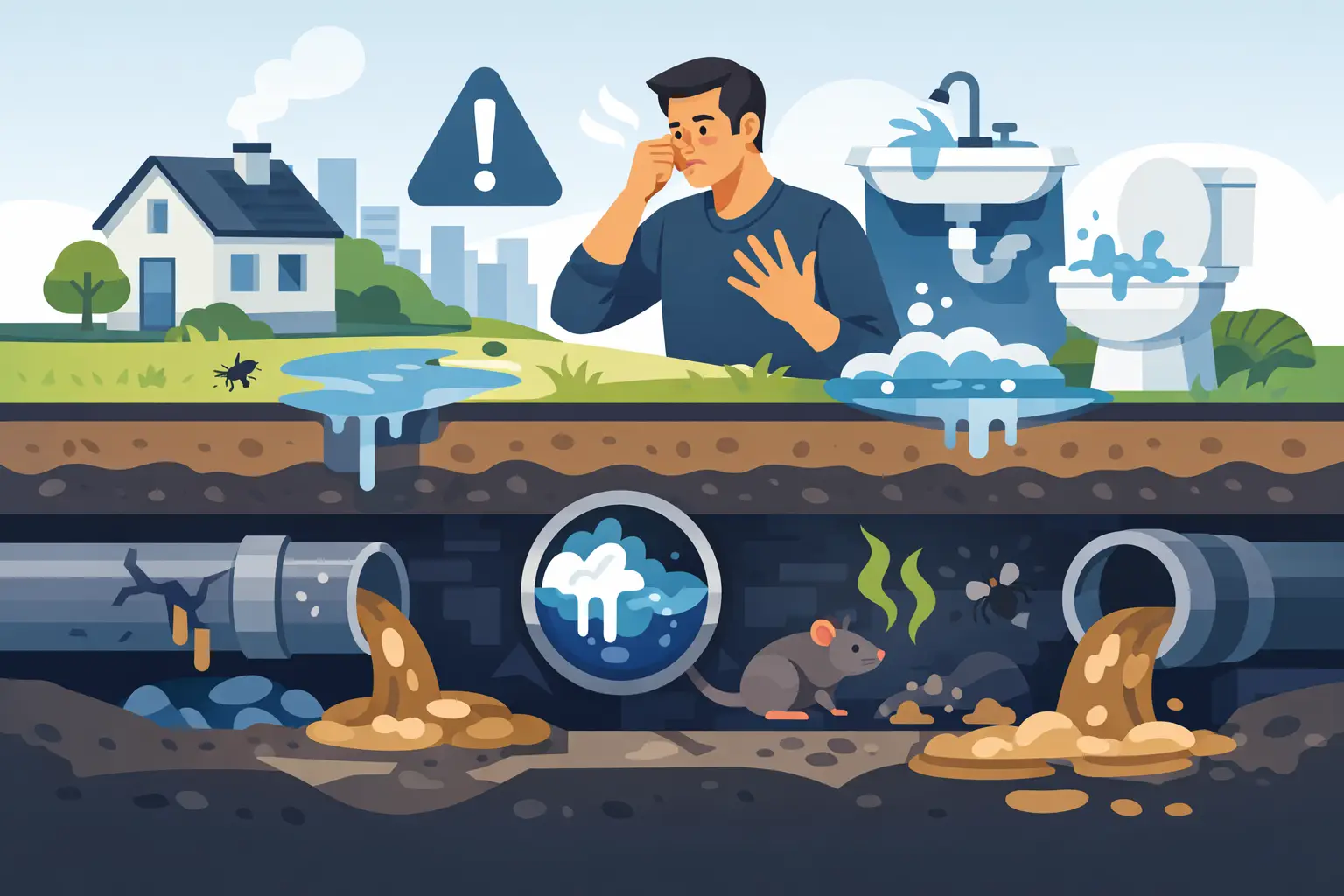
A slow sink is frustrating. A toilet that bubbles when the washing machine drains is a warning. Knowing the top signs of sewer trouble can help you act before wastewater backs up into a basement, bathroom, business, or rental property. The sooner the real problem is identified, the better chance you have of avoiding damaged floors, cleanup costs, and a much bigger mess.
Why Sewer Problems Need Fast Attention
Your main sewer line carries wastewater from every drain in the building to the public sewer or septic system. When that line is restricted, cracked, invaded by roots, or damaged, the problem usually affects more than one fixture. It may begin as an occasional slow drain, then turn into gurgling toilets, foul odors, or a backup at the lowest drain in the property.
A single clogged sink may only need a local drain cleaning. Multiple fixtures acting up at once often point to a mainline issue. That distinction matters because pouring chemical cleaner into one drain will not clear a blockage farther down the sewer line. Harsh chemicals can also damage pipes and create a hazard when a professional needs to work on the line.
Top Signs of Sewer Trouble at Your Property
1. More Than One Drain Is Slow
If the kitchen sink drains slowly after a heavy meal, the problem may be grease or food buildup in that one line. But if the shower, bathroom sink, toilet, and laundry drain are all slow, suspect a restriction in the main sewer line.
Pay attention to patterns. Drains may work normally at first, then slow down when the dishwasher, washer, or a large amount of water is running. That extra water can expose a blockage that is already narrowing the pipe.
2. Toilets, Tubs, or Drains Start Gurgling
Gurgling happens when air cannot move through the plumbing system the way it should. As water tries to pass a partial blockage, it can push air back through another drain. You may hear the toilet bubble while the shower runs, or notice the tub drain making noise after flushing.
One brief gurgle does not always mean an emergency. Repeated gurgling, especially alongside slow drains, should not be ignored. It often means the line is struggling to carry wastewater away.
3. Water Backs Up in the Lowest Drain
Water follows the easiest available path. In many homes and commercial buildings, that means a sewer blockage shows up first in a basement floor drain, shower, tub, or other low fixture. You may flush a toilet upstairs and see dirty water rise in a downstairs tub.
Stop using water if this happens. Do not run the washer, dishwasher, sinks, or additional toilets while waiting for service. Every gallon sent into the system can add to the backup.
4. You Smell Sewer Gas Indoors or Outside
A persistent sewage odor is never something to cover up with air freshener. The smell may come from a dry floor drain trap, but it can also indicate a damaged sewer line, a failing seal, or a blockage that is holding waste in the pipe.
Outside odors near the foundation, cleanout, driveway, or yard deserve attention too. Sewer gas and wastewater smells can signal a leak below ground. If the odor is strong or comes with wet ground, arrange an inspection promptly.
5. Clogs Keep Coming Back
A toilet that needs plunging every few months, a shower that repeatedly drains poorly, or a kitchen line that clogs again shortly after cleaning is telling you something. Temporary relief is not the same as a full solution.
Recurring clogs can be caused by grease buildup, wipes, scale inside aging pipes, tree roots, or a damaged section of line. Professional drain cleaning or a sewer camera inspection can show whether the issue is buildup that needs thorough cleaning or a pipe problem that requires a different repair plan.
6. Your Yard Has Wet, Soft, or Unusually Green Patches
Not every wet spot in a yard means a sewer leak. Rainfall, irrigation, and drainage issues can all create soft ground. But a soggy patch that appears during dry weather, especially with a sewage smell, is a serious red flag.
Wastewater escaping an underground sewer line can make grass grow faster and greener in one area. It can also leave muddy spots, sinkholes, or standing water. Keep people and pets away from the area until the source is checked.
7. You Notice Water Around the Sewer Cleanout
The sewer cleanout is an access point that allows a drain specialist to reach the main line. If water or sewage is coming out around the cleanout cap, the line is likely blocked downstream from that point.
Do not remove the cap yourself if the line is backed up. Built-up pressure can release wastewater quickly. A trained technician can open the line safely, locate the blockage, and determine whether cleaning, hydro-jetting, or further inspection is needed.
8. The Problem Gets Worse After Heavy Use
A partially blocked sewer may handle normal daily use but fail during busy periods. You might notice trouble after several showers, a laundry day, a busy restaurant shift, or when guests are using multiple bathrooms.
This is common with grease buildup, roots, and debris that have narrowed the line but not closed it completely. Waiting until the pipe blocks fully can turn a manageable service call into an after-hours cleanup situation.
9. Mature Trees Are Near the Sewer Line
Tree roots naturally seek water and nutrients. Even a small crack, loose pipe joint, or opening in an older sewer line can attract roots. Once inside, they grow and catch toilet paper, waste, and debris until flow is restricted.
Root intrusion is especially common in older properties, but it can happen anywhere. Cutting roots may restore flow, yet the best long-term approach depends on the condition of the pipe. A camera inspection helps show whether the line needs cleaning, regular maintenance, or repair.
10. You Have an Older Property With No Recent Sewer Inspection
Age alone does not mean a sewer line is failing. Still, older clay, cast iron, or poorly connected lines can be more vulnerable to root intrusion, corrosion, shifting soil, and breaks. A property that has never had its sewer line inspected may have developing issues that are not obvious yet.
This is particularly worth considering before buying a home, after major landscaping work, or when taking over management of a rental or commercial property. Finding a restriction early gives you more options than waiting for a full backup.
What to Do When You See Signs of Sewer Trouble
First, limit water use. If several drains are slow or wastewater is backing up, pause laundry, dishwashing, showers, and flushing whenever possible. This reduces the chance of sending more water into an already restricted line.
Next, skip chemical drain cleaners. They rarely solve a main sewer blockage and may sit in the pipe when the line is not draining. A professional can clear many blockages with the right equipment, then use a camera to see what caused the problem. Hydro-jetting can be a strong option for grease, sludge, roots, and heavy buildup because it cleans the pipe with high-pressure water instead of harsh chemicals. It is not the answer for every damaged pipe, which is why inspection matters.
If sewage has entered the home or business, keep children, pets, customers, and staff away from the affected area. Wastewater can contain harmful bacteria. A fast call for sewer clearing can help stop the source before cleanup and restoration begin.
Preventing the Next Backup
Good habits reduce many drain and sewer problems. Keep grease, coffee grounds, food scraps, wipes, paper towels, and hygiene products out of drains and toilets. Products labeled flushable can still catch on roots or buildup in a sewer line.
For properties with a history of roots, grease, or recurring clogs, scheduled cleaning can be less stressful and less expensive than waiting for a backup. Landlords and business owners may benefit from preventive service because a sewer issue can affect tenants, customers, and daily operations with little warning.
When the warning signs show up, do not wait for the lowest drain to overflow. Drain Pros LLC provides focused drain cleaning, hydro-jetting, and sewer line inspection for Burlington-area homes and businesses. A clear diagnosis and timely service can keep a small warning from becoming a cleanup project.