A slow kitchen sink can tempt anyone to grab the strongest bottle on the shelf. But chemical cleaners versus drain cables is not just a question of what clears water fastest. The wrong choice can leave behind the real blockage, damage a vulnerable pipe, or create a dangerous situation for the next person who works on the drain.
For a one-time minor clog, the answer may be simple. For recurring backups, sewage smells, multiple slow drains, or a commercial grease line, it is usually time to stop guessing and find out what is actually inside the pipe.
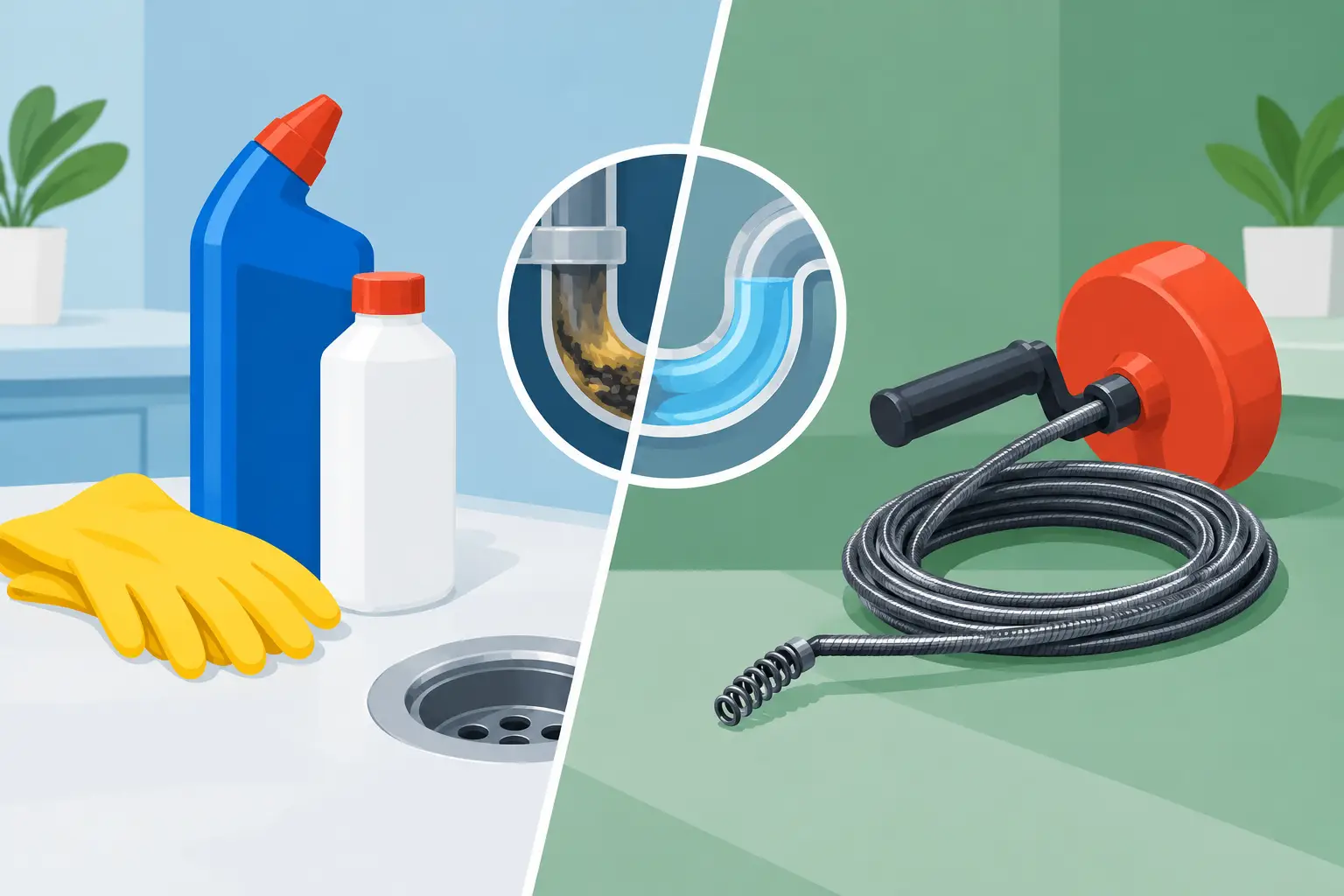
Chemical Cleaners Versus Drain Cables: The Main Difference
Chemical drain cleaners use reactive ingredients to break down or dissolve material in a drain. Depending on the product, those ingredients may generate heat or rely on highly alkaline or acidic compounds. They are sold as a quick fix for hair, soap residue, and minor organic buildup near the drain opening.
A drain cable, also called a drain snake or auger, is a mechanical tool. It moves through the pipe to bore into, grab, or break apart a blockage. Professional-grade cables come in different sizes and cutting heads for different drain lines. A small cable suited for a bathroom sink is not the same tool used to clear a main sewer line.
That difference matters. Chemicals try to react with the clog. A cable physically reaches it. Neither method is automatically right for every situation, and neither is a substitute for knowing the condition of the line.
When Chemical Cleaners May Seem Like the Easy Choice
Store-bought drain cleaner can sometimes help with a light, isolated clog in a sink or tub where water still drains slowly. The appeal is obvious: pour it in, wait, and hope the water starts moving again.
The problem is that “hope” is doing a lot of work. Chemical products may soften a small amount of hair or soap scum, but they often do not remove the full buildup coating the pipe. A drain can appear open for a few days, then slow down again because the underlying restriction remains.
Chemical cleaners are also a poor match for many common drain problems. They will not cut through tree roots in a sewer line. They do not correct a pipe that is cracked, offset, crushed, or holding standing water because of a slope issue. They are not a reliable answer for heavy grease buildup in restaurant or commercial kitchen drain lines.
The risks of repeated chemical use
Strong drain chemicals can be hard on older metal pipes, compromised joints, and certain pipe materials when used repeatedly or left sitting in a blocked line. They can also create heat inside the pipe. That is not a good combination when the pipe is already weakened or the cleaner cannot move past the clog.
There is a safety concern, too. If a chemical product is sitting in a drain, anyone attempting to cable or open that line can be exposed to splashing caustic liquid. Never mix drain-cleaning products, and do not add another product just because the first one did not work. Mixing chemicals can create harmful fumes or a violent reaction.
If you have already used a chemical cleaner and the drain is still blocked, tell the drain cleaning technician before any work begins. That simple information helps protect everyone on the job.
When a Drain Cable Is the Better Tool
A properly selected drain cable is often the better choice when a clog is solid, recurring, or located farther down the line. Cables can break through packed hair, paper buildup, scale, small root intrusions, and other material that a liquid product may barely touch.
For example, a bathroom sink that keeps backing up may have hair and toothpaste buildup around the stopper assembly or in the first section of pipe. A cable can reach that material and pull or break it apart. A toilet that will not flush properly may have an obstruction that needs a toilet-safe cabling approach rather than a bottle of chemicals.
For mainline sewer clogs, professional equipment matters even more. The cable must be sized correctly for the pipe and matched with the right cutting head. Using an undersized tool may only poke a small hole through the blockage. Using the wrong tool or forcing it can damage the line, get the cable stuck, or fail to reach the actual problem.
A cable is effective at restoring flow, but it has limits. It may open a path through grease or root buildup without fully cleaning the pipe wall. That is why a drain that repeatedly clogs may need a more thorough cleaning method and a camera inspection.
Why Hydro-Jetting Can Be the Next Step
When buildup is spread along the inside of a drain or sewer line, hydro-jetting can provide a more complete cleaning than a cable alone. Hydro-jetting uses controlled high-pressure water to remove grease, sludge, soap residue, scale, and root debris from pipe walls.
This approach is especially useful for recurring kitchen line clogs, commercial grease-line buildup, and sewer lines that have been opened with a cable several times but continue to have flow problems. It cleans rather than simply punches through a blockage.
Hydro-jetting is not appropriate for every pipe. Before jetting, the line may need to be evaluated for damage, severe deterioration, or a collapse. A sewer camera inspection helps identify what is causing the backup and whether cleaning is the right solution. Hydro-jetting clears buildup, but it does not repair a broken, collapsed, or improperly installed pipe.
Signs You Should Skip Both DIY Options
Some drain problems need a professional assessment from the start. Do not keep pouring chemicals or repeatedly forcing a hand snake if more than one fixture is affected. A slow tub, toilet bubbling, and a backup at a basement floor drain can point to a main sewer issue rather than a simple fixture clog.
Call for drain service if you notice any of the following:
- Water backing up into a tub or shower when a toilet is flushed
- Multiple drains slowing down or stopping at the same time
- Sewage odor indoors or outside near the sewer line
- A clog that returns soon after you clear it
- Gurgling drains, bubbling toilets, or wastewater coming up through a floor drain
- Heavy grease buildup affecting a commercial kitchen line
These symptoms can come from roots, wipes, grease, scale, damaged piping, or a blockage farther down the sewer. A camera inspection replaces guesswork with a clear view of the line.
A Practical Choice for Homes and Businesses
For a minor, isolated slow drain, a careful first step may be removing visible debris from the stopper or drain opening and using a plunger where appropriate. Avoid making a chemical cleaner your regular maintenance plan. If the problem returns, there is usually more in the line than a bottle can solve.
For landlords and property managers, repeated chemical use can be especially costly. It may delay the real diagnosis while tenants continue dealing with slow drains, odors, or backups. Scheduling proper drain cleaning and camera inspection can help identify whether the issue is a recurring buildup problem, root intrusion, or a pipe condition that requires repair by an appropriately qualified contractor.
Businesses should take the same approach with grease-bearing lines. Routine line cleaning can help keep flow moving, but grease-line cleaning is different from grease-trap pumping, interceptor service, or waste hauling. The right service depends on where the buildup is and what your system needs.
Get the Cause of the Clog, Not Just a Temporary Opening
At Drain Pros LLC, the goal is straightforward: clear the blockage safely and help you understand why it happened. That may mean professional cabling for a tough obstruction, hydro-jetting for heavy buildup, or a sewer camera inspection when the line keeps acting up.
Homeowners and businesses in Burlington and surrounding Southeast Iowa and West-Central Illinois communities should not have to keep buying products that only provide a short break from the same drain problem. A clear line starts with the right method, not the harshest chemical on the shelf.
If your drain is slow again, your toilet is gurgling, or wastewater is backing up where it should not, treat that as useful information. Getting the line checked now can help prevent a much messier problem later.