A kitchen sink that fills up while the dishwasher runs, a shower that leaves water around your ankles, or a toilet that gurgles when the washer drains can turn a normal day into a mess fast. Chemical free drain cleaning is a smart first choice for many clogs because it avoids pouring harsh, pipe-damaging products into a system that may already be struggling.
The key is using the right method for the problem. Some slow drains respond well to simple cleaning and maintenance. Others are warning signs of a deeper blockage in the line, tree roots in the sewer, heavy grease buildup, or a damaged pipe. Knowing the difference can save you from repeat clogs, water damage, and wasted money on products that do not reach the real problem.
What Chemical Free Drain Cleaning Means
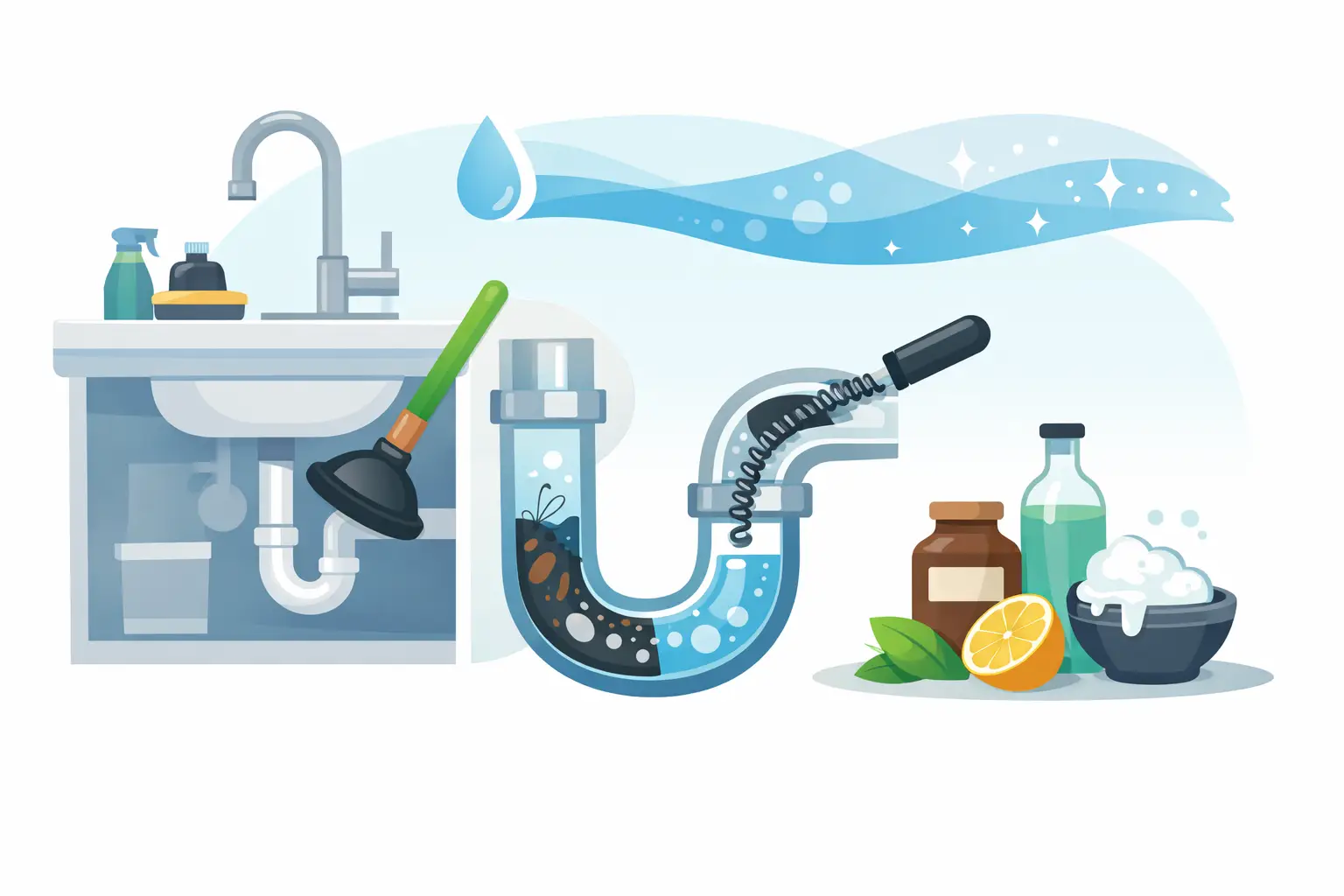
Chemical free drain cleaning removes or breaks up a blockage without relying on caustic drain openers, acidic cleaners, or harsh solvents. Instead of trying to dissolve everything in the pipe with a liquid product, it uses physical cleaning methods such as plunging, snaking, drain cabling, inspection, and high-pressure water.
That approach matters because many store-bought drain chemicals create heat as they react. They can sit in a partially blocked pipe, damage older plumbing, weaken certain connections, and create a safety hazard for anyone who later opens the line. They are also not a dependable answer for major grease deposits, roots, collapsed sections of pipe, or a clog farther down the sewer line.
Chemical-free does not mean every issue can be handled with a home remedy. It means the cleaning method is chosen based on what is actually blocking the drain, not just what is sitting on a store shelf.
When a Simple Clog Can Be Cleared at Home
For a minor, recent clog, start with the basics. A sink plunger can work well when food particles or soap residue are close to the drain opening. Use a flat-bottomed plunger for sinks and tubs, and make sure there is enough water to cover the rubber cup. Block the overflow opening on a bathroom sink or tub with a wet rag so the pressure stays in the drain.
Hair is another common bathroom problem. If you can safely remove the stopper, a small plastic drain tool or hand-cleaning tool can pull out the hair and soap buildup caught just below the drain. Wear gloves, work slowly, and avoid forcing anything deeper into the pipe.
Hot water can help with light grease in a kitchen sink, but use common sense. Very hot water is not the right fix for every pipe material or every clog, and boiling water can be risky around porcelain fixtures or aging plumbing. Warm water followed by a little dish soap may loosen fresh grease, but it will not remove a thick grease blockage farther down the line.
Baking soda and vinegar are often suggested for chemical free drain cleaning. They can freshen a drain and may help loosen mild residue near the top of the pipe, but they are not a serious clog-clearing solution. The fizz looks convincing, yet it does not have the force to cut through packed hair, hardened grease, roots, or a sewer-line obstruction.
Skip Harsh Chemicals When the Drain Is Already Stopped
If water is standing in the sink, tub, or floor drain, avoid adding liquid drain opener. Once a chemical is in the line, it can splash back during plunging or remain trapped when a technician has to cable the drain. That puts everyone at greater risk.
Do not mix drain products, either. Combining chemicals can create dangerous fumes or reactions. Even using one type after another can make a simple service call more complicated and less safe.
A better move is to stop using the affected fixture, keep children and pets away from standing water, and pay attention to what other drains are doing. That information helps identify whether the problem is isolated or part of a larger line blockage.
Signs the Problem Is Beyond One Drain
One slow bathroom sink may be a local hair clog. Several drains acting up at once usually point to something farther down the system. Watch for toilets that bubble, water backing up into a tub or shower, sewage odors, slow drains throughout the building, or a floor drain that fills when appliances discharge water.
For homeowners, these signs can mean a main sewer line is blocked. For landlords, restaurants, and small businesses, they can mean a larger interruption that affects tenants, customers, and daily operations. Waiting for the backup to get worse often turns a manageable cleaning job into a cleanup problem.
Recurring clogs deserve attention even if they eventually drain on their own. A line that keeps plugging up may have grease scale, root intrusion, a low spot holding debris, broken pipe, or another condition that cannot be solved by repeatedly plunging the fixture.
Professional Chemical Free Drain Cleaning Options
A professional drain specialist has tools that remove the blockage rather than simply pushing a hole through it. The right option depends on the pipe, the location of the clog, and what is causing it.
Drain Cabling and Snaking
A professional cable machine uses a rotating cable and the proper cutting head to break through or retrieve common obstructions. It is often effective for hair, paper buildup, small roots, and localized clogs in sinks, tubs, toilets, and branch lines.
Cabling can restore flow quickly, but it may not fully clean grease-coated pipe walls. If grease is the ongoing issue, the drain may clog again unless the buildup is removed more thoroughly.
Sewer Camera Inspection
A sewer camera inspection lets the technician see what is inside the line before guessing at a repair. It can help locate roots, buildup, damaged pipe, separated joints, or an object lodged in the sewer.
That matters when a clog returns or when multiple fixtures are backing up. An inspection gives you a clearer explanation of the problem and helps avoid paying for the wrong solution.
Hydro-Jetting
Hydro-jetting uses controlled high-pressure water to scour buildup from the inside of a drain or sewer line. It is a strong chemical-free option for grease, sludge, soap scale, and other material that clings to the pipe walls. It can also be useful for preventive maintenance in commercial kitchens and properties with recurring line buildup.
Hydro-jetting is not automatic for every clog. The line should be evaluated first, especially if it is old, cracked, or suspected to be damaged. A camera inspection can help determine whether the pipe is in suitable condition and whether jetting is the right tool.
Preventing the Next Drain Backup
Good habits will not stop every sewer problem, but they reduce the buildup that causes many routine service calls. Keep grease, oils, and fats out of kitchen drains. Let cooking grease cool in a container and throw it away instead of rinsing it down with hot water.
Use sink strainers to catch food scraps and bathroom hair. Only flush toilet paper and human waste. Wipes labeled flushable, paper towels, hygiene products, and cotton swabs do not belong in the toilet, even when they disappear with one flush.
If your home has large trees near the sewer route or your business handles a lot of grease, scheduled drain maintenance is worth considering. Preventive cleaning is usually easier to plan around than an after-hours backup.
Get the Right Fix Without the Harsh Chemicals
When a drain is slow, start with safe, simple steps. When water backs up, multiple fixtures are affected, or the same clog keeps coming back, it is time for professional equipment and a clear diagnosis. Drain Pros LLC provides focused drain and sewer cleaning for homes and businesses that need fast, dependable results without relying on harsh chemical treatments.
A clear drain is good. Knowing why it clogged and having the buildup removed the right way is even better. That is how you protect your pipes, avoid repeat problems, and get back to normal without adding another problem to the line.