A slow drain can turn into a floor-level mess fast, especially when the main sewer line is involved. When comparing sewer camera inspection vs jetting, the question is not which service is better across the board. One helps identify what is happening inside the pipe. The other is built to remove the blockage and clean the line. The right first step depends on the symptoms, the age of the line, and whether the problem keeps coming back.
For homeowners, landlords, and business owners around Burlington, the goal is simple: get the line flowing again without guessing or paying for work that does not match the problem. Here is how sewer cameras and hydro-jetting work, when each makes sense, and when using both is the smart move.
What a Sewer Camera Inspection Does
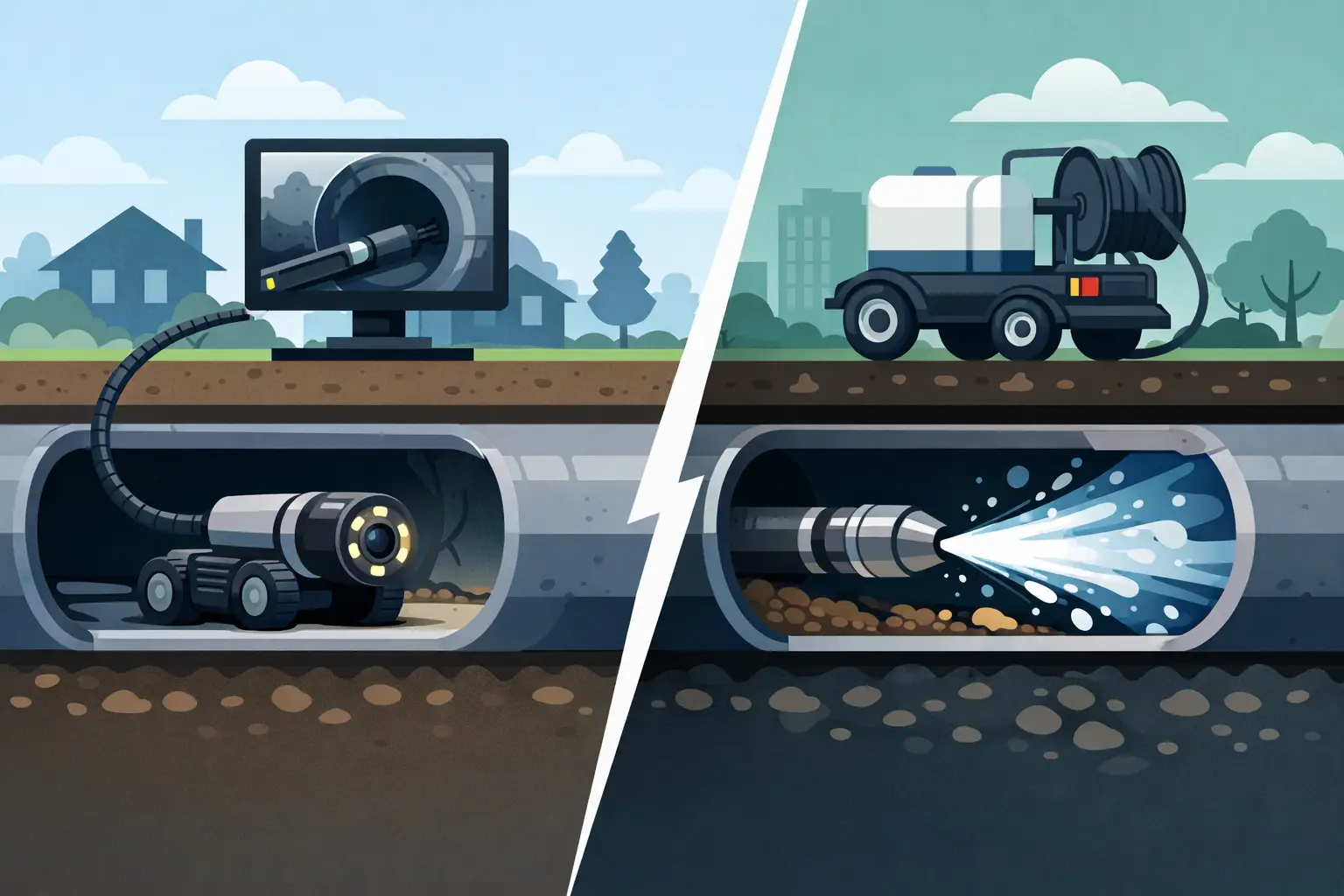
A sewer camera inspection uses a small waterproof camera attached to a flexible cable. A drain specialist feeds the camera through a cleanout or access point and watches a live video feed from inside the sewer line.
This is a diagnostic service. It shows what is causing the trouble and where it is located. Instead of assuming a recurring clog is just grease, hair, or toilet paper, the camera can reveal roots, buildup, a shifted pipe joint, a cracked section, standing water, or an object stuck in the line.
A camera inspection is especially useful when the issue is unclear. Maybe several drains are slow at once. Maybe the line was cleared recently but backed up again. Maybe you are buying an older property and want a clearer picture of the sewer before a surprise repair lands on your plate.
The camera also helps separate a cleaning problem from a repair problem. If the line is packed with sludge or roots but structurally sound, cleaning may be all it needs. If the pipe has collapsed, has a serious offset, or is badly damaged, forcing more cleaning through it will not provide a lasting fix.
Signs You May Need a Camera First
A camera is often the best starting point if you have repeated backups with no obvious cause, sewage coming up in a tub or floor drain, unexplained wet spots near the sewer route, or a line that clogs again shortly after being snaked.
It can also be the right choice after a drain cleaning if the technician suspects a deeper issue. Clearing a hole through a clog can restore flow for a while, but it does not always explain why the blockage formed in the first place.
What Hydro-Jetting Does
Hydro-jetting is a cleaning service. It uses high-pressure water sent through a specialized hose and nozzle to break apart and flush away debris inside the pipe. The water scours the pipe walls far more thoroughly than a basic cable machine that may only punch a path through the blockage.
Jetting is effective against grease buildup, soap residue, sludge, scale, food waste, paper buildup, and many root intrusions. It is a strong option for kitchen lines in restaurants and commercial spaces, as well as residential main sewer lines that have a history of heavy buildup.
Unlike harsh chemical drain cleaners, hydro-jetting relies on water rather than corrosive products. That is better for people handling the issue, and it avoids pouring aggressive chemicals into the drain system. Still, the water pressure is powerful, which is why an experienced drain specialist should evaluate the line before deciding whether jetting is appropriate.
When Jetting Is the Better First Move
Jetting may be the first recommendation when the cause is already fairly clear and the pipe is known to be in good condition. For example, a restaurant with a grease-heavy kitchen line may benefit from scheduled jetting before grease becomes a full shutdown. A homeowner may also choose jetting after repeated slow drains caused by buildup in an otherwise sound sewer line.
If a line has been jetted successfully before and the same type of buildup has returned, there may be no need to start with a camera every time. The service history matters. So does the condition of the pipe.
Sewer Camera Inspection vs Jetting: The Real Difference
The simplest way to think about it is this: a camera tells you what is in the pipe, while hydro-jetting removes what can be cleaned out of the pipe.
A sewer camera inspection does not clear a clog on its own. You may see roots, grease, or an obstruction on the screen, but the camera is there to diagnose the problem. Jetting, on the other hand, is designed to restore flow and clean the interior of the line. It does not repair a broken or collapsed pipe.
That difference matters because a sewer backup can have more than one cause. A line might have grease buildup and a low spot where water and waste collect. Jetting can remove the buildup, but the low spot may keep causing problems over time. A camera gives you the information needed to make a practical decision instead of treating the symptom alone.
Cost can vary, too. A camera inspection adds a diagnostic step, but it can prevent wasted cleaning attempts or help avoid unnecessary digging. Jetting is more involved than a basic cable cleaning, yet it can provide a deeper clean that lasts longer when buildup is the main issue. The best value is the service that addresses the actual condition of your line.
When It Makes Sense to Use Both
In many sewer problems, the best answer is not camera or jetting. It is camera, jetting, then a final camera check when needed.
An initial inspection can confirm whether the line is safe to jet and identify the blockage. The jetting service then clears the debris. A follow-up look can show whether the line is clean and whether cracks, root entry points, or pipe offsets were hidden by buildup before the cleaning.
This approach is common with recurring mainline clogs and older sewer systems. It is also helpful for property managers who need a clear record of what was found and what work was performed. For a commercial property, it can support a maintenance plan based on what the line actually collects, not a one-size-fits-all schedule.
There are times when a specialist may start by clearing an urgent backup to get the building usable again, then inspect afterward. If sewage is threatening a basement, restroom, kitchen, or tenant space, restoring flow quickly comes first. Once the immediate mess is under control, the camera can help determine the next step.
What Not to Do When Your Sewer Is Backing Up
Do not keep flushing toilets or running water to test whether the line has cleared. If the main sewer is blocked, more water can come back through the lowest drain in the building. Avoid using chemical drain openers as a solution for a mainline issue. They rarely solve a major sewer blockage and can create hazards for anyone servicing the line later.
It is also wise not to assume a temporary improvement means the problem is gone. If the drain starts moving after plunging or snaking but the issue has happened more than once, there may be buildup, roots, or pipe damage farther down the line.
Choosing the Right Service for Your Property
Start with the symptoms. A first-time, obvious clog may only need straightforward drain clearing. Repeated backups, multiple affected fixtures, or an older line with an unknown history often justify a camera inspection. Heavy grease, sludge, or root buildup in a sound line may call for hydro-jetting.
The right recommendation should come with a plain explanation of what was found, what can be cleaned, and what may require repair later. At Drain Pros LLC, that means focusing on the sewer and drain problem in front of you, not selling work that does not fit the situation.
A sewer issue is stressful enough without guessing at the fix. If water is backing up, stop using affected fixtures, keep people away from contaminated areas, and get a qualified drain specialist involved before a manageable clog becomes a bigger cleanup.