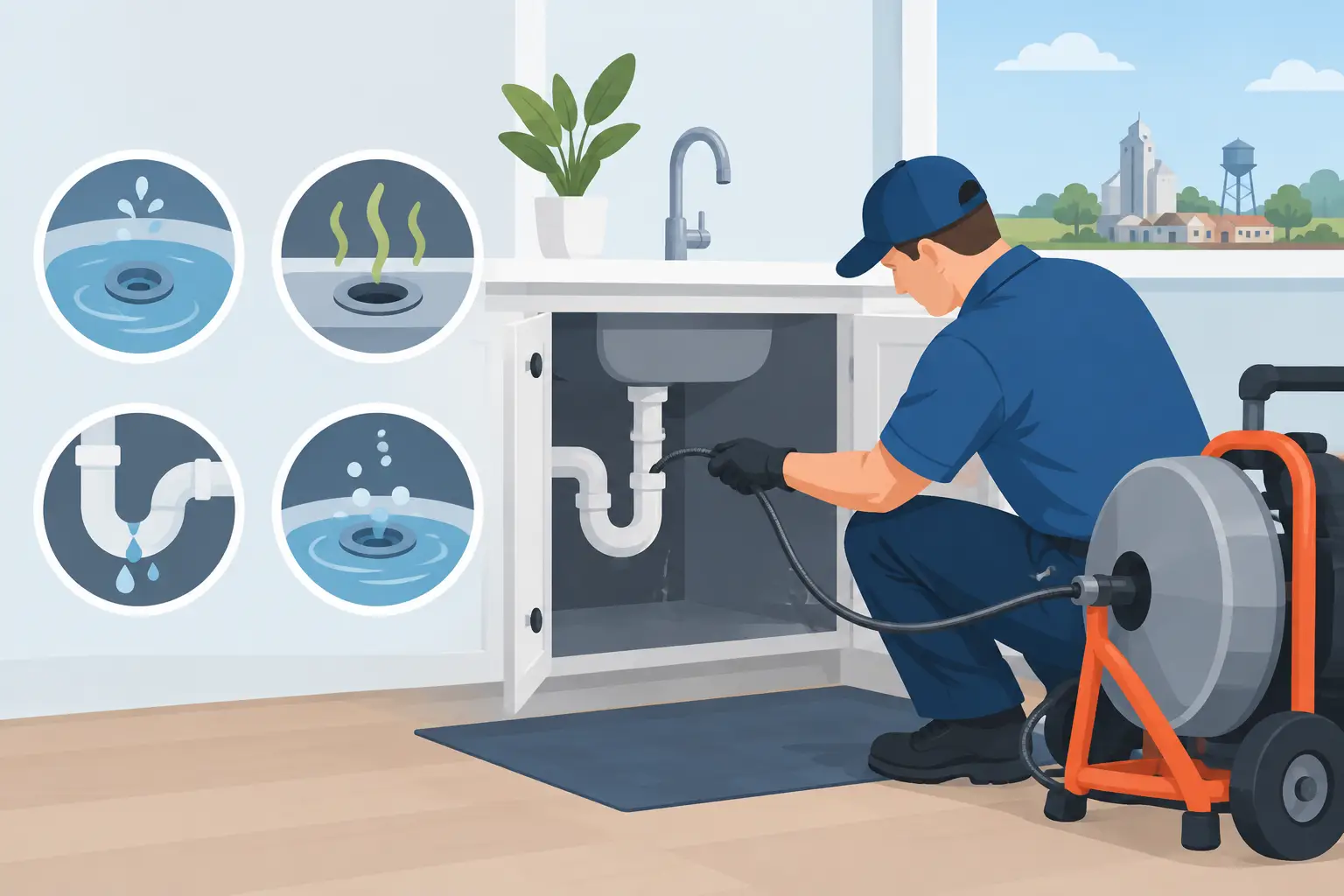
A slow kitchen sink may seem like a small annoyance until the dishwasher backs up, the drain starts gurgling, or wastewater appears where it should not. For dependable drain cleaning in Biggsville, IL, the goal is not just to get water moving for the day. It is to clear the blockage properly, find out why it happened, and help prevent the next backup.
Drain trouble can affect any home, rental, restaurant, office, or other commercial property. Some clogs are close to a fixture and simple to identify. Others are farther down the line, where grease, roots, wipes, soap buildup, or years of debris restrict the pipe. Knowing the warning signs helps you decide when a drain needs professional attention instead of another store-bought chemical.
Signs You Need Drain Cleaning in Biggsville, IL
One slow drain does not always mean there is a main sewer problem. Hair, soap residue, and everyday buildup commonly collect near shower, tub, and bathroom sink drains. A professional cleaning can remove that material without guessing at the source of the problem.
When several drains are slow at once, the concern is more serious. A kitchen sink, tub, and toilet that all drain poorly may point to a blockage in a shared line or the main sewer line. Gurgling sounds, water rising in a shower when a toilet flushes, sewage odors, or wastewater coming up from a floor drain are also signs to stop waiting.
Call for service when you notice recurring clogs, especially if plunging provides only a short-term improvement. A drain that repeatedly backs up is usually telling you there is buildup or an obstruction farther down the line. Pouring more chemicals into it may not solve the issue and can be hard on pipes, fixtures, and anyone working on the drain later.
What Is Causing the Clog?
The cause depends on the drain and how the property is used. Kitchen lines often collect cooking grease, food debris, and detergent residue. Grease may go down as a liquid, but it cools and sticks to the inside of the pipe. Over time, that sticky layer catches more debris and reduces the opening water needs to pass through.
Bathroom drains usually deal with hair, soap, toothpaste, and personal-care products. Toilets and sewer lines can be blocked by excessive paper products, wipes labeled as flushable, hygiene products, or small objects that do not belong in the system. Flushable does not always mean a product breaks down quickly enough to move safely through every drain line.
Outside sewer lines can face a different problem: tree roots. Roots naturally seek moisture and can work their way into small openings in aging pipe connections. Once inside, they trap toilet paper and other debris. Cleaning can restore flow, but a camera inspection may be needed to see whether roots, pipe damage, or a low spot in the line is contributing to repeat backups.
Why Professional Equipment Makes a Difference
A plunger is useful for a minor, nearby clog. A hand auger can sometimes help with a simple sink or tub blockage. But when the clog is deep in the line, keeps returning, or affects multiple fixtures, the right equipment matters.
Professional drain machines are built to clear material farther into the drain system. The technician can select the proper cable and cutting head for the line and blockage instead of forcing a one-size-fits-all solution. That helps remove the obstruction while treating the pipe with care.
For heavy grease, sludge, scale, or widespread buildup, hydro-jetting may be the better option. Hydro-jetting uses controlled high-pressure water to clean the interior walls of the pipe. It is especially useful for grease-prone commercial kitchen lines and residential drains with stubborn buildup. It avoids harsh chemical drain cleaners and can provide a more thorough cleaning than simply punching a small opening through a clog.
Hydro-jetting is not automatically the right answer for every pipe. If a line is severely damaged, collapsed, or otherwise compromised, high-pressure cleaning may not be appropriate. A camera inspection gives a clear look inside the line so the cleaning method can match the condition of the pipe.
Camera Inspections Take the Guesswork Out
A sewer camera inspection is one of the most useful tools for recurring drain problems. Instead of assuming what is inside the line, a technician sends a camera through the pipe to identify the source and location of the blockage.
The camera may reveal root intrusion, grease buildup, a foreign object, separated connections, or pipe damage. That information helps determine whether cleaning is likely to solve the problem or whether a qualified repair contractor should evaluate a damaged line. Cleaning clears blockages. It does not repair broken, collapsed, or badly deteriorated pipe.
For landlords and property managers, inspections can be especially helpful when a problem keeps returning between tenants. The footage and findings make it easier to understand whether the issue is use-related, buildup-related, or tied to the condition of the line. That means fewer repeated service calls based on guesswork.
Residential and Commercial Drains Need Different Plans
A family home and a busy business do not put the same demand on a drain system. At home, most recurring problems come down to daily habits, aging lines, roots, or accumulated buildup. Preventive cleaning can be a smart choice for a property with a history of backups, especially before a holiday gathering or a period when guests will be using the home.
Commercial properties may need a more regular schedule. Restaurants, break rooms, rental buildings, salons, and other high-use spaces can put more grease, hair, paper products, or debris into their lines than a typical household. Waiting for a full backup can disrupt operations, frustrate customers, and create an avoidable cleanup problem.
The best schedule depends on the building, the type of drain, the age of the lines, and the history of clogs. A business with grease buildup may benefit from planned drain-line cleaning, while a homeowner may only need service when warning signs show up. The point is to address the actual condition of the line, not sell a service that does not fit.
Simple Habits That Help Drains Stay Clear
Good habits cannot prevent every clog, particularly when roots or aging sewer lines are involved. They can, however, reduce the everyday buildup that leads to slow drains and backups.
Keep grease, oil, and food scraps out of the kitchen sink. Use drain screens to catch hair in showers and tubs, and empty those screens regularly. Only flush toilet paper and human waste. Wipes, paper towels, cotton products, and similar items should go in the trash, even when packaging says they are flushable.
Be cautious with chemical drain cleaners. They may create a temporary opening in light buildup, but they often do not remove the full blockage. Repeated use can also create safety concerns and make professional service more difficult. If a drain is slow again soon after treatment, it is time to find the real cause.
If you live in a mobile home, drain-cleaning access matters. Drain Pros clears mobile-home drain and sewer lines only through an accessible exterior cleanout or toilet access. We do not crawl or work underneath mobile homes. A quick discussion of the problem and available access points can help determine the best next step.
Get a Clear Answer Before a Small Clog Grows
A drain backup is rarely convenient, but it does not have to become a bigger property problem. Drain Pros LLC provides focused drain and sewer cleaning, hydro-jetting, and camera inspection service for Biggsville and surrounding West-Central Illinois communities. There is no weekend up-charge, and straightforward options are available for homeowners and businesses that need help getting lines flowing again.
If a drain is slow, noisy, smelly, or backing up, act before wastewater ends up where it does not belong. Contact Drain Pros to describe the problem and confirm availability in Biggsville, Oquawka, Stronghurst, or another listed service community. We can discuss the available access and appropriate next steps for drain cleaning.