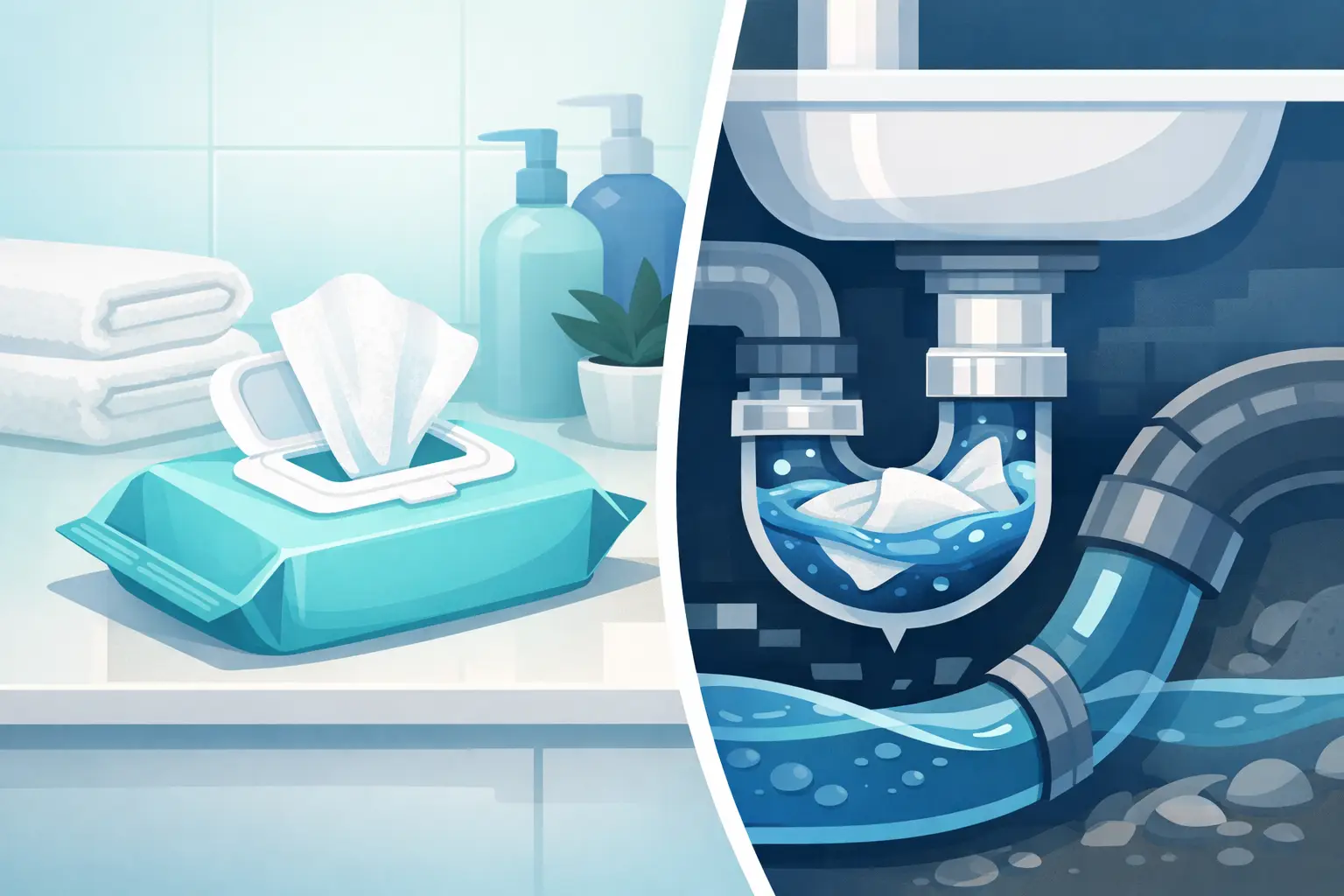
That package may say flushable wipes, but your toilet and sewer line do not read the label. A wipe can disappear around the bend of the toilet without trouble, then catch on buildup farther down the line. One wipe may not create an immediate problem. Repeated flushing can turn a minor restriction into a toilet backup, a slow main sewer, or a costly cleanup.
For homes, rental properties, restaurants, offices, and other businesses around Southeast Iowa, the practical rule is simple: toilet paper is made to break apart in water. Wipes are made to stay together long enough to clean. That difference matters once they enter a drain system.
Why Flushable Wipes Cause Drain Problems
“Flushable” usually means a product can physically pass through a toilet under certain testing conditions. It does not mean it breaks down as quickly or completely as toilet paper in every home plumbing system, septic tank, municipal sewer, or pump station.
Toilet paper is designed to lose strength quickly when it gets wet and moves through the pipe. Most wipes are woven or bonded fibers. They hold their shape because that is what makes them useful outside the toilet. Inside a drain, that strength allows them to snag on rough pipe joints, roots, grease, scale, or another object already sitting in the line.
Once one wipe catches, more material can build up behind it. Toilet paper, paper towels, hair, feminine hygiene products, dental floss, and kitchen grease can all add to the blockage. The result may be a partial clog at first: a toilet that flushes slowly, a tub that gurgles, or a sink that drains only after the toilet finishes bubbling.
A main sewer blockage can become much more serious. If wastewater cannot move out to the city sewer or septic system, it looks for the lowest available opening. That may be a basement floor drain, shower, bathtub, or first-floor toilet. Waiting until sewage is on the floor is never the affordable option.
“But We Have Been Flushing Them for Years”
That is common, and it is also why wipe-related clogs can feel sudden. The problem often builds slowly. A line may have a little scale, a slightly offset joint, a low spot, or tree-root intrusion that has not caused a complete backup yet. Wipes add material that can hang up in those weak spots.
It also depends on the property. A newer home with smooth, properly sloped pipe may tolerate more before symptoms appear. An older home with cast iron, clay tile, deteriorating joints, or roots is more likely to have a problem. Commercial properties can face added risk because more people use the restrooms and small restrictions grow quickly under heavier use.
Septic systems deserve extra caution. Wipes can remain intact in the tank and complicate pumping or maintenance. If a home has a grinder pump or sewage ejector system, wipes can create another failure point. A pump designed for normal toilet paper and wastewater is not the place to test what a wipe can handle.
Signs Wipes May Be Clogging Your Sewer Line
A single slow toilet does not always mean the main line is blocked. The clog could be in that fixture’s trap or branch drain. The warning signs become more urgent when several fixtures act up together.
Watch for toilets that bubble when a sink or washing machine drains, water rising in a tub after flushing, multiple slow drains, sewage odors near drains, or water appearing at a floor drain. These symptoms can point to a restriction in the main sewer line, where wipes may be part of the buildup.
Do not keep flushing to see whether the toilet will “push through.” Every extra flush adds water to a line that may already be unable to carry it away. If the bowl is rising, remove the tank lid and close the flapper if you can do so safely, then shut off the water valve behind the toilet. Keep people from using water elsewhere in the building until the problem is checked.
For property managers and business owners, it helps to treat repeat restroom complaints as a maintenance issue, not just a one-time nuisance. A recurring clog can signal a developing mainline problem. Addressing it early helps prevent lost business time, tenant complaints, and avoidable damage.
What to Do When Flushable Wipes Create a Clog
Start with the least risky response. If one toilet is slow and no other fixtures are affected, a toilet plunger may clear ordinary paper buildup. Use a flange-style toilet plunger, make sure there is enough water to cover the cup, and use steady pressure. Do not use excessive force or keep flushing between attempts.
Avoid chemical drain cleaners. They rarely dissolve wipes, and harsh products can sit in a blocked pipe, create fumes, damage certain plumbing materials, and make later service more hazardous. They are especially unhelpful for a main sewer issue.
A small hand auger can sometimes remove a nearby toilet obstruction, but it is easy to scratch porcelain or push material deeper if you do not know where the blockage is. If the issue involves more than one fixture, a professional drain machine or sewer inspection is usually the smarter next step.
A drain and sewer specialist can clear the line and determine what caused the restriction. Depending on the pipe and condition, the right solution may be cable cleaning, hydro-jetting, or a camera inspection. Cable equipment can cut through or retrieve many obstructions. Hydro-jetting uses high-pressure water to clean grease, sludge, and buildup from the pipe walls, but it should be used only after assessing the line condition. Older or damaged pipe may need a different approach.
At Drain Pros LLC, the goal is not just to get water moving for the next few hours. A proper inspection can help identify whether wipes were the main problem or whether roots, grease, pipe damage, or a sagging line gave them a place to collect.
A Better Rule for What Goes in the Toilet
The safest everyday habit is the “three Ps” rule: pee, poop, and toilet paper. Everything else belongs in a trash container, even if the packaging says it is safe to flush.
That includes baby wipes, personal cleansing wipes, disinfecting wipes, makeup wipes, and cleaning cloths. Paper towels should stay out of the toilet too. They may look like paper, but they are made to stay strong when wet. Cotton swabs, dental floss, diapers, sanitary products, and medications can cause their own problems and should never go down the drain.
If wipes are needed for personal care, keep a lined trash can with a lid next to the toilet. This is a simple change, but it removes a common source of plumbing trouble. For businesses, clear restroom signage and well-stocked trash containers can reduce misuse without making customers or employees feel called out.
Prevention Is Cheaper Than a Backup
If your home has an older sewer line, large trees near the route to the street, past backups, or a history of slow drains, preventive service is worth considering. A sewer camera inspection can show what is happening inside the pipe instead of guessing from the surface. It can reveal roots, cracks, heavy buildup, or other conditions that make wipe clogs more likely.
There is no one schedule that fits every property. A newer home with no symptoms may only need attention when warning signs appear. A restaurant, rental property, older home, or building with recurring drain issues may benefit from planned cleaning and inspection. The right choice depends on how the system is used and what the pipe is telling you.
If a toilet is bubbling, several drains are slow, or wastewater is coming up where it should not, stop adding water to the system and get the line checked promptly. The best place for a wipe is the trash can, not the sewer line waiting below your bathroom floor.