A busy kitchen can put more stress on a drain line in one lunch rush than a home sink sees in days. Grease, food scraps, soap residue, and heavy dishwashing all collect inside the pipe. When flow starts slowing down, commercial kitchen drain cleaning can keep a small issue from becoming a messy backup that interrupts service, creates odors, and puts staff on cleanup duty.
For restaurant owners, kitchen managers, landlords, and facility operators, the goal is simple: keep wastewater moving and keep the kitchen working. That takes more than pouring a store-bought product down the sink when it starts draining slowly. It takes the right cleaning method, an honest look at what is causing the restriction, and a maintenance plan that fits how hard your kitchen runs.
Why Commercial Kitchen Drains Clog So Fast
Kitchen drains handle a different kind of workload than restroom drains or most residential lines. Grease is usually the biggest issue. Hot cooking oil, fats, sauces, and meat drippings may look like liquid when they enter the drain, but they cool and stick to the pipe walls farther down the line. Over time, that coating catches food particles, coffee grounds, rice, pasta, and other debris.
Dish soap can make grease move for a short distance, but it does not remove it from the system. The buildup simply travels until it finds a cooler section of pipe or a rough spot where it can collect. A line can still appear to drain normally while the opening inside the pipe gets smaller week after week.
Some commercial kitchens also deal with mineral scale, especially in older lines, along with broken-down debris from disposals and dish areas. If the same drain keeps slowing down, the problem may be farther down the branch line or in the main sewer line. Repeated quick fixes often buy time, but they do not always clear the full buildup.
Warning Signs to Address Before a Backup
A complete backup rarely happens without warning. Kitchen staff are often the first to notice a change because they use the sinks and floor drains every day. Slow drainage, water standing in a sink basin, gurgling sounds, or an odor near a drain are all signs that the line needs attention.
Pay close attention when more than one fixture is affected. For example, if a prep sink drains slowly and a nearby floor drain bubbles during dishwashing, the restriction may be beyond one sink trap. Water backing up through a floor drain is another clear signal to stop adding water to the system and arrange professional service.
Grease buildup can also create a pattern. The kitchen may drain fine during a quiet shift but struggle during the busiest hours, when multiple sinks and equipment are discharging at once. That does not mean the issue will clear on its own. It usually means the pipe has limited capacity left.
What Professional Kitchen Drain Cleaning Involves
The right approach depends on the line, the location of the blockage, and the condition of the pipe. A drain cleaning specialist should start by listening to what staff have seen: which fixtures are slow, when the problem started, whether it returns after cleaning, and what goes down the drain each day. Those details help narrow down the source of the problem before work begins.
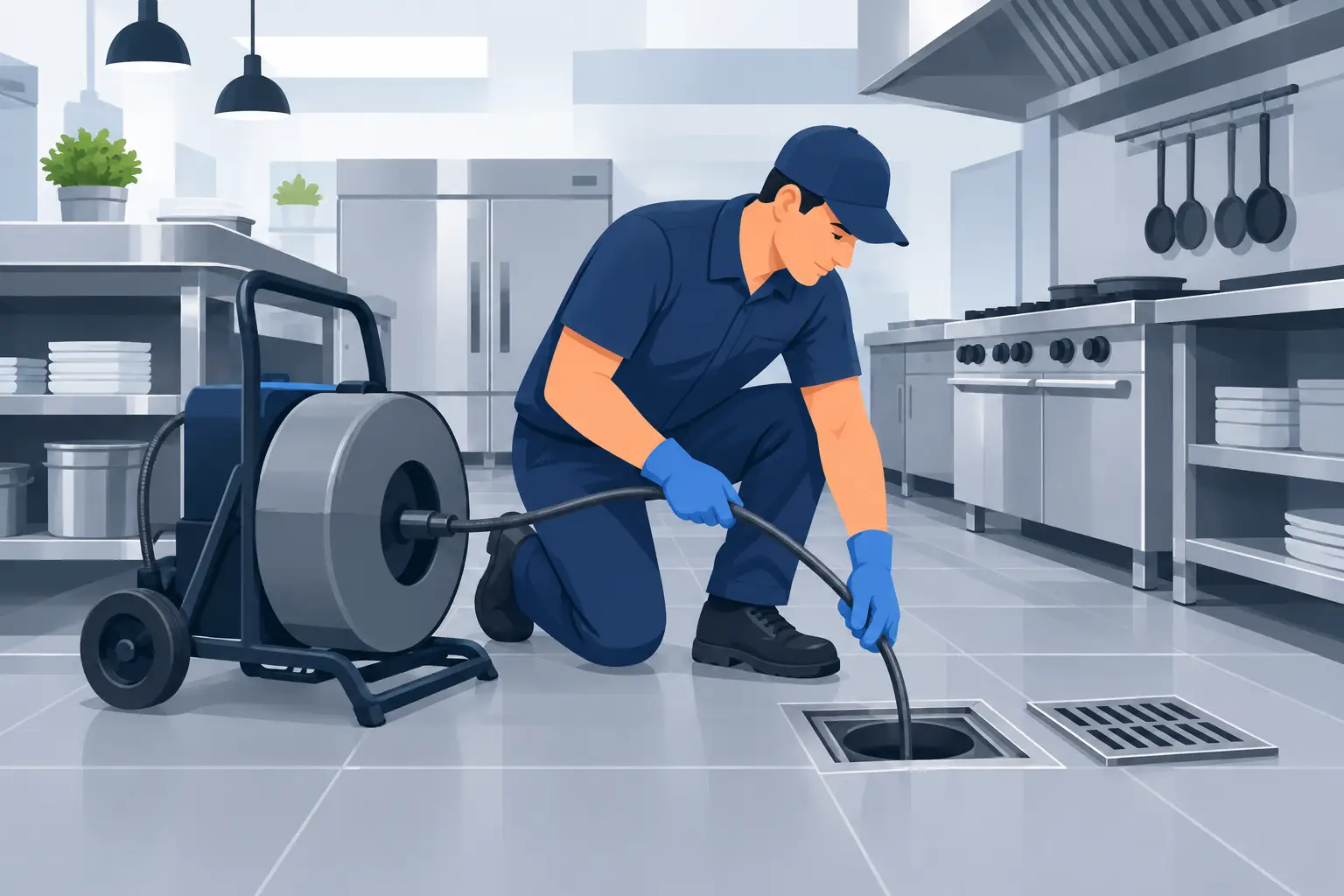
For a localized blockage, mechanical drain cleaning may be the practical choice. Professional cable equipment can break through or retrieve certain obstructions and restore flow. It can be effective for a specific clog, but it may not remove grease coating from the full interior of a long commercial kitchen line.
When Hydro-Jetting Makes Sense
Hydro-jetting uses controlled high-pressure water to scour buildup from the inside of a drain or sewer line. For grease-heavy kitchen drains, it can be a more thorough option than simply punching a hole through the center of the clog. The goal is to clear the grease, sludge, and loose debris from the pipe walls so wastewater has more room to flow.
Hydro-jetting is not a one-size-fits-all answer. Older pipes, damaged sections, or lines with a suspected collapse should be evaluated first. High-pressure cleaning clears buildup, but it does not repair broken, separated, or collapsed pipe. When the condition of a line is unknown, a sewer camera inspection can help determine whether hydro-jetting is appropriate.
Unlike harsh chemical drain products, professional hydro-jetting relies on water pressure rather than corrosive chemicals. That matters in a commercial kitchen where repeated chemical use can be hard on some piping and may leave staff dealing with fumes or splash risks. The equipment still needs to be operated correctly, which is why this is work best handled by a trained drain-cleaning professional.
When a Camera Inspection Helps
A camera inspection is especially useful when a drain problem keeps returning. It allows the technician to inspect the inside of the line and look for grease buildup, roots in an exterior sewer line, offsets, cracks, standing water, or other conditions affecting flow.
For a restaurant or commercial property, that information helps avoid guessing. If the camera shows a heavy grease restriction, cleaning can be targeted to the right section. If it reveals pipe damage or a collapse, the property owner can discuss repair options with an appropriately qualified contractor instead of scheduling repeated cleanings that will not solve the underlying issue.
Grease Lines Are Not the Same as Grease Traps
This distinction matters for kitchen operators. Cleaning the drain lines that carry kitchen wastewater is different from grease-trap pumping, grease-interceptor servicing, or waste hauling. A drain line can clog with grease even when a grease-management system is being maintained, and a recently pumped grease trap does not automatically mean the downstream drain line is clear.
Your kitchen should follow local rules and your established grease-management procedures. Staff habits matter, too. Wiping pans before washing, collecting fryer oil properly, and keeping food scraps out of sinks reduce what enters the line. But even a careful kitchen can develop buildup over time, particularly with high volume or older piping.
A Practical Prevention Plan for Busy Kitchens
Preventive service is usually easier to schedule and manage than a backup during a shift. The right interval depends on your menu, volume, drain layout, and history. A small café may need a different schedule than a restaurant with fryers, dishwashing stations, prep sinks, and a high-volume weekend crowd.
Start by tracking drain behavior. If staff regularly mention slow sinks or odors, do not wait for standing water. Keep a simple record of which drain is affected, what time of day it happens, and whether the issue follows a busy service period. That information can help identify a recurring pattern.
Daily kitchen habits also make a real difference:
- Wipe grease and food residue from cookware before sending it to the wash area.
- Use sink strainers where practical and empty them into the trash, not another drain.
- Keep rice, pasta, coffee grounds, flour-heavy residue, and produce scraps out of sinks.
- Train new staff on what cannot go down the drain, including cooking oil and grease.
Avoid relying on chemical drain openers as routine maintenance. They may not reach the full buildup, and repeated use can create safety concerns for employees. A slow drain that returns after chemicals is a sign to have the line properly assessed and cleaned.
Choosing Service Without Disrupting the Kitchen
When calling for commercial kitchen drain service, explain whether the issue is a slow drain, a full backup, an odor, or a recurring problem. Mention the affected fixtures and whether the kitchen can continue operating safely. Clear details help the drain specialist bring the right equipment and recommend a practical next step.
It also helps to ask whether a camera inspection is worthwhile after cleaning, especially if the same line has clogged more than once. The lowest-cost option in the moment is not always the best value if it only opens a narrow path and leaves most of the grease in place. On the other hand, a full hydro-jetting service may not be necessary for every simple, isolated clog. The right service should match the actual condition of the line.
Drain Pros LLC provides focused drain cleaning, hydro-jetting, and camera inspection for commercial properties in Burlington and surrounding Southeast Iowa and West-Central Illinois communities. The approach is straightforward: identify the problem, clear the line with the appropriate method, and give you a clear explanation of what was found.
A kitchen drain does not need to be completely blocked before it deserves attention. When water starts slowing down, odors start building, or the same problem keeps coming back, handling it early can protect your schedule, your staff, and the next service rush.