A restaurant floor drain that slows down during the lunch rush is more than an inconvenience. So is a restroom backup at an apartment building, a recurring sewer odor in a retail space, or a kitchen line that clogs again two weeks after being snaked. This commercial hydro jetting service guide explains when high-pressure water cleaning is the right answer, what to expect from the process, and how to prevent a drain problem from disrupting business again.
What Commercial Hydro Jetting Does
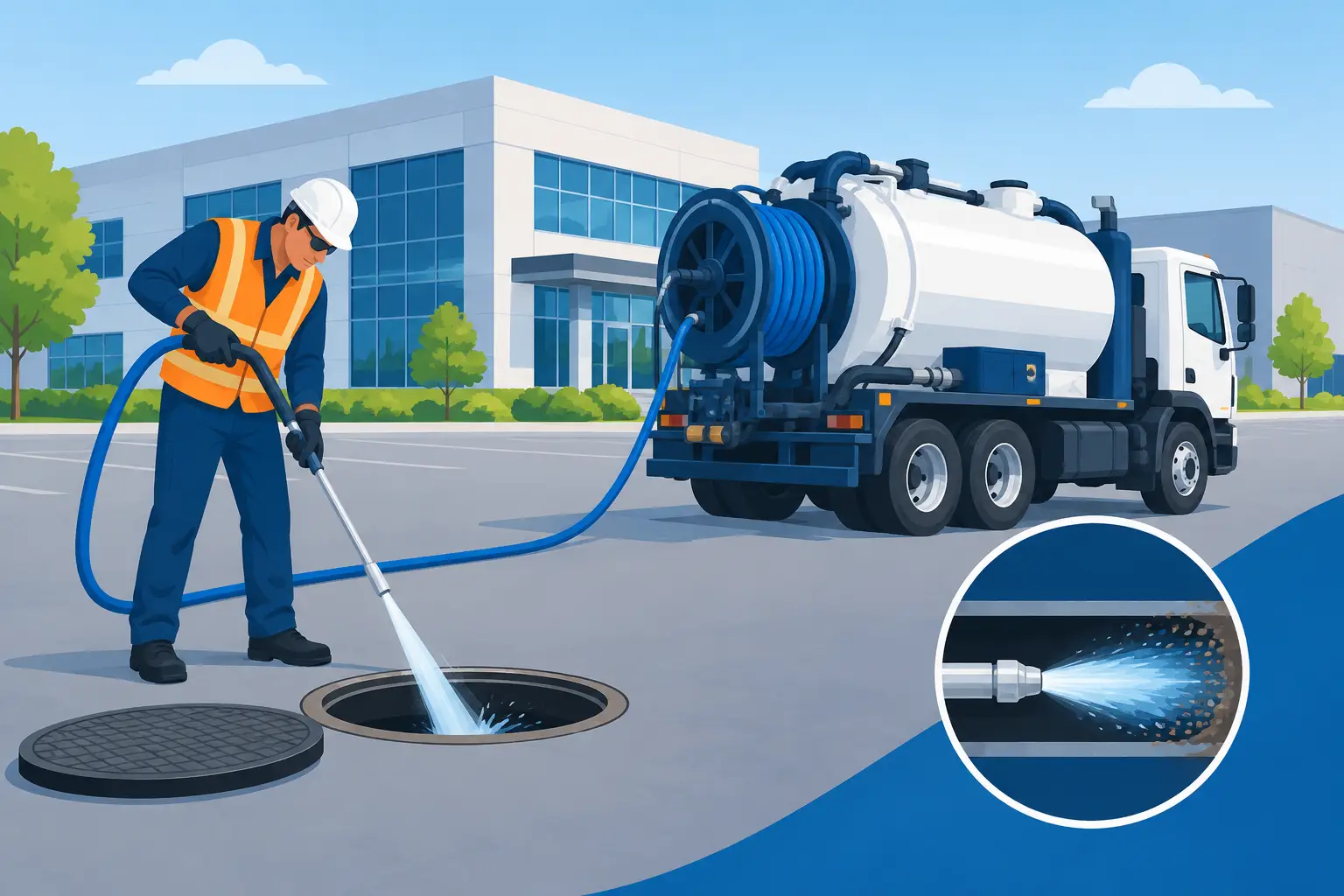
Hydro jetting uses a specialized hose and nozzle to send high-pressure water through a drain or sewer line. The water cuts through buildup on the inside walls of the pipe and flushes loosened debris toward the sewer. Unlike a basic cable machine that may open a path through a clog, hydro jetting is designed to clean more of the pipe interior.
That difference matters in commercial settings. Many business drains handle a heavier and less predictable load than a typical household line. Grease, food particles, paper products, soap residue, mineral scale, sludge, and roots can build up over time. A line may still drain, but it is gradually losing capacity until one busy day turns a slow drain into a backup.
For grease-heavy kitchen lines, hydro jetting can break up and clear accumulated grease inside the drain piping. It is not the same as grease-trap pumping, interceptor servicing, or waste hauling. Those are separate services and should be handled on their own schedule.
Signs Your Business May Need Hydro Jetting
A single isolated clog does not always call for hydro jetting. Sometimes a standard drain cleaning is enough. But repeat trouble is a strong sign that buildup remains in the line and needs more thorough cleaning.
Watch for drains that slow down during busy periods, especially in commercial kitchens, break rooms, restrooms, and shared tenant spaces. Gurgling, foul sewer odors, water coming up through floor drains, or backups in more than one fixture can also point to a larger blockage in a branch line or main sewer line.
Other common warning signs include:
- The same drain needs clearing several times a year.
- Floor drains overflow after heavy use or cleaning.
- Grease or sludge returns shortly after a cable cleaning.
- A sewer line backs up when toilets, sinks, or equipment drain at the same time.
- Older trees near the building raise concern about root intrusion.
None of these signs automatically means the line needs jetting. A sewer camera inspection can show what is actually inside the pipe and help determine whether hydro jetting is a good fit.
When a Camera Inspection Should Come First
Commercial drain problems are not always caused by soft buildup. A camera inspection is especially useful when a line has a history of backups, the building is older, roots are suspected, or there is any concern about pipe damage.
The camera lets a drain specialist see whether the issue is grease, scale, roots, a settled blockage, or something more serious such as a broken, offset, or collapsed pipe. Hydro jetting cleans drain lines. It does not repair damaged pipe, correct a collapsed drain, or solve a structural issue. If the inspection reveals damage, an appropriately qualified contractor can advise on repair options.
Starting with a camera can also prevent wasted work. If a pipe is in poor condition, the cleaning approach may need to be adjusted. If the pipe is sound but coated with grease or mineral buildup, hydro jetting may be the most effective way to restore flow and extend the time between service calls.
How a Commercial Hydro Jetting Service Works
A professional job begins with an assessment of the drainage problem, the affected fixtures, and available access points. The technician may ask when the issue occurs, what goes down the drains, whether the building has had previous backups, and whether any cleaning or inspection has been done recently. Straight answers help identify the likely cause faster.
When needed, the line is inspected with a camera before cleaning. Then the technician selects a nozzle and water pressure suited to the pipe and type of blockage. Different nozzles are used for different jobs. Some pull the hose forward through the line, while others are designed to scour grease, cut roots, or move debris back toward the cleanout.
The goal is controlled cleaning, not simply blasting water into a pipe. A trained technician works the line carefully, monitors what comes back, and uses the proper equipment for the situation. After the cleaning, a follow-up camera inspection may be recommended to confirm that the buildup has been cleared and to check the condition of the line.
For businesses, access, water supply, and timing matter. Drain Pros needs an accessible entry point and a suitable water supply for hydro-jetting. Contact us to discuss the setup and available appointment times. Scheduling around lower-traffic hours depends on availability and is not a promise of after-hours or 24/7 service.
Which Commercial Properties Benefit Most?
Restaurants and food-service operations are common candidates because grease and food debris build up fast. Even with good kitchen habits, grease can cool and stick to pipe walls. Dishwashing, mop sinks, prep sinks, and floor drains can all contribute to the problem.
Apartment buildings, rental properties, and multi-tenant commercial spaces also benefit from proactive drain maintenance. More occupants mean more toilet paper, soap residue, wipes, and accidental items entering the system. One tenant may report a slow drain while the actual blockage is developing farther down a shared line.
Retail buildings, offices, schools, churches, manufacturing facilities, and service shops can have different drain concerns. Sediment, soap, paper products, debris from cleaning, and mineral scale can reduce flow over time. Properties with mature trees may also need periodic inspection for root intrusion in sewer lines.
The best maintenance plan depends on what the building sends through its drains, the age and condition of the piping, how often the line has clogged, and the cost of a shutdown. A busy restaurant may need more frequent preventive cleaning than a small office with light restroom use.
Hydro Jetting vs. Cable Drain Cleaning
Cable drain cleaning and hydro jetting are both valuable tools, but they solve problems differently. A cable machine uses a rotating cable and cutting head to break through or retrieve a blockage. It can be a practical choice for a localized clog, a compact obstruction, or a line that needs to be opened quickly.
Hydro jetting uses water to clean along the pipe walls. It is often the better option for recurring grease, sludge, scale, and widespread buildup because it removes more material instead of only creating a hole through the clog.
There is no one-size-fits-all answer. A camera inspection and the condition of the line should guide the decision. In some cases, a cable is used first to restore access, followed by hydro jetting for a more complete cleaning. In other cases, jetting is unnecessary and a standard drain clearing handles the issue.
Preventing Repeat Commercial Drain Backups
Hydro jetting works best when it is paired with better day-to-day drain habits. Train staff not to send grease, food scraps, wipes, paper towels, coffee grounds, or cleaning debris down drains. Use strainers where they make sense and empty them regularly. Do not rely on harsh chemical drain cleaners, which can be unsafe to handle and may not remove the buildup causing the problem.
For properties with repeat issues, keep a simple service record. Note which line clogged, what symptoms appeared, what the camera found, and how long it had been since the previous service. That history makes it easier to set a preventive schedule based on real conditions rather than guesswork.
Property managers should also encourage tenants and staff to report slow drains early. A slow floor drain or recurring gurgle is usually easier and less disruptive to address before wastewater reaches a restroom, kitchen, hallway, or sales floor.
Get the Right Answer Before the Backup Gets Worse
When commercial drains are backing up, the cheapest-looking fix is not always the most affordable one. Repeated quick clearings can add up, especially when they interrupt staff, tenants, customers, and daily operations. A clear diagnosis and the right cleaning method can reduce repeat calls and help protect the property.
Drain Pros LLC provides commercial drain cleaning, hydro jetting, and sewer camera inspections for businesses in Burlington and surrounding Southeast Iowa and West-Central Illinois communities. Businesses in Burlington, West Burlington, Fort Madison, Mount Pleasant, Keokuk, Oquawka, Stronghurst, and other listed service communities can contact us to confirm availability. If your business has repeat clogs, grease buildup, roots, or a slow mainline, ask for a straightforward assessment. One call can help turn a recurring drain problem into a manageable maintenance plan.