A slow floor drain during a busy shift is more than an inconvenience. It can mean grease has moved past the trap and started coating the drain line, creating odors, backups, and a cleanup problem nobody wants. The best grease trap cleaning methods combine regular manual cleaning, proper waste handling, staff habits, and professional drain service when buildup reaches the line.
Grease traps are designed to catch fats, oils, and grease before they enter the building drain system. They work well when they are cleaned on schedule. When they are ignored, the trapped material hardens, food solids collect, and wastewater has less room to flow. The result is often a messy backup at the worst possible time.
Why Grease Trap Cleaning Cannot Wait
A grease trap does not remove grease forever. It temporarily separates grease and solids from wastewater, giving staff or a qualified service provider a chance to remove the collected waste. As the trap fills, its ability to do that job drops quickly.
The warning signs usually start small: persistent kitchen odors, slow sinks, gurgling drains, or water pooling near a floor drain. A recurring issue may also mean grease has traveled beyond the trap and into the branch line or main drain. Cleaning the trap is still necessary, but it may not solve a blockage farther downstream.
For restaurants, cafeterias, bars, food trucks, and other commercial kitchens, neglect can lead to downtime, sanitation concerns, and local compliance issues. For a property owner or manager, a preventive routine is usually far less expensive than dealing with an overflow during service hours.
Best Grease Trap Cleaning Methods: Start With a Schedule
The right cleaning frequency depends on the trap size, menu, volume of cooking, dishwashing habits, and local requirements. A small kitchen with limited frying may need less frequent attention than a high-volume restaurant that runs fryers and dishwashers all day.
A practical rule is to monitor the trap rather than wait for a clog. Many kitchens follow the 25 percent rule: once fats, oils, grease, and settled solids take up roughly one-quarter of the trap’s liquid capacity, it is time for service. This prevents the trap from becoming overloaded and lets it keep separating grease effectively.
Keep a simple cleaning log with the date, person or provider responsible, observations, and any drain problems noticed. That record helps managers spot patterns. If the trap seems to fill much faster than usual, the kitchen may need better scraping practices, a shorter cleaning interval, or an inspection of the drain line.
Manual Cleaning for Smaller, Accessible Traps
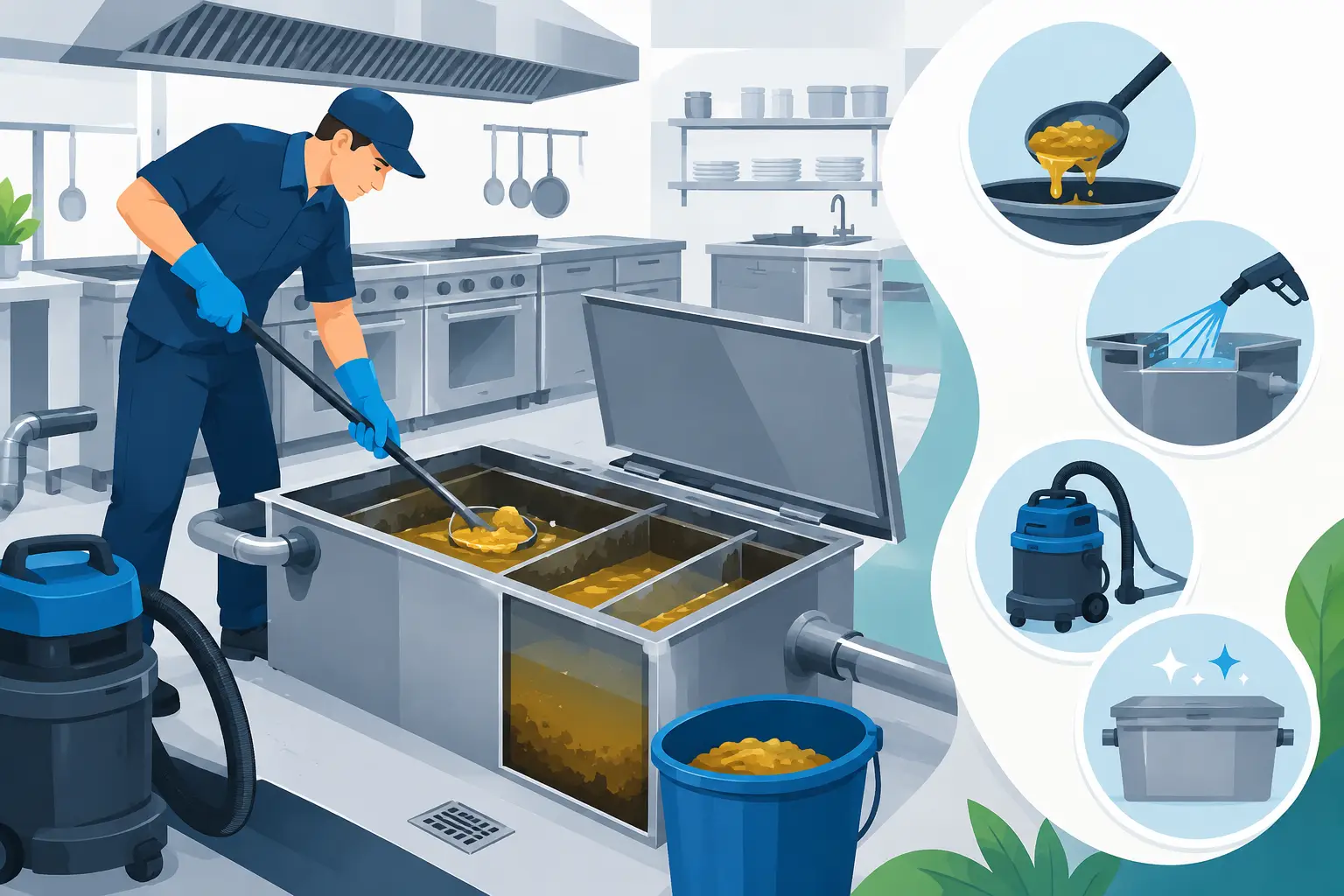
For smaller indoor grease traps, manual cleaning is often the basic maintenance method. The work should be done carefully and according to local disposal rules. Grease waste should never be washed down another drain, dumped outdoors, or put into a storm drain.
Have trained staff or a qualified grease-trap service provider follow the manufacturer’s cleaning instructions and applicable waste-disposal requirements. The process needs to remove collected grease and solids, clean accessible components, and restore the unit correctly. This overview is not a substitute for the instructions for your specific trap.
This is not a job for harsh drain chemicals. Chemicals may move grease farther into the system, damage components, create safety hazards for staff, and make later cleaning more difficult. Hot water alone is not a solution either. It may melt grease temporarily, but that grease can cool and solidify farther down the line.
Pumping and Interceptor Service for Larger Systems
Large exterior interceptors and high-volume grease collection systems generally require specialized pumping, waste hauling, and servicing. Those services are different from cleaning a grease-clogged drain line. Kitchen operators should work with a properly qualified grease-waste provider for pumping and disposal requirements.
After an interceptor is serviced, pay attention to how the drains perform. If sinks or floor drains remain slow, the trouble may be in the grease line beyond the interceptor. That calls for drain cleaning and possibly a camera inspection, not simply another pumping appointment.
Keep Grease Out of the Trap When Possible
No grease trap can make up for poor kitchen habits. The most effective maintenance program begins before dishes ever reach the sink.
Train staff to scrape plates, pans, and cookware into the trash or an approved grease collection container before washing. Dry-wiping greasy surfaces with paper towels can reduce what reaches the sink. Food scraps should be kept out of drains, because they settle in the trap and take up capacity that should be available for grease separation.
Avoid using emulsifiers or enzyme products as a substitute for cleaning. Some products can break grease into smaller particles, allowing it to move beyond the trap and collect in the drain line. A kitchen may appear to have fewer problems for a short time while the blockage is simply forming farther away.
Dishwashing temperature matters, too. Very hot discharge can carry melted grease through the trap before it has time to separate. The specific setup and local requirements vary, so kitchen managers should follow equipment guidance and local regulations while watching how their trap performs in real conditions.
When the Grease Problem Is in the Drain Line
A clean trap does not always mean a clear drain. Grease that escapes the trap can coat the inside of kitchen drain lines layer by layer. Food particles cling to that coating, narrowing the pipe until water drains slowly or backs up.
Mechanical drain cleaning can break through certain blockages, but it may leave grease on the pipe walls. For heavy grease buildup in suitable, structurally sound lines, hydro-jetting is often the more thorough option. A professional hydro-jetter uses controlled high-pressure water to cut through grease and flush debris from the pipe.
Hydro-jetting is not a repair for cracked, collapsed, or damaged pipe. If there is concern about pipe condition, a sewer camera inspection can show what is inside the line before cleaning proceeds. Camera inspection is especially useful for recurring backups, repeated grease-line clogs, or a sudden change in how the system drains.
Drain Pros LLC provides commercial drain cleaning, hydro-jetting, and sewer camera inspections for businesses in Burlington and surrounding Southeast Iowa and West-Central Illinois communities. We focus on the drain piping itself: grease-line cleaning, hydro-jetting, and camera inspection. We do not provide grease-trap pumping, interceptor pumping, or waste hauling; those services should be handled by a qualified grease-waste provider. If your trap has been serviced but the kitchen line is still slow, gurgling, or backing up, contact Drain Pros to check the drain line and determine whether cleaning or jetting is the right next step.
A Practical Grease Maintenance Routine
The best maintenance routine is one your team can actually follow during a busy week. Daily, staff should scrape and wipe cookware before washing, empty sink strainers, and report slow drains or odors early. Weekly, inspect the trap area for leaks, unusual grease accumulation, loose covers, and signs that the cleaning schedule needs adjustment.
At each scheduled cleaning, remove grease and solids completely, clean baffles and accessible surfaces, reassemble the trap correctly, and record the work. Schedule professional drain cleaning when slow drainage persists, water backs up at floor drains, or the trap is being cleaned regularly but the kitchen still has odor and flow problems.
A properly maintained grease trap helps protect the drain system, but it cannot fix grease that has already built up farther down the pipe. Keep staff procedures simple, clean the trap before it is overloaded, and address slow drains before a busy kitchen is forced to stop. That steady approach keeps the kitchen cleaner, the drains moving, and small maintenance tasks from becoming a major interruption.