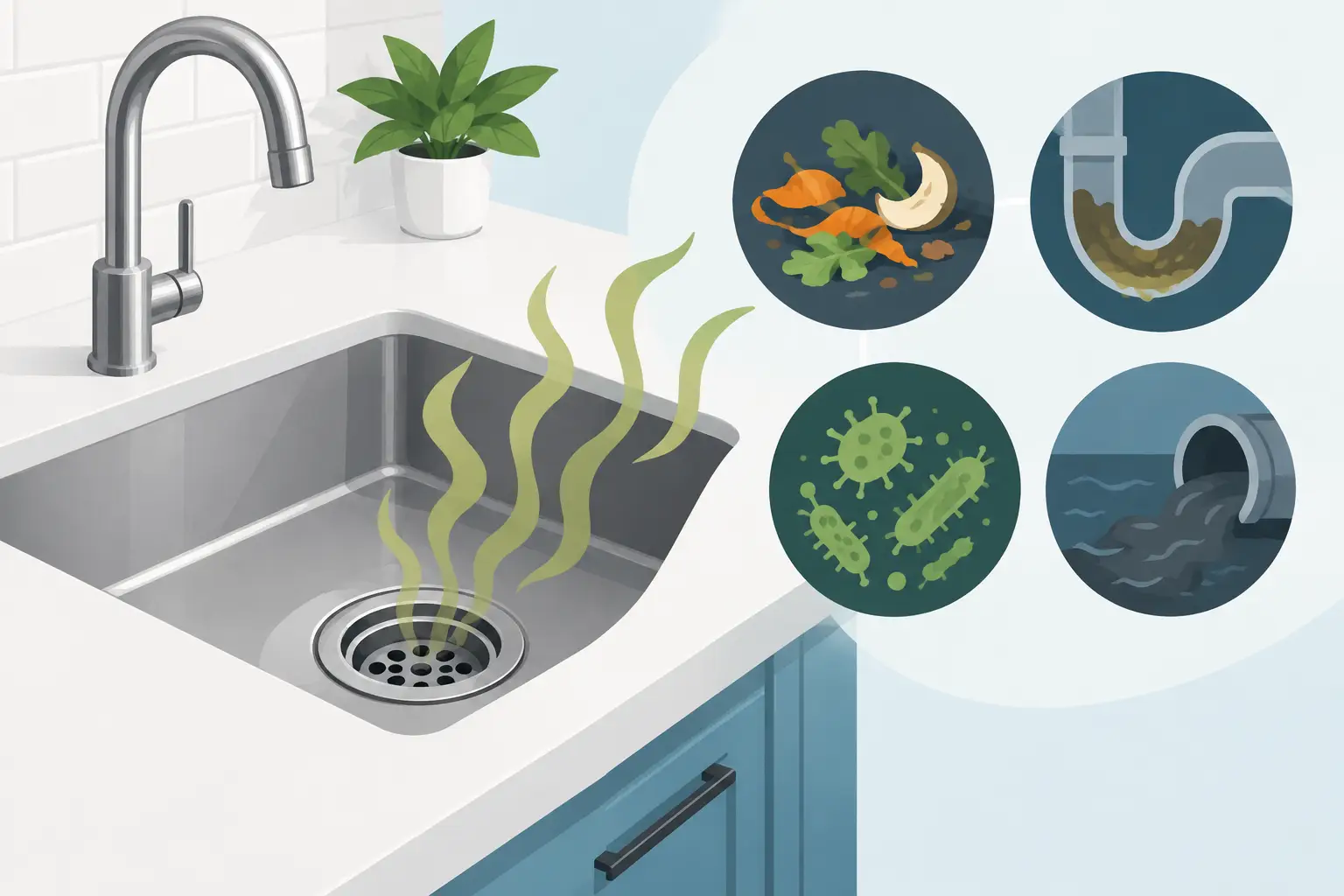
A drain that smells bad is more than an annoyance when guests are coming over or customers are walking through your business. Drain odor causes can be as simple as a dry trap under a rarely used sink, or they can point to buildup and blockage farther down the line. The smell, where it appears, and whether it comes back after cleaning all help narrow down the problem.
A quick rinse or air freshener may hide the odor for a few hours. It will not remove what is feeding the smell. Knowing the likely cause helps you decide whether a simple home fix makes sense or whether it is time for professional drain cleaning and a camera inspection.
Common Drain Odor Causes in Homes and Businesses
A dry P-trap
Most sinks, floor drains, showers, and tubs have a curved section of pipe called a P-trap. It holds water, creating a barrier between the room and odors in the drain or sewer line. If a guest bathroom sink, basement floor drain, utility sink, or vacant commercial restroom goes unused for a while, that water can evaporate.
When the trap is dry, sewer-like odors can move into the room. Run water for 30 to 60 seconds to refill the trap. For a floor drain that dries out repeatedly, adding a small amount of mineral oil after filling it with water can slow evaporation. If the odor remains after the trap is full, the issue may be buildup or a drainage problem rather than a dry trap.
Food residue and grease buildup
Kitchen drains collect more than most people realize. Grease, cooking oil, food particles, coffee grounds, and soap residue stick to the inside of the line. Over time, that coating can turn sour or rancid. In restaurants and other commercial kitchens, grease buildup can develop much faster because of the volume moving through the drain line.
Hot water may improve flow for a short time, but it does not remove a heavy layer of grease farther down the pipe. Harsh chemical cleaners are also a poor long-term answer. They can be rough on pipes and often cut only a narrow path through the blockage. Professional hydro-jetting uses high-pressure water to clean grease, sludge, and buildup from the pipe walls without relying on harsh chemicals. It is a cleaning method, not a repair for a broken or collapsed line.
Biofilm in bathroom drains
A bathroom drain can smell musty, rotten, or sulfur-like even when water still drains. Hair, toothpaste, shaving products, body oils, soap, and skin cells create a slimy coating called biofilm. Bacteria feed on that material, and the result is an unpleasant odor from the sink, shower, or tub.
Cleaning the stopper and visible hair may help, especially in a bathroom sink. But recurring odor and slow drainage often mean buildup has collected beyond what you can reach by hand. That is when professional drain cleaning can clear the line more thoroughly.
Debris in a garbage disposal
If the kitchen sink smells strongest when the disposal runs, food debris may be caught inside the unit or at the drain opening. Small particles can sit under splash guards and in crevices, then break down and smell worse over time.
Turn off power to the disposal before cleaning around it. Do not put your hand inside the unit. If cleaning the accessible splash guard does not improve the smell, the drain line itself may have buildup that needs attention.
A partial clog or main sewer blockage
One smelly drain can be a local drain problem. Odors coming from several drains, especially along with slow draining, gurgling, or water backing up in a tub or floor drain, deserve faster attention. Those signs can point to a blockage in a shared branch line or the main sewer line.
Roots, wipes, paper products, grease, scale, and other debris can restrict a sewer line. As waste and standing water sit behind the restriction, odors become more noticeable. A sewer camera inspection can show where the blockage is and help identify whether cleaning is the right next step. If a camera reveals pipe damage, a collapse, or another repair issue, an appropriately qualified contractor can advise on repair options.
Sewer gas from a venting issue
Drain systems need venting so water can move through pipes without pulling the water out of nearby traps. A blocked or damaged vent can contribute to gurgling drains, slow flow, and recurring odors. You may notice the problem after a toilet flushes or when a washing machine drains.
Because vent issues can look similar to clogs, guessing is not always productive. Cleaning may resolve odors caused by a blocked drain line, but it will not repair a damaged vent or pipe. A proper inspection helps separate a cleaning issue from a repair issue.
When Drain Odors Need Professional Attention
A brief odor from an unused drain is usually easy to address. The situation changes when the smell returns soon after you refill the trap or clean the drain opening. Persistent odors mean something is still sitting in the line, or the line is not draining the way it should.
Call for drain and sewer service when you notice several drains smelling at once, repeated backups, gurgling sounds, water rising in an unexpected fixture, or a strong sewer smell that does not go away. Businesses should also take recurring drain odors seriously. A smelly restroom, break room sink, or kitchen drain can affect customers, employees, and daily operations before it turns into a full blockage.
For property managers and landlords, recurring odor complaints are worth investigating instead of treating room by room. A camera inspection can be especially useful when the same unit, floor drain, or building section keeps having trouble. It gives a clearer picture of buildup, roots, or an obstruction inside the line.
What Not to Do When a Drain Smells
Do not keep pouring chemical drain opener into a line that already drains slowly or backs up. It may not reach the source of the problem, and it can leave harsh chemicals sitting in the pipe or fixture. That creates a safety concern for anyone who later works on the drain.
Avoid flushing wipes, paper towels, feminine products, grease, or large amounts of food waste in an effort to move an odor along. These materials frequently create the blockage that traps odor-causing debris in the first place. Grease belongs in a container for disposal after it cools, not down the kitchen drain.
It is also best not to ignore a sewer odor just because it fades. Temperature changes, water use, and airflow can make the smell seem to disappear temporarily. If it keeps returning, the cause is still there.
Preventing Odors From Coming Back
Regular use and basic care go a long way. Run water in seldom-used sinks, showers, and floor drains every few weeks. Keep hair and food scraps out of drains, clean sink stoppers regularly, and wipe grease from pans before washing them.
For restaurants, rental properties, and buildings with heavy use, preventive drain cleaning can be a practical way to avoid odor complaints and surprise backups. The right schedule depends on how the drains are used. A busy kitchen may need more frequent grease-line cleaning than a residential bathroom, while a property with mature trees may need periodic sewer line checks for root intrusion.
Drain Pros LLC helps homeowners and businesses in Burlington and surrounding Southeast Iowa and West-Central Illinois communities clear odor-causing buildup with professional drain cleaning, hydro-jetting, and sewer camera inspections. If the smell keeps coming back, getting the line checked now is usually easier and more affordable than waiting for a backup.