Water rising around your ankles during a morning shower is more than an annoyance. A shower drain blockage can leave soap scum, hair, and dirty water sitting in the tub or shower pan, and it often gets worse faster than people expect. The good news is that many slow drains give you warning signs before they become a full backup.
Knowing what you can safely try at home – and when it is time to call a drain specialist – can help protect your bathroom, your time, and your plumbing system.
What Causes a Shower Drain Blockage?
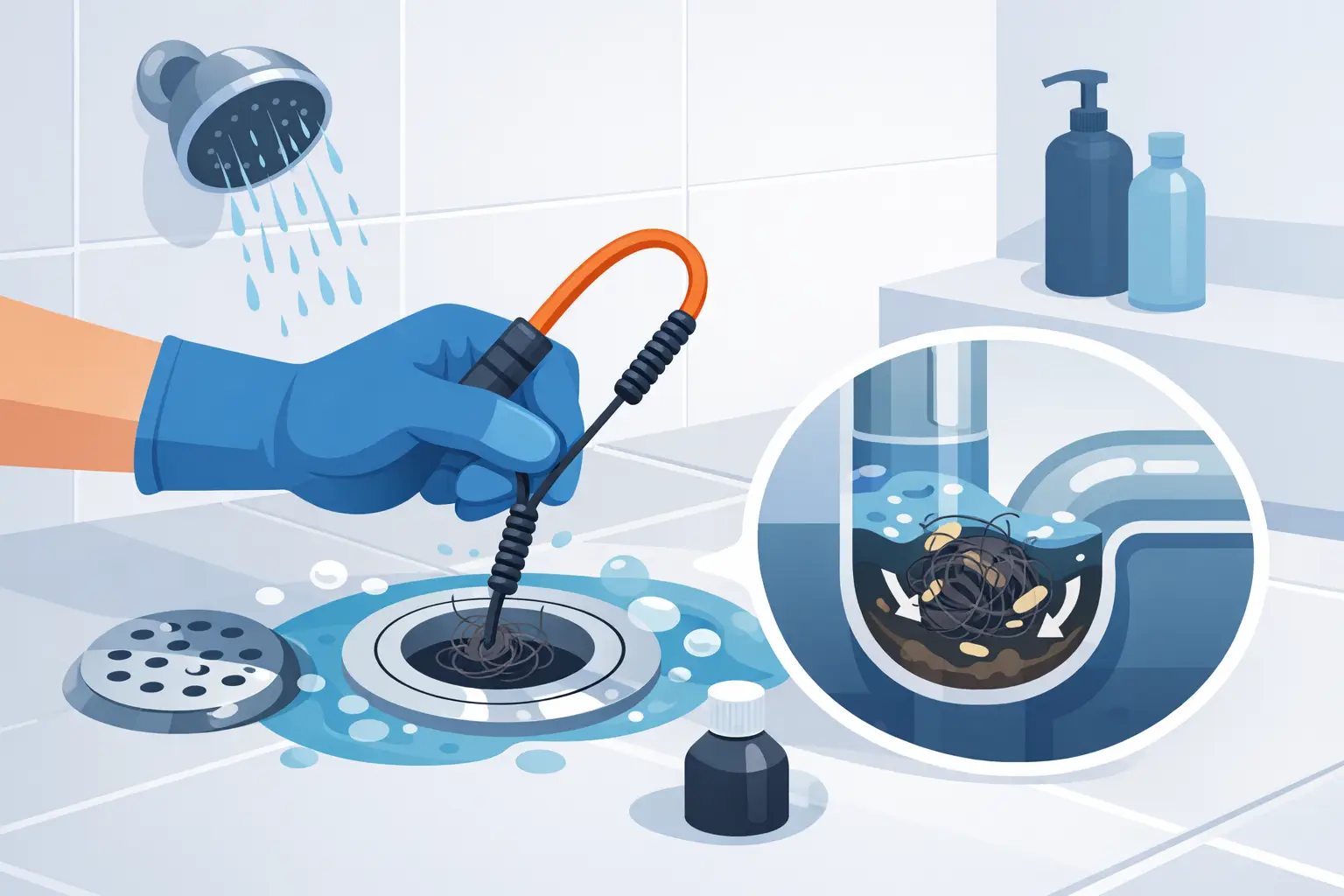
Most shower clogs do not happen all at once. They build up a little at a time. Hair is usually the main culprit, especially in homes where several people use the same shower. Strands catch on the drain cover or inside the pipe, then trap soap residue, shampoo, conditioner, skin oils, and other debris.
Hard water can make the problem worse. Mineral buildup sticks to the inside of the pipe and gives soap scum and hair more to grab onto. In older homes, rough or corroded drain pipes can also collect debris more easily than newer piping.
Sometimes the blockage is not limited to the shower drain. If the shower is slow along with a bathroom sink, toilet, or tub, the issue may be farther down the branch line or in the main sewer line. That calls for a different approach than simply pulling hair from the drain opening.
Early Signs You Should Not Ignore
A slow drain is the first sign most homeowners notice. Water may take several minutes to disappear after a shower, or it may pool near your feet before finally draining away. You may also hear gurgling, notice an unpleasant odor, or see dark debris coming back through the drain.
If water backs up into the shower when you flush a nearby toilet or run the bathroom sink, stop treating it as a simple shower clog. That pattern can point to a larger drain line blockage. Acting early is usually less stressful and less expensive than waiting for wastewater to back up onto the bathroom floor.
Safe First Steps for a Slow Shower Drain
Start with the easiest option: remove the drain cover and look for visible hair and buildup. Put on gloves, use a flashlight, and pull out what you can reach. A small plastic drain-cleaning tool can help hook hair close to the surface. Dispose of the debris in the trash, not down the toilet or sink.
After clearing the opening, run hot water for a few minutes to see whether flow improves. Hot water can help loosen fresh soap residue, but it will not remove a packed hair clog or a deeper blockage. Avoid using boiling water on acrylic tubs, fiberglass showers, or older plastic drain pipes, since extreme heat can cause damage.
A plunger may help if there is standing water and the clog is close to the drain. Use a flat-bottomed cup plunger, make sure there is enough water to cover the rubber edge, and plunge with firm, steady strokes. If your shower has an overflow opening, cover it with a wet rag to create better suction.
For a light buildup, you can also try a small amount of dish soap followed by warm water. This may help break up greasy residue, but it is not a fix for a stubborn hair clog, scale buildup, or problem deeper in the line.
Be Careful With Chemical Drain Cleaners
Store-bought chemical cleaners are tempting when water is not moving, but they can create more trouble than they solve. Many products use harsh ingredients that can damage certain pipes, weaken seals, or leave dangerous chemicals sitting in standing water. They can also make a later professional repair less safe.
Chemical cleaners rarely remove the hair mass causing a typical shower clog. They may burn a narrow channel through the buildup, only for the drain to clog again shortly afterward. If you have already poured a chemical cleaner into the drain, tell the technician before any work begins.
When a Shower Drain Blockage Needs Professional Service
A professional drain cleaning is the smart move when basic cleaning does not restore normal flow, the clog keeps returning, or multiple fixtures are draining slowly. Recurring clogs usually mean there is more buildup farther down the line than a surface tool can reach.
Call for help promptly if you notice sewage odors, discolored water backing up into the shower, gurgling from toilets, or water appearing in the tub when another fixture drains. Those signs may indicate a shared line or sewer issue, not just a shower drain blockage.
Landlords and property managers should take repeat bathroom drain problems seriously, particularly in multi-unit buildings. A clog affecting one shower may be isolated, but repeated backups in connected bathrooms can disrupt tenants and lead to water damage if left unresolved.
A drain specialist can inspect the line, locate the blockage, and choose the right cleaning method. Depending on the pipe condition and type of buildup, that may involve professional cabling or hydro-jetting. Hydro-jetting uses high-pressure water to clear grease, sludge, scale, and debris from inside the pipe without relying on harsh drain chemicals. It is highly effective for many stubborn blockages, though the pipe should be evaluated first, especially in an older property with damaged or fragile lines.
For homeowners and businesses in Southeast Iowa and nearby Illinois communities, Drain Pros LLC provides focused drain and sewer cleaning with clear communication about what is causing the problem and what it takes to clear it.
How to Prevent Future Shower Drain Clogs
The simplest prevention step is a drain screen. Choose one that fits securely over or inside the drain and clean it after every few showers. It is a small habit, but it catches the hair that would otherwise collect inside the pipe.
Keep heavy bath products out of the drain whenever possible. Thick body scrubs, shaving residue, bath oils, and excess conditioner can add to the sticky buildup that traps hair. Wipe up loose hair from shower walls before rinsing them down.
Once a month, remove the drain cover and clean away anything caught near the opening. Follow that with warm water. This routine will not solve a deeper pipe issue, but it can slow down the common buildup that leads to an unexpected clog.
If your household has long hair, hard water, or several people sharing one bathroom, preventive drain cleaning can be worth considering. The right schedule depends on how often the shower is used, the age of the plumbing, and whether the drain has a history of clogs. A property with repeated trouble may need more than a drain screen – it may need the line cleaned thoroughly.
Do Not Wait for the Bathroom Floor to Flood
A shower drain that is merely slow today can become a full backup during the next busy morning. The longer hair, soap residue, and debris stay in the pipe, the tighter the blockage can become. Quick action at the first sign of trouble gives you the best chance of keeping a small problem small.
Try the safe basics, skip the harsh chemical gamble, and get professional help when the drain does not clear or other fixtures are involved. A clear shower drain means one less mess waiting for you at the start of the day.