A bathtub should drain with a steady swirl, not a burp, gulp, or gurgle from the pipe. If you are asking, “why does bathtub gurgle,” the short answer is that air is struggling to move through the drain system normally. Sometimes the problem is a simple hair clog near the tub. Other times, that noise is an early warning that a larger drain or sewer line needs attention.
A gurgling tub is worth taking seriously, especially if the sound is new, keeps coming back, or happens when you flush a toilet, run the washing machine, or use another drain. Catching the cause early can help you avoid a slow-draining tub, sewer odors, or a backup where you least want one.
Why Does a Bathtub Gurgle When It Drains?
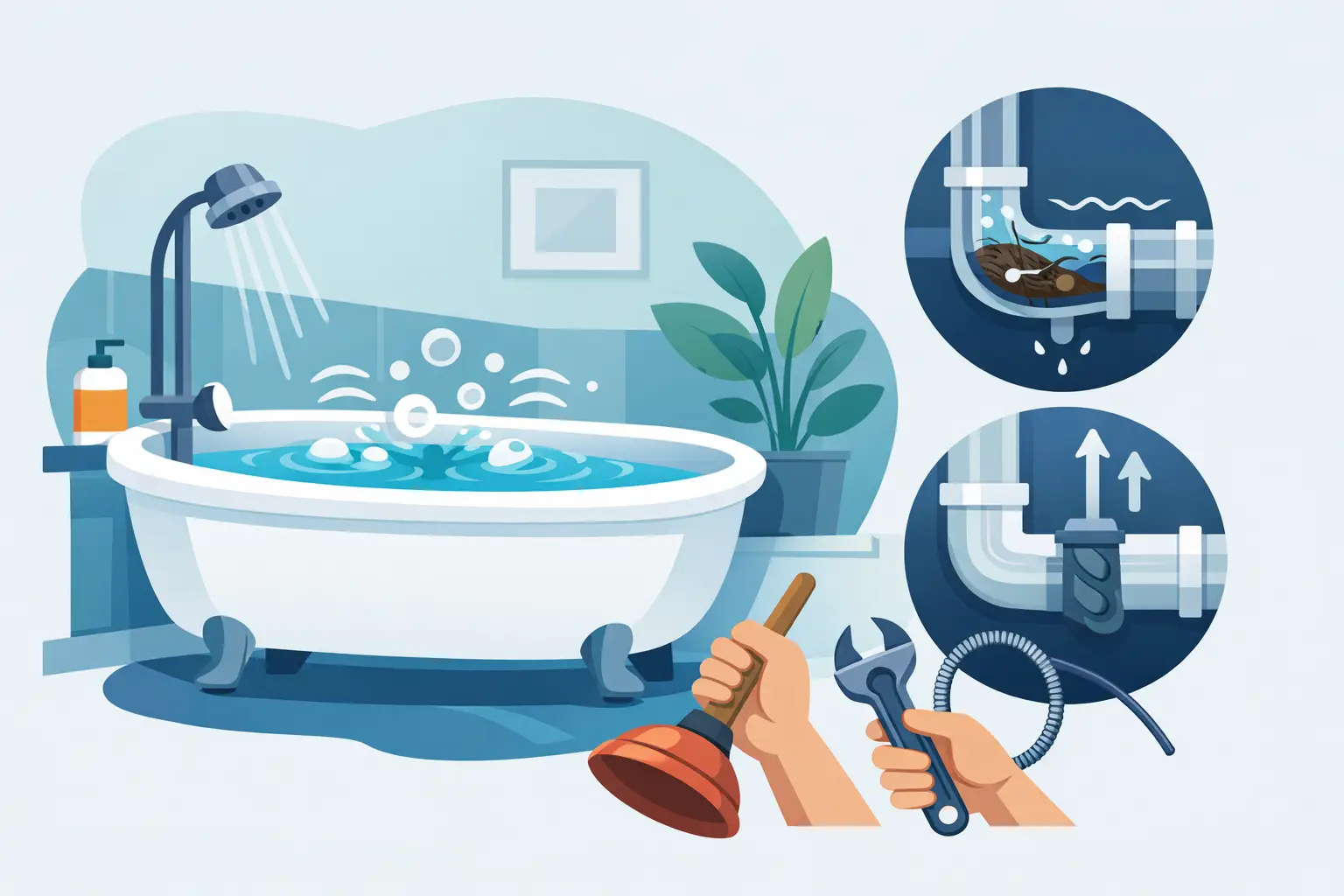
Your plumbing drains need both water flow and air flow. As water moves down the tub drain, air has to move through the plumbing vent system or around the water in the pipe. When a clog, blockage, or vent issue restricts that movement, the system pulls and pushes air through the water instead. That creates the familiar gurgling sound.
Think of turning a full bottle upside down. Water cannot leave smoothly until air can enter to replace it. A bathtub drain works on the same basic principle. The exact location of the restriction determines whether you have a small tub-drain problem or a larger issue farther down the line.
Common Causes of a Gurgling Bathtub
Hair and soap buildup in the tub drain
Hair, shampoo residue, soap scum, and bath products can collect just below the drain cover or deeper in the tub trap. This buildup does not always stop the water completely. Instead, it narrows the pipe enough that water and air fight for space as the tub drains.
You may notice the tub takes longer to empty, the drain gives off a stale odor, or the gurgle becomes louder near the end of draining. This is one of the more common and straightforward causes, particularly in a bathroom used daily by a busy family.
A clog in the shared bathroom drain
Bathroom fixtures often connect to the same branch drain. If the blockage sits beyond the tub, the tub can gurgle even when the tub drain itself looks clear. A partial clog may be caused by accumulated debris, paper products, wipes, or buildup farther into the pipe.
A useful clue is what happens when other fixtures run. If flushing the toilet makes the bathtub gurgle, or water in the tub shifts when the bathroom sink drains, the restriction is likely in a shared line rather than right at the tub.
A blocked plumbing vent
Plumbing vents run through the roof and allow air to balance pressure inside the drain system. Leaves, nests, ice, or other debris can block a vent opening. When the vent cannot do its job, drains may gurgle, drain slowly, or lose water from their traps.
Vent problems can be tricky because the drain may not look badly clogged from inside the bathroom. The sound may occur at more than one fixture, and you may notice sewer-like odors if trap water is being pulled down. Roof work also carries a real fall risk, so this is usually not a DIY inspection for most property owners.
A main sewer line blockage
When several drains are acting up at once, the concern moves beyond the bathroom. A partial main sewer blockage can make the bathtub gurgle because the tub is often one of the lowest fixtures in a home. Water and air pressure from toilets, sinks, or appliances may show up in the tub first.
Warning signs include gurgling from multiple drains, toilets that bubble or flush poorly, water backing up into the tub or shower, and repeated clogs that return after basic plunging. Tree roots, grease buildup, damaged pipe, and items that should never have been flushed can all restrict a main line. This calls for prompt professional diagnosis, not repeated chemical treatments.
What You Can Safely Check First
Start by removing the drain stopper and pulling out visible hair and debris. A plastic drain-cleaning tool can help reach material close to the surface. Run warm water afterward to see whether the tub drains more freely. Avoid forcing sharp metal tools into the drain, since they can damage parts of the stopper assembly or push a clog farther down.
If the tub alone is slow and gurgling, try a plunger designed for flat drains. Cover the tub overflow opening with a wet rag so the plunger can build pressure, add enough water to cover the plunger cup, and use several firm strokes. Check the drain again. This works best for a minor clog near the tub, not for a blockage deep in the line.
Skip harsh chemical drain cleaners. They may not reach the actual blockage, can create fumes, and may sit in the pipe when a drain is badly restricted. That makes later service more hazardous and can be tough on older plumbing. A mechanical cleaning method or professional drain service is usually the better choice when the clog will not clear.
When a Gurgling Tub Means You Need Help
Call a drain specialist if the tub gurgles along with toilet bubbling, water rises in the tub when another fixture drains, or more than one room has slow drains. Those are signs that the problem may be in a shared drain or main sewer line. Do not keep running water to test the system if wastewater has started backing up.
Recurring gurgling also deserves a closer look. A drain may seem to improve after plunging, only to clog again a few weeks later because the real buildup is farther down the pipe. For rental properties and small businesses, recurring trouble can quickly become a tenant, customer, or sanitation issue. Addressing the cause is less disruptive than waiting for a full backup.
Professional drain cleaning can remove stubborn buildup from branch lines, while a sewer camera inspection can show what is happening inside a main line. If grease, roots, scale, or heavy debris are causing the issue, hydro-jetting may be the right option. It uses high-pressure water to clean the inside of the pipe without relying on harsh chemicals. The right method depends on the pipe condition and the source of the blockage.
How to Prevent Bathtub Gurgling From Returning
A simple drain screen catches a surprising amount of hair before it enters the pipe. Clean it regularly instead of letting debris wash down in small amounts day after day. Keep heavy bath oils, thick scrubs, and large amounts of soap residue from building up where possible.
The bigger prevention step is watching for changes. A tub that starts draining slowly, a toilet that makes an unusual sound, or a sink that backs up briefly is easier to deal with before it becomes an emergency. Older homes, properties with large trees near sewer lines, and buildings with a history of drain problems may benefit from preventive cleaning or a camera inspection.
For homeowners and property managers in Southeast Iowa and nearby Illinois communities, Drain Pros LLC can identify whether the noise is coming from a simple tub clog, a branch line, or the main sewer. Fast drain cleaning and clear answers can save you from guessing – and from finding out about a blockage after the tub starts filling with dirty water.
A bathtub gurgle is your plumbing telling you that something is not moving the way it should. Listen to it early, limit water use if other drains are affected, and get the line checked before a small noise turns into a messy backup.