A slow kitchen sink can be annoying. A toilet that gurgles when the washing machine drains, water coming up in a shower, or a floor drain backing up is a different kind of problem. Those signs can point to a blockage farther down the line, where a plunger and store-bought drain cleaner will not reach. For dependable drain cleaning in Keokuk, IA, the goal is simple: find the restriction, clear it properly, and help prevent the same backup from returning.
Drain and sewer issues rarely improve by waiting. What starts as a slow drain can become a messy backup, an interrupted workday, or damage to floors and belongings. A professional drain specialist brings the right equipment for the line and a straightforward explanation of what is happening.
When a Clog Is More Than a Simple Clog
One slow fixture does not always mean there is a main sewer issue. A bathroom sink may be collecting hair, soap residue, and toothpaste buildup near the drain opening. A kitchen sink may have grease and food debris in the branch line. Those smaller restrictions can often be addressed with targeted cleaning.
The warning signs change when several fixtures are involved. If flushing a toilet causes water to rise in the tub, if drains are gurgling, or if water appears at a basement or utility floor drain, the problem may be in the main sewer line. That is a job for professional equipment and a careful assessment, not repeated chemicals or forceful plunging.
Call for service when you notice recurring backups, sewage odors, multiple slow drains, or water coming back through a lower-level drain. These are signs that the line may be restricted by roots, grease, wipes, heavy paper products, scale, or a foreign object. In some cases, a camera inspection may show pipe damage, a separated joint, or a collapsed section. Cleaning can remove a blockage, but it cannot repair a broken pipe. If damage is found, an appropriately qualified contractor can advise on repair options.
Drain Cleaning in Keokuk, IA: Choosing the Right Method
There is no one-size-fits-all answer for every clogged line. The right cleaning method depends on the location of the blockage, the type of buildup, the pipe condition, and whether the line has a history of recurring trouble.
Cable Cleaning for Common Blockages
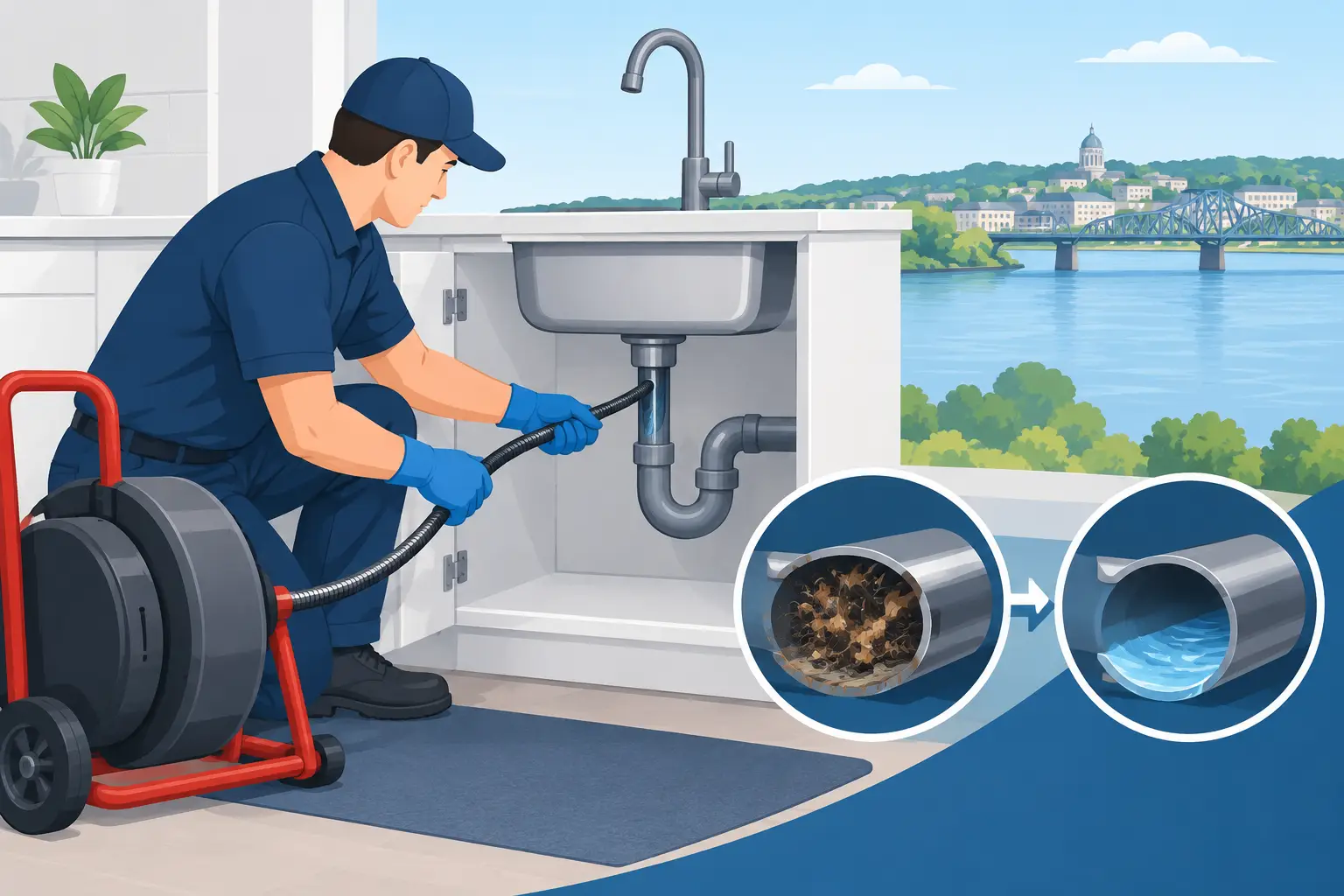
Professional cable machines are effective for many drain and sewer obstructions. A cable with the proper cutting head can break through roots, paper buildup, and compacted debris so the line can begin flowing again. It is often the practical starting point for a stopped-up drain or mainline blockage.
Cable cleaning restores flow, but it may not fully remove grease or residue stuck along pipe walls. If a line repeatedly clogs with buildup, a more thorough cleaning approach may be worth considering.
Hydro-Jetting for Heavy Buildup
Hydro-jetting uses high-pressure water to scour grease, sludge, scale, and debris from the inside of a drain or sewer line. It is especially useful for commercial kitchen lines, high-use residential drains, and pipes with recurring buildup. Instead of relying on harsh chemical drain cleaners, hydro-jetting uses water to clean the line more completely.
That does not mean hydro-jetting is right for every pipe. Older, damaged, or questionable lines should be evaluated first. A camera inspection can help determine whether the pipe condition supports jetting and identify the source of repeat problems. Hydro-jetting cleans a line well, but it is not a fix for a collapsed pipe, severe offset, or other structural defect.
Camera Inspections Take Out the Guesswork
When a backup keeps returning, guessing gets expensive. A sewer camera inspection allows a technician to view the inside of an accessible drain or sewer line and locate trouble spots. It can show root intrusion, grease accumulation, standing water, foreign objects, pipe condition concerns, and where a restriction is located.
For homeowners, that means clearer decisions before spending money on repeat cleanings. For landlords and property managers, it provides a better picture of whether the issue is tenant use, buildup from normal use, or a line condition that needs separate attention. For businesses, a camera can help identify trouble before a busy service day turns into a shutdown.
Why Chemical Drain Cleaners Often Make Things Worse
A bottle of drain cleaner looks like an easy answer, especially when water is standing in a sink. The trade-off is that these products frequently do little against a serious clog and can leave harsh chemicals sitting in the line. They may create heat, damage certain piping materials, and make the drain more hazardous for anyone who needs to service it afterward.
Chemicals also do not remove roots from a sewer line or clean heavy grease from a commercial drain. If the product clears a small path through a blockage, the drain may seem better for a few days and then clog again. A mechanical cleaning or hydro-jetting service addresses the material causing the restriction rather than masking the symptom.
Until help arrives, avoid adding more chemicals, grease, wipes, or excess water to the affected drain. If sewage is backing up, keep people and pets away from the area and avoid using fixtures that drain into the same line.
The Usual Causes of Recurring Drain Problems
Recurring clogs are frustrating because they often have a pattern. In homes, the usual suspects are cooking grease, coffee grounds, food scraps, hair, soap residue, wipes, feminine products, and too much paper product. Even items labeled flushable can catch on roots, buildup, or rough spots in an older line.
In commercial settings, grease is often the bigger concern. Restaurants, break rooms, and food-service operations can build up grease in drain lines over time, even when staff is careful. Regular grease-line cleaning can help keep wastewater moving. That service is different from grease-trap pumping, interceptor servicing, and waste hauling.
Tree roots are another common issue around older sewer lines. Roots naturally seek moisture and can enter small openings or compromised joints. Once inside, they catch paper and debris until the line slows or stops. Cleaning can remove root growth and restore flow, while a camera inspection helps reveal whether there is an underlying pipe condition contributing to the problem.
Preventive Cleaning Can Help Avoid Costly Backups
Not every property needs drain cleaning on a set schedule. It depends on the building’s age, pipe material, tree coverage, usage, and history. A newer home with no prior issues may only need service when symptoms arise. A restaurant, rental property, older home with mature trees, or building with repeated backups may benefit from preventive maintenance.
The value is not just keeping water moving. Scheduled cleaning lets you address buildup before it becomes an after-hours mess, a tenant complaint, or a closure during business hours. It also gives you a record of what has been found in the line and how quickly buildup returns.
For everyday prevention, keep grease out of sinks, use strainers where hair or food scraps are common, and flush only toilet paper and human waste. These habits will not solve a damaged line, but they can reduce avoidable clogs.
Local Help for Homes and Businesses
Keokuk homes, rental properties, and businesses need practical answers when drains stop working. Drain Pros LLC specializes in drain and sewer cleaning, hydro-jetting, and camera inspections for customers in Keokuk, Fort Madison, Wever, Burlington, and other listed Southeast Iowa and West-Central Illinois service communities. The focus is on clear communication, reliable workmanship, and affordable options, including no weekend up-charge and customer-friendly financing through Afterpay.
If your drain is slow, your sewer line is backing up, or the same clog keeps coming back, do not keep pouring products into the pipe and hoping for a different result. Get the line assessed, cleaned with the right method, and checked when the symptoms point to a deeper issue. Contact Drain Pros to confirm service availability and discuss the problem and access points. For mobile homes, service is limited to accessible exterior cleanouts or toilet access; we do not work underneath the home.