A toilet that gurgles when the washing machine drains is more than an annoying sound. It can be one of the top sewer vent blockage signs that your drain system is struggling to pull in the air it needs. Left alone, vent trouble can contribute to slow drains, sewer odors, bubbling fixtures, and backups that disrupt your home or business.
A vent issue can look a lot like a clog in the main sewer line, and sometimes both problems are present. The right answer depends on what is happening throughout the property, which fixtures are affected, and what an inspection finds.
What a Sewer Vent Actually Does
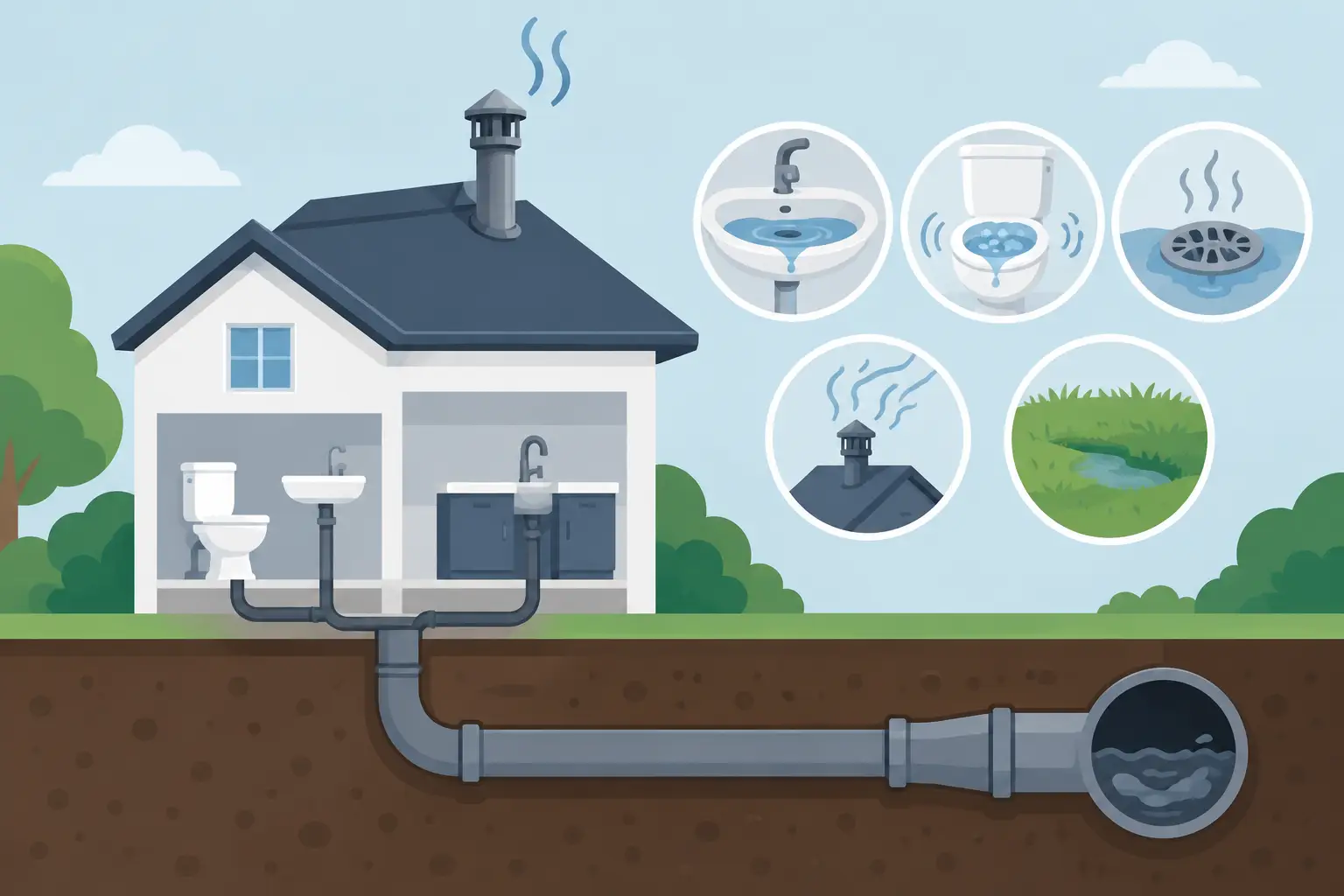
Your drain system needs air to move wastewater smoothly. Sewer vents are pipes that extend upward, usually through the roof, allowing air into the drain system and sending sewer gases safely outside. They help maintain proper pressure when a toilet flushes, a tub drains, or a commercial sink discharges a large amount of water.
Without enough airflow, draining water can create a vacuum effect inside the pipes. That vacuum can pull water from fixture traps, create gurgling noises, and slow drainage. The water held in a trap is what blocks sewer gas from entering occupied spaces, so protecting it matters.
A vent does not carry the same steady flow of wastewater as a drain line. Still, debris, animal nests, leaves, frost, or a buildup inside the pipe can restrict it. Older systems may also have vent piping that is undersized, damaged, or poorly configured. Cleaning a clog may restore flow when buildup is the cause, but a broken or incorrectly installed vent needs evaluation and repair by an appropriately qualified contractor.
Top Sewer Vent Blockage Signs to Watch For
One symptom by itself does not always prove a blocked vent. A slow bathroom sink, for example, may simply have hair and soap buildup in its own drain. The concern rises when symptoms show up in several fixtures or happen whenever another fixture drains.
Gurgling from toilets, sinks, or tubs
Gurgling is one of the clearest warning signs. You may hear a toilet bubble after a nearby sink drains, or a tub may make noise when the washing machine empties. Those sounds can occur when pressure changes move air through water in a trap. A vent restriction is one possible cause, but a drain or sewer blockage can produce similar sounds.
An occasional faint sound is not always an emergency. Repeated gurgling, especially in more than one room, deserves attention before it turns into a larger drainage problem.
Sewer odors inside the building
A healthy drain system should keep sewer gases out of living and work areas. If you smell a sewer odor near a bathroom, utility room, floor drain, or seldom-used fixture, a vent restriction may be affecting the water seal in the trap.
First, check whether a rarely used drain has dried out. Pouring water into that drain may restore the trap seal. If odors return, appear around multiple fixtures, or come with gurgling and slow drains, there may be a deeper vent or sewer-line issue to investigate.
Toilet bowl water that rises, drops, or moves oddly
The water level in a toilet bowl should remain fairly consistent between flushes. A blocked vent can cause the level to shift, bubble, or move when other fixtures drain. You may also notice a weak, uneven flush even though the toilet itself does not appear clogged.
This symptom can also be caused by a blockage farther down the drain system. If the bowl rises close to overflowing or wastewater comes back into the tub or shower, stop using water where possible and arrange for professional drain service.
Several drains running slowly at once
A single slow sink usually points to a local drain clog. When a kitchen sink, bathroom sink, shower, and toilet all seem sluggish, the issue may be farther downstream. A restricted vent is one possibility, but a partially blocked main sewer line is another common cause.
Pay attention to timing. If a shower drains normally until the toilet flushes, or the kitchen sink backs up when the dishwasher runs, the system may have a pressure or flow problem beyond one fixture drain.
Water bubbling in a nearby fixture
Bubbles in a toilet or shower when another fixture is used should not be ignored. For example, flushing an upstairs toilet may cause a downstairs tub to bubble. That can happen when air pressure is forced toward the nearest opening instead of moving properly through the vent.
It can also signal a developing mainline blockage. In a building with lower-level fixtures, wastewater tends to show up at the lowest open drain first. That is why a bubbling shower, basement floor drain, or lower-level toilet should be treated as an early warning, not a nuisance to wait out.
Recurring trouble after previous drain cleaning
If drain cleaning improves the problem but gurgling, odors, or pressure-related symptoms return quickly, there may be more going on than ordinary buildup. Roots, grease, scale, damaged pipe, or a vent obstruction can create repeat problems. A camera inspection can help identify whether the line is clear, restricted, or physically damaged.
For restaurants, rental properties, and other commercial spaces, recurring drainage issues can also develop from heavy grease use or frequent high-volume discharge. Grease-line cleaning may be appropriate when buildup is found in the drain line, but it is different from grease-trap pumping or interceptor service.
A Vent Blockage or a Main Sewer Clog?
The two problems overlap enough that guessing can waste time and money. A vent blockage is more likely when fixtures gurgle, trap water moves, and odors appear without a major backup. A main sewer restriction is more likely when wastewater backs up, multiple drains slow down, or the lowest fixture in the building fills when water is used elsewhere.
There are exceptions. A severe mainline clog can create plenty of gurgling, and a significant vent restriction can make ordinary drain problems feel worse. That is why the condition of the main sewer line should be checked before assuming the roof vent is the only issue.
For a commercial property, the layout matters even more. A restroom group, kitchen line, floor drains, and utility sinks may connect differently than fixtures in a house. A qualified drain specialist can assess the pattern of symptoms and determine the best access point for cleaning or inspection.
Why Vent Pipes Become Blocked
Roof vents are exposed to the weather year-round. Leaves, twigs, nesting material, and windblown debris can collect at the opening. In cold conditions, frost can narrow the opening as warm, moist air rises through the pipe. Small animals and birds can also block an unprotected vent opening.
Inside the system, older pipes may develop scale, corrosion, or shifts that restrict airflow. A vent can also be affected by poor installation, an inadequate pipe size, or a structural problem in the piping. Those conditions are not fixed by pouring chemical drain cleaner into a sink. Harsh chemicals can damage pipes, create hazards, and rarely address the actual cause.
Avoid climbing onto a roof to investigate unless you have the right safety equipment and experience. Roof access carries real fall risk, and forcing a tool down a vent can damage older piping or push debris farther into the system.
How the Problem Is Diagnosed
A proper diagnosis starts with the symptoms. Note which fixture gurgles, what happens when another fixture drains, whether odors are constant, and whether there has been any wastewater backup. That information helps narrow the likely source before work begins.
Drain cleaning through an accessible cleanout can clear common mainline obstructions such as roots, grease, wipes, and buildup. When the cause is uncertain or problems keep returning, a sewer camera inspection provides a clear look inside the accessible drain line. It can reveal roots, standing water, buildup, separated connections, or damaged pipe that cleaning alone cannot correct.
Hydro-jetting can be an effective, environmentally safer option for clearing certain grease and buildup conditions from suitable drain lines. It uses high-pressure water rather than harsh chemicals. However, hydro-jetting does not repair a collapsed pipe, broken pipe, or defective vent. If inspection shows physical damage, the appropriate repair professional should review the options.
When to Call for Drain Service
Call for help promptly if several drains are slow, a toilet or shower bubbles when other water is used, sewer odors persist, or wastewater starts backing up. Early service can often prevent a messy interruption at home, a tenant complaint, or a business slowdown.
Drain Pros LLC serves Burlington and surrounding Southeast Iowa and West-Central Illinois communities with drain cleaning, hydro-jetting, and sewer camera inspections. We assess drain and sewer-line blockages through accessible entry points; a sewer camera inspection does not by itself rule out a separate roof-vent problem. Suspected vent defects or repairs should be evaluated by an appropriately qualified plumbing contractor. For mobile homes, we clear lines only through an accessible exterior cleanout or toilet access and do not work underneath the home. Contact us to confirm availability for your location.
The most useful next step is simple: stop treating repeated gurgling and slow drains as separate annoyances. They may be the system telling you it needs a closer look before a minor warning becomes a full sewer backup.