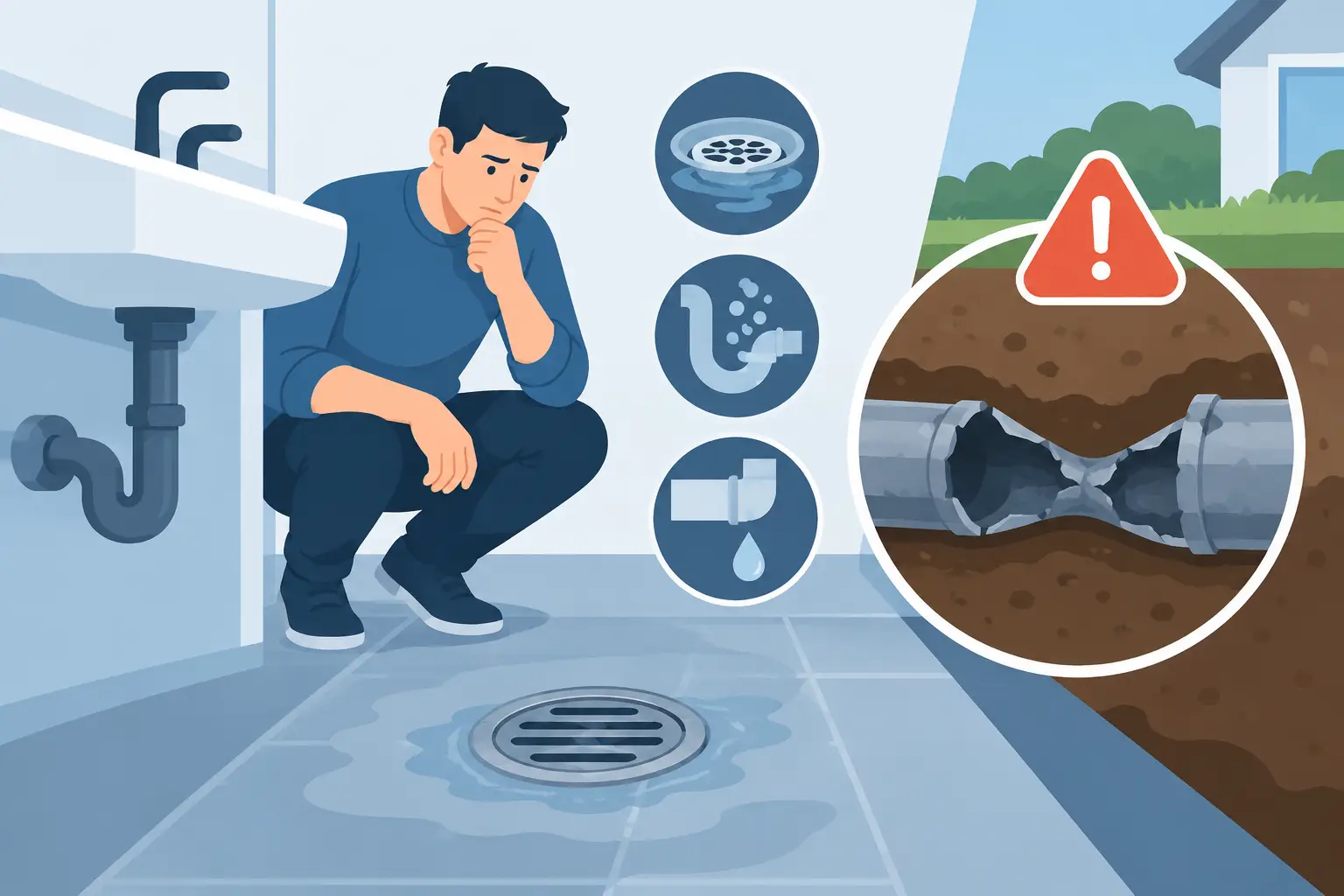
A drain line rarely collapses without giving you some warning first. The top signs of drain collapse often look like an ordinary clog at the start: a slow toilet, a tub that drains poorly, or a backup that seems to clear for a while. The difference is that the problem keeps coming back, gets worse, or affects more than one drain. Acting early can help you avoid a messy sewer backup and get clear answers about what is happening underground.
What Does a Collapsed Drain Mean?
A collapsed drain or sewer line has been damaged enough that wastewater cannot move through it normally. The pipe may be crushed, cracked, offset, sagging, or filled with soil and debris after part of the line gives way. Older clay, cast-iron, Orangeburg, and poorly supported pipe can be more vulnerable, but damage can happen to many types of drain lines.
Tree roots, shifting soil, heavy traffic over a buried line, age, corrosion, and improper installation can all play a role. A blockage and a collapsed line are not the same thing. Grease, wipes, roots, or buildup may be cleared with professional drain cleaning or hydro-jetting when the pipe is structurally sound. A damaged pipe, however, needs to be identified before anyone assumes cleaning alone is the answer.
Top Signs of Drain Collapse
Recurring backups after the line has been cleared
One backup can be caused by a normal blockage. But if the same toilet, floor drain, or main line backs up again soon after cleaning, there may be a deeper issue. A partial collapse can catch paper, waste, roots, and debris at the damaged spot until flow is restricted again.
This does not automatically mean the line has failed. It can also point to heavy buildup, roots, or a belly in the pipe where waste collects. A sewer camera inspection is the practical next step because it shows where the trouble is and what is causing it.
Multiple drains slowing down at once
A single slow bathroom sink often has a local clog near that fixture. When toilets, tubs, showers, and sinks in different parts of the building start draining slowly together, the issue may be farther down the main sewer line.
Watch for patterns. If flushing a toilet makes water rise in a shower or tub, or if a washing machine drain causes a floor drain to overflow, stop using excess water until the line can be checked. Continued use can turn a limited backup into a larger cleanup problem.
Sewage coming up from the lowest drain
The lowest drain in a home or business is usually the first place a mainline problem shows itself. That could be a basement floor drain, lower-level shower, tub, or toilet. Wastewater that comes up through these drains is a serious warning that flow is blocked or severely restricted downstream.
A collapse is one possible cause, especially when the backup repeats. Keep people and pets away from contaminated water, avoid running fixtures, and arrange professional drain and sewer service as soon as possible.
Persistent sewer odors indoors or outside
A sewer smell near drains, in a basement, around a cleanout, or outside over the line should not be ignored. A crack, separated joint, or damaged section of pipe can allow odors to escape. In some cases, an odor has another cause, such as a dry trap or vent issue, so smell alone does not prove a collapse.
Still, odors paired with slow drains or recurring backups deserve a closer look. A camera inspection can help determine whether the line has an obstruction, root intrusion, broken section, or another condition affecting flow.
Wet, soft, or unusually green areas in the yard
A damaged underground sewer line can allow wastewater to seep into surrounding soil. You may notice a wet area that does not dry out, soft or sunken ground, or a patch of grass that grows faster and greener than the rest of the yard.
Weather and drainage problems can create similar conditions, so do not assume every wet spot is a broken sewer. But if the area is near the sewer route and you are also dealing with indoor drain problems, it is time for an inspection. Avoid driving equipment over soft ground or digging around the suspected area until the situation is understood.
Depressions, sinkholes, or shifting ground
A more advanced failure can wash soil into or around a damaged pipe. Over time, that can create a dip in the lawn, a depression near a driveway, or ground that seems to be sinking. This is not a wait-and-see symptom.
Keep people, vehicles, and heavy equipment away from the affected spot. The concern is not just drainage. Unstable ground can become a safety issue, and the damaged line needs proper evaluation by a qualified professional.
Gurgling and unusual sounds from drains
Gurgling toilets, bubbling water in a tub, or a floor drain that makes noise when another fixture runs can indicate trapped air caused by restricted flow. Partial blockages, roots, grease buildup, venting issues, and pipe damage can all create these sounds.
Gurgling by itself is not enough to diagnose a collapsed line. When it comes with repeated backups, foul odors, or multiple slow drains, though, it is a useful clue that the main line should be checked instead of repeatedly treating individual fixtures.
Why a Camera Inspection Matters
Guessing at an underground problem gets expensive fast. A sewer camera inspection allows a drain specialist to see inside the line and locate the condition affecting flow. The camera can reveal root intrusion, thick buildup, offsets, standing water, cracks, separated joints, or a section that has collapsed.
That information helps determine whether professional cleaning may restore normal flow or whether the pipe has structural damage that requires repair evaluation by an appropriately qualified contractor. It also prevents the wrong approach. Hydro-jetting is highly effective for clearing grease, sludge, roots, and other buildup in suitable lines, but it does not repair a broken or collapsed pipe.
For commercial properties, a camera inspection can be especially helpful when recurring drain problems disrupt employees, customers, tenants, or operations. Restaurants and food-service businesses may deal with grease-line buildup, while older rental properties may have roots or aging sewer materials. The right answer depends on what the camera shows, not on a one-size-fits-all service.
What to Do If You Suspect a Collapse
First, reduce water use. Avoid laundry, long showers, dishwashers, and repeated flushing if drains are backing up or the main line appears restricted. Do not keep adding chemical drain cleaners. These products rarely solve a main sewer problem and can create hazards around standing wastewater.
Next, pay attention to the symptoms. Note which fixtures are affected, where backups appear, whether the trouble follows heavy water use, and whether the issue has happened before. That information helps the technician narrow down the likely location and decide whether cleaning, camera inspection, or both are appropriate.
Drain Pros LLC provides professional drain cleaning, hydro-jetting, and sewer camera inspections for homeowners and businesses in Burlington and surrounding Southeast Iowa and West-Central Illinois communities. If the camera shows structural pipe damage, you will have clearer information to discuss repair options with a qualified contractor.
A recurring backup is not just an inconvenience to keep working around. Get the line checked while the problem is still manageable, protect your property from a larger mess, and make decisions based on what is actually inside the pipe.